
What is Obeah?
The Secret Religion of the West Indies
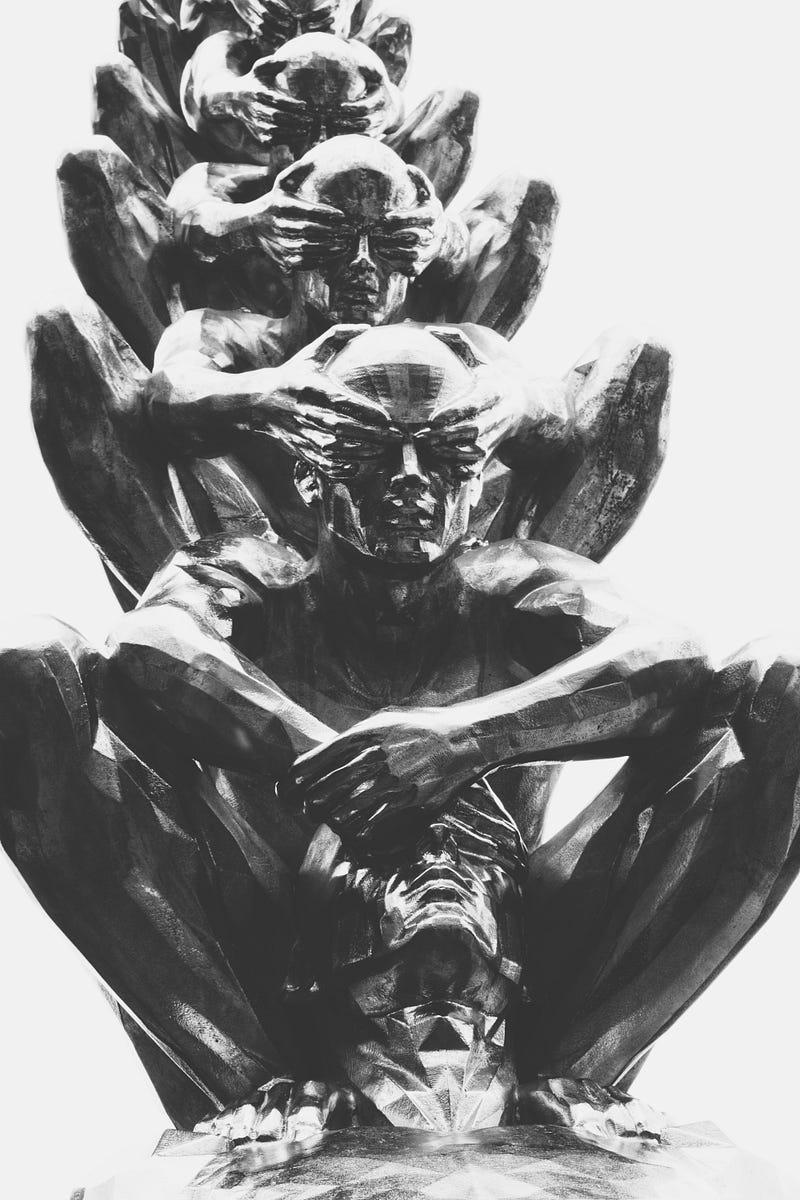
Obeah: A particular sorcery practiced in the West Indies, derived from numerous African, Native American, and European cultures and religions.
Unlike Haitian Voudou and Juju, the generic label for African magic on the continent, Obeah is not as famous. Similar to its cousin in the Black American South, it is a folk religion practiced in much of the British West Indies under the guise of Christianity, however, with out the same presence of Catholic saints, synchronized with less success. It is generally believed to be heavily based off of the Akan people’s traditional religion, but it has been influenced by Native American, and even East Indian beliefs.
Due to its use as a form of rebellion in colonial slavery, it has been outlawed as taboo and still is, despite the fact that the British Empire has retracted its physical presence from the islands. When people speak of Obeah, many react with true fear and anxiety, and yet there are many who go to the local obeahman (or woman) for help with finances, protection, love, and health. Some even go to cause others’ misfortune.
Unlike most religions, Obeah is usually practiced by an individual, not by an entire group, giving it extreme fluidity. It’s secrecy, as well as its individuality as a religion has caused it to struggle in gaining recognition as a formal religion, but it should be noted that obeahmen and women had vital roles in their communities. During colonial history and chattel slavery, spiritual leaders such as obeahmen served as doctors, storytellers, and military leaders for communities of both enslaved and “freed” African people. Proof of this lies in the story of Queen Nanny of the Maroons in Jamaica, who is said to have battled the British successfully for 19 years with the power of her Obeah, which allowed her to catch bullets in her buttocks and fire them back at British soldiers with great accuracy.
It is Obeah’s fluidity as a religion that is perhaps its biggest strenth, but also the cause of much confusion when people try to understand it. Someone who works with ancestral spirits can be an obeahman as much as someone who only works with plants and herbs. Obeah includes the study of medicine to heal and poison, the observation of celestial bodies, communication with the dead, and more. Since I revealed to my grandmother that I have an altar for our ancestors, she has not stopped referring to me as an obeahman. The title of such a position is likely given by the community, as well as oneself.
Growing up in a blended family with roots in Guyana and Grenada (specifically Carriacou), I have personally seen how Obeah varies between nation to nation. In Guyana, Obeah stories are filled with distinct spirits, such as the Bacoo, the Oli, the Moongazer, and the Masacuraman. In Carriacou, however, many stories I have heard do not involve spirits, but rather quarrels between people. Specifically, they include the power of the “Goat Mouth”, an innate ability that people possess that allows them to speak things into fruition, whether it is the occurrence of money or the sudden death of a person.
In my own personal opinion, Obeah is what you make it. Granted, those who believe in it and practice it are generally from the West Indies, but I have come in contact with an African-American man who practices its predecessor, Akan tradition, but still calls it Obeah. Much of what Obeah is is hidden due to it’s synchronization with Christianity, but it only takes a look at West Indian culture to see Obeah’s heavy presence, particularly in rural areas. The practice of leaving bags of rice at doors, walking in the house backwards late at night so jumbies (spirits) don’t follow you inside, and sacrificing goats before a boat festival are all examples of Obeah that are overlooked because they are merely seen as superstition. Just like our patois/English creole/dialect, the traditional/indigenious religion of the West Indies has been diminished as inferior due to the lack of apparent structure in the eyes of academia and major world religions.
The truth about Obeah is the fact that it is innate, just like all black peoples’ connection to Africa, regardless of where we may be. Obeah and the powers that come with it may skip a generation or many. It may be written off as strange gut feelings or good luck. Even for the spiritually adept it may be overshadowed by the vast structures of other world religions, even African ones, such as Ifa and Vodun, but Obeah does not care. It takes up space regardless. It has power regardless. If it didn’t it wouldn’t permeate the minds of so many West Indians, causing them to clutch crosses or even seek out obeahmen for help. Even those that don’t believe in it believe in it. Obeah is the eternal mystery that does not care to be figured out.
Hello! If you made it this far, thank you for reading! As a spiritualist, it is my hopes to uncover all the secrets I can about black, indigenous religions, particularly Obeah. If you know anything about this topic, or your simply interested feel free to leave a comment. Also, if you like topics such as this you’ll love my novel, Radiance Lost, inspired by Obeah, other African religions, and West Indian and West African culture! Share, clap, and comment. I hope to see you again!