
What is My Relationship Attachment Style?
Am I the crazy one? Or, is it an unhealthy attachment style?
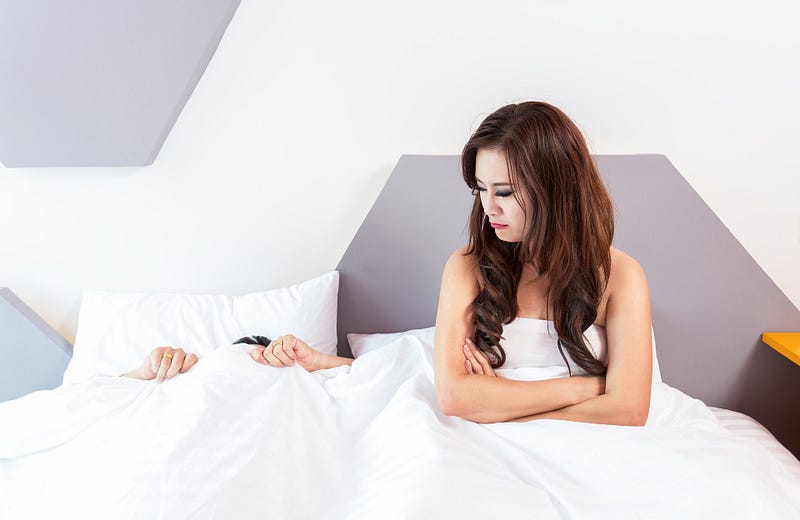
Am I the crazy one in this relationship?
Have you ever felt like the crazy one in your romantic relationship?
This idea constantly bombarded me in one of my last serious relationships. One so toxic, I’m surprised we didn’t leave with emotional radiation poison. When the relationship deteriorated, I started reading self-help books and attending therapy.
One day, the term relationship attachment style appeared in an article I found on Psychology Today. Not only did the theory explain what happened in my relationship but I was able to effectively heal myself with the knowledge and tools provided for those issues.
The research indicates that it’s not that either partner in the relationship is the “crazy one.” It’s more so that both partners may have insecure attachment styles, which easily creates a dysfunctional, unhappy environment.
To avoid further unhappy relationships, we need to understand our own issues better and change the question.
What is my relationship attachment style? How can I change it?
How is Relationship Attachment Style Developed?
The relationship style we possess as adults stem from our relationships with our caregivers as children. Attachment first develops with the bond between the infant and the caregiver and the bond enhances with daily interactions. For the next several years, the attachment evolves between the child and caregiver, and it later becomes a particular relationship attachment style in adulthood. And, the child, now an adult, will spend their life recreating the relationship they held with their caregiver.
What is My Relationship Attachment Style? (4 Attachment Styles)
- Secure attachment (Low anxiety/Secure!)
- The secure child might become upset when caregivers/friends/partners separate however they are comfortable with the return. The secure adult has a high emotional intelligence allowing them to communicate effectively and directly when there is an issue. Their self-awareness and ability to problem solve help them attract other securely attached individuals. (55% of the population).
- Anxious-preoccupied attachment (High anxiety/Low avoidance)
- The anxious child would be frightened of separation and display high anxiety behaviors upon the return of caregivers. The anxious adult can be clingy, obsessive, demanding, and display anxious behaviors and mood swings. They attract partners they can serve and proceed to romanticize their relationship (however unhealthy). Anxiety and insecurities cultivate in those with this style due to the lack of self-identification, lack of foundation, and lack of guidance. (20% of the population).
- Dismissive-Avoidant attachment (Low anxiety/High avoidance)
- The avoidant child will react calmly to separation and disappearance (on the outside) but will not welcome any return. The adult avoidant can be very independent and self-sufficient. However, they tend to avoid intimacy and closeness. They may deliberately aggravate partners or sabotage the relationship to prevent further commitment. They may often be passive-aggressive in relationships. Although it may look like strong independence on the surface, it usually stems from low-self esteem and an intense fear of vulnerability.
- Fearful-Avoidant/Disorganized attachment (High anxiety/High avoidance)
- The fearful/disorganized child maintained an unpredictable relationship behavior with a caregiver. This relationship developed from a chaotic, inconsistent environment possibly embedded in some form of abuse or trauma. In the fearful adult, it evolves into a combination of preoccupation and avoidant behaviors. Due to their upbringing, they possess severe mistrust of people, often engage in avoidant behaviors, and avoid or reject partners. At the same time, they can exhibit anxious behaviors around their relationships, overanalyzing, and catastrophizing interactions.
- They repeat toxic relationship patterns formed by their caregiver and fear communication and vulnerability. Despite all of this, the fearful adult still craves a healthy romantic relationship.
- (In case you were wondering, I’m Disorganized/fearful-avoidant!)
How Do Attachment Issues Impact My Relationship?
Attachment styles can cause more harm if you do not heal your past and learn new patterns with securely attached individuals.
The only relationship match in attachment styles comes with securely attached adults. One partner (if not both) must be securely attached for the relationship to work.
We subconsciously simulate the relationships we held with our caregivers with our romantic partners. If our caregiver was an emotionally abusive alcoholic, we may remain with a partner with similar traits holding onto the unfeasible goal that we can change them and change the relationship dynamic. Essentially, we are attempting to change our childhood caregiver and change the ending to that relationship.
If we succeed in fully changing the person or relationship style, then it will prove we had been worthy of love, all along.
Relationship Between the Dismissive Avoidant and the Fearful Avoidant
In my previous relationship where I started to feel crazy (the one relationship I had ever felt I was losing my mind), my partner was exceptionally immature and fell under Dismissive Avoidance while I was under Fearful-Avoidant. This increased instability and resentment between us.
Though I didn’t realize it at the time, I had recreated the relationship I held with my mother as a child. There were days when he would disappear without ever explaining where he was going. Righteous anger when I asked. Prioritizing everybody else. Signs of severe alcoholism and emotional manipulation.
It was inconsistent. It was chaotic. And it hurt.
Everyone asked why I continued dating him and I truly had no idea. After therapy, I accepted I was trying to change him and the dynamic in an effort to prove I was worthy as a child and as an adult.
Rather than further damage our inner child by continuing a relationship that mimics the one we held with our caregiver, we need to focus on healing it.
How Can I Heal From My Attachment Issues?
According to Lisa Firestone’s article on Healing From Attachment Issues, there are 3 fundamental options to begin healing.
- Tell your past story in a mindful, coherent way that helps you realize and embrace your small and large traumas. This can help you heal and help your children avoid making the same mistakes.
- Choose a partner with a healthier attachment style, preferably a secure attachment style if you believe you carry an insecure attachment style.
- Find a therapist who is educated and trained in attachment styles.
My other advice in addition to the ones above is to surround yourself with positive materials on the subject. Not only can it help you create self-awareness on your patterns but it can help you learn to love yourself over time.
This means self-help books, positive articles, meditation guides, and even social media videos by coaches and therapists can be helpful tools. The authors and creators below have been helpful to me for the last year.
Reading Materials:
- Attachment theory articles on Psychology Today.
- Attached by Amir Levine, M.D. and Rachel S.F. Heller, M.A.
- Let that Sh*t Go, a healing journal.
Content Creators:
- The Love Addict Coach (Instagram and Tiktok)
- Psych Advice w/ Julie Theis (Instagram and Tiktok)
- Kirstie Taylor (Instagram and Tiktok)
Conclusion
We can change our attachment styles and patterns. It’s not impossible. The first step is accepting what happened in your childhood and becoming aware of the patterns you may be repeating. We need to work on healing our inner child before we can do anything else.
From there, we can learn to love ourselves, engage in new, healthy behaviors, set boundaries, and attract securely attached partners.
In the end, we are the only ones who can truly validate our self-worth.
Your only question should be:
How can I attract a securely attached partner?