
What Is Money And Where Does It Come From? Let’s Ask JRR Tolkien
This Week In Money July 9–15
This Week In Money by Greg Coleridge helps you understand the history of economics. Get TWIM delivered directly to your email inbox for free.
JULY 9
1778 — FIRST STATES RATIFY THE ARTICLES OF CONFEDERATION Eight states signed the Articles on this day. Other states followed shortly thereafter. The Articles granted the Federal Government the authority to issue money and determine its value if nine states agreed. The Articles comprised the original U.S. Constitution.
2007 — CITIGROUP CEO CHARLES PRINCE INTERVIEW WITH THE FINANCIAL TIMES Explaining his bank’s excessive money creation through the creation of risky sub-prime loans
“When the music stops, in terms of liquidity, things will get complicated. But as long as the music is playing, you’ve got to get up and dance.”
JULY 10
1509 — BIRTH OF JOHN CALVIN, FRENCH THEOLOGIAN AND PASTOR Many believe Calvin broke the ice on the legitimization of usury (interest on loans). The Catholic Church prohibited it, based on the Biblical passage, Deuteronomy 23, verses 19–20. Calvin was part of the Protestant Reformation. His response to the issue, which carried considerable influence, was:
“Usury is not now unlawful, except insofar as it contravenes equity and brotherly union. Let each one, then, place himself before God’s judgment seat, and not do to his neighbor what he would not have done to himself, from whence a sure and infallible decision may be come to. To exercise the trade of usury…is much less tolerable among the children of God; but in what cases and how far it may be lawful to receive usury among loans, the law of equity will better prescribe than any lengthened discussions.”
Benjamin Nelson, “The Idea of Usury, From Tribal Brotherhood to Universal Otherhood,” p 79.
1832 — ANDREW JACKSON VETOES LEGISLATION TO RENEW THE CHARTER OF THE PRIVATE SECOND BANK OF THE UNITED STATES
“Is there no danger to our liberty and independence in a bank that in its nature has so little to bind it to our country?… Should its influence become concentrated, as it may under the operation of such an act as this, in the hands of a self-elected directory whose interests are identified with those of the foreign stockholders, will there not be cause to tremble for the purity of our elections in peace and for the independence of our country in war? Their power would be great whenever they might choose to exert it; but if this monopoly were regularly renewed every fifteen or twenty years on terms proposed by themselves, they might seldom in peace put forth their strength to influence elections or control the affairs of the nation. But if any private citizen or public functionary should interpose to curtail its powers or prevent a renewal of its privileges, it can not be doubted that he would be made to feel its influence.”
1983 — PUBLICATION OF “FISCAL POLICY AND RESOURCE ALLOCATION IN ISLAM” Edited by ZIAUDDIN AHMED, MUNAWAR IQBAL AND M. FAHIM KHAN
“Money creation is a social prerogative and hence the benefits of the process of money creation should accrue to the whole society which can best be achieved through 100 per cent reserve system.
JULY 11
1862 — LEGISLATIVE ACT AUTHORIZING US GOVERNMENT TO ISSUE MONEY Congress passes legislation to issue and circulate $150 million in non-interest bearing, debt-free notes — Greenbacks. This is authorized in the U.S. Constitution, Article 1, Section 8.
2011 — STATEMENT BY STEVEN KEEN, ECONOMIST, ON QUANTITATIVE EASING
“This is the biggest transfer of wealth in history,” as the giant banks have handed their toxic debts from fraudulent activities to the countries and their people.
2014 — POSTING OF VIDEO “CENTURY OF ENSLAVEMENT” BY THE CORBETT REPORT
“What is the Federal Reserve system? How did it come into existence? Is it part of the federal government? How does it create money? Why is the public kept in the dark about these important matters? In this feature-length documentary film, The Corbett Report explores these important question and pulls back the curtain on America’s central bank.”
2019 — “INSIDE THE BATTLE FOR THE NEXT GLOBAL MONETARY SYSTEM — FACEBOOK LIBRA VS CENTRAL BANKS” VIDEO A description of the emergence of cryptocurrencies, especially Facebook’s “Libra.”
JULY 12
1804 — DEATH OF ALEXANDER HAMILTON, FIRST SECRETARY OF THE TREASURY He was a major proponent of First Bank of the United States — a privately owned national bank. The name was to deceive people into thinking that money creation was done by the government instead of corporate banks. The nation’s money was created out of thin air and loaned to the government — at interest — and to private individuals. Eighty percent of the stock was privately held. Hamilton called the public debt “a public blessing” because of his belief that it would tie the wealthy (who would own the government bonds) of the country to the government, and they would, in turn, provide political support for higher taxes, to make sure that there was enough money in the treasury to pay off their principal and interest. [Note: We must not be confused. While the musical about his life is a tremendous artistic production, it sugarcoats Hamilton’s efforts to centralize government, deter small “d” democracy and create a privately owned central bank that enriched already rich investors.]
1895 — BIRTH OF BUCKMINSTER FULLER, AMERICAN ARCHITECT, SYSTEM THEORIST, AUTHOR, DESIGNER, INVENTOR, AND FUTURIST
“You never change things by fighting the existing reality. To change something, build a new model that makes the existing model obsolete.”
That’s what the National Emergency Employment Defense (NEED) Act does.
2012 — GREEN PARTY USA CALLS FOR MONETARY REFORM IN PARTY PLATFORM
“Democratize Monetary Policy and the Federal Reserve System: Place a 100% reserve requirement on demand deposits in order to return control of monetary policy from private bankers to elected government. Selection of Federal Reserve officers by our elected representatives, not private bankers. Strengthen the regional development mission of the regional Federal Reserve Banks by directing them to target investments to promote key policy objectives, such as high-wage employment, worker and community ownership, ecological production, and inner city reconstruction.”
2022 — “WHERE DOES MONEY COME FROM” POSTED ONLINE ARTICLE
“In the US, coins are made at the US Mint and issued by the Treasury via our central bank, the Federal Reserve. Cash bills are printed by the Bureau of Printing and Engraving and issued (through a slightly convoluted process) by the Federal Reserve. But only a small fraction of the money used in our economy is bills or coins. Most of what are considered cash transactions are done with debit cards, checks, or electronic transfers — bank-account money. The money involved in these transactions is just account entries; no dollar bills or coins are involved. Most of the money both here and throughout the world is bank-account money, and it’s created by commercial banks when they make loans.”
JULY 13
1832 — CONGRESS FAILS TO OVERRIDE PRESIDENT JACKSON’S VETO TO RENEW THE CHARTER OF THE SECOND NATIONAL BANK OF THE UNITED STATES In his veto message to renew the misnamed “national bank” (it was actually a private bank controlled/owned by stockholders, a majority of whom were foreigners), Jackson stated:
“Controlling our currency, receiving our public monies, and holding thousands of our citizens in dependence…would be more formidable and dangerous than a naval and military power of the enemy.”
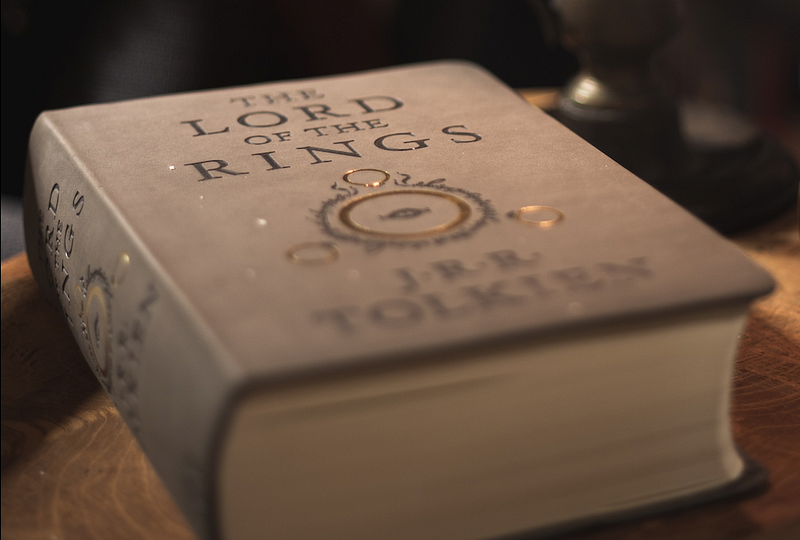
1956 — QUOTE OF J.R.R TOLKIEN, AUTHOR (THE HOBBIT AND LORD OF THE RINGS) AND UNIVERSITY OF OXFORD PROFESSOR, IN CONDOUR MAGAZINE
“The main mark of modern governments is that we do not know who governs, de facto any more than de jure. We see the politician and not his backer; still less the backer of the backer; or what is most important of all, the banker of the backer. Enthroned above all, in a manner without parallel in all past, is the veiled prophet of finance, swaying all men living by a sort of magic, and delivering oracles in a language not understood of the people.”
2011 — “GREENING THE DOLLAR,” POSTED ARTICLE BY STEPHEN ZARLENGA
“Real progress on monetary reform is being made. Don’t swallow the widespread negativism spread, out of error or by design, which tries to convince people that there’s no use in fighting for justice. “That strategy was taught by the Taoist philosopher Sun Tzu in The Art of War. He advised that the best way to defeat opponents is to convince them to surrender by convincing them that victory is impossible. Rather than falling for it, steel yourself! Progress on solving our monetary problems does take time, yet it is being made and will continue to be made. “For example, I was invited to give a talk at the 2007 US Green Party Convention to explain the need for monetary reform. On advice of an old friend, I called my talk “Greening the Dollar.” Now, four years later, thanks to Dee Berry and Ben Kjelsus of Kansas City, MO, the US Green Party has come forward with a marvelous monetary reform plank for its economic platform! For the first time in our nation’s history, a national party has proposed an effective solution to our malfunctioning monetary system! We applaud their remarkable courage and intelligence to present a genuine alternative to our malformed and unjust money system.”
2013 — PUBLICATION OF ARTICLE, “EVERYONE KNOWS THAT THE FEDERAL RESERVE BANKS ARE PRIVATE…EXCEPT THE AMERICAN PEOPLE” Most Americans Still Don’t Know that Federal Reserve Banks Are Private Corporations
“This evening, the PBS program, Frontline, will do something that corporate broadcast media has failed to do since the financial crash of 2008. Frontline will air the results of its year-long investigation of the most powerful financial institution in the world — the central bank of the United States — known as the Federal Reserve, or simply “the Fed.” “The Fed’s radical makeover of itself began in December of 2007 when the Fed decided, on its own, that it had the authority to secretly pump out trillions of dollars in cumulative loans to prop up the mega banks on Wall Street, as well as to the foreign banks that were on the other side of Wall Street’s hundreds of trillions of dollars in derivative trades. The Fed secretly ran that program through at least July of 2010 according to the eventual audit that was conducted by the Government Accountability Office. (That audit only came about because Senator Bernie Sanders attached an amendment to the Dodd-Frank financial reform legislation of 2010.)
2022 — “WALL STREET INVENTED AN INVESTMENT THAT’S EVEN WORSE THAN THE ONE THAT CAUSED THE 2000 CRASH,” POSTED ARTICLE BY JARED A. BROCK “Rent-back securities… these horrible investment products are absolutely awful. Basically, the instrument bundles together rental payments from rent-trapped tenant-serfs along with mortgages on the rental units as collateral. Once bundled, the seller markets them as a super-safe investment and sells them to the highest sucker/bidder… “Rent-backed securities are hot… “Why did Blackstone create rent-backed securities?… “Rent-backed securities will inevitably destroy lives… “Why doesn’t America destroy rent-backed securities?… “How to end rent-backed securities”
JULY 14
1833 — DEATH OF WILLIAM M. GOUGE, ADVISOR TO PRESIDENT ANDREW JACKSON, EDITOR OF THE PHILADELPHIA GAZETTE, PUBLISHER OF THE “HISTORY OF THE AMERICAN BANKING SYSTEM” AND A “FISCAL HISTORY OF TEXAS”
“The large extent of bank influence is not easily seen. We seldom see an identified bank or a money corporation candidate running for office; but when questions arise which affect them, the banks have agents at work, whose operations are the more effective because they are unseen.”
JULY 15
2012 — PUBLICATION OF ARTICLE, “ASSET HOLES: US ‘LEADERSHIP IN MONEY, CREDIT, CAFR SURPLUS TRILLIONS” BY CARL HERMAN
“The great news is that economic solutions are obvious: Monetary reform: the US doesn’t have a money supply, but its Orwellian opposite of a ‘debt supply.’ Banks and the Fed create what we use for money as debts, then charge the 99% interest for its use. Monetary reform has government transparency (yes, unimaginable without total Occupy victory) to create debt-free money for direct payment of public goods and services. This has game-changing triple benefits of full-employment as government becomes the employer of last resort, optimal infrastructure, and falling prices because infrastructure contribute more to productivity than cost.”
This Week In Money by Greg Coleridge helps you understand the history of economics. Get TWIM delivered directly to your email inbox for free.


