
What is Mesology? An Exploration of the Relationship between Human and Nature with Augustin Berque
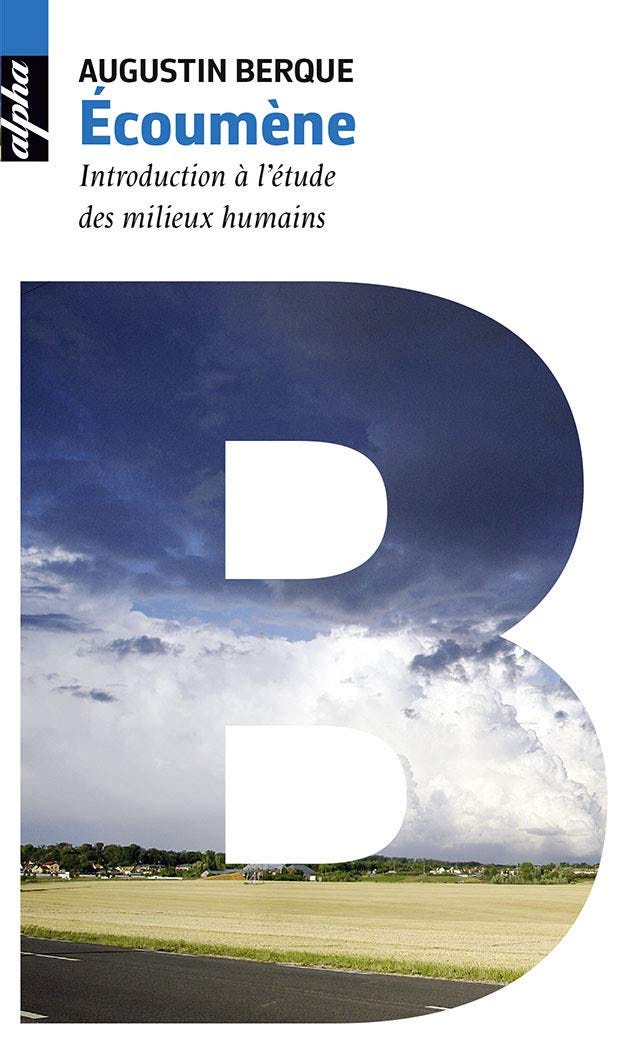
The term “mesology” is not a common word. It was first used by the biologist Charles Robin (1821–1885). Augustin Berque used it to refer to the study of the relationship between human beings and their milieu. For Berque one’s environment consists of an ecological, technological, and symbolic dimensions.
Berque’s perspective is the result of a long journey. Born in Rabat, Morocco in 1942, a child of Jacques Berque (1910–1995), an Arabist and professor at the Collège de France. His father known best for his criticism of the colonial system.
Augustin Berque, who wanted to become an orientalist, first learned Chinese. When the time came for the young geographer to go to China to complete his research, his plan was interrupted by the Cultural Revolution. He then went to Japan, using his Chinese skills to learn Japanese.
In Japan, his research focused on the people’s efforts to adapt rice cultivation to the cold climate of Hokkaido. This led Berque to reflect on the relationship humans have with nature. Something that would become central in his research.
Readers who are familiar with ecological and environmental philosophy are probably familiar with the works of Philippe Descola and Bruno Latour, two famous figures in French environmental thought.
The former work focuses on critiques of nature/culture dualism, while the latter’s critique focuses on the very idea that we are “modern” beings.
What characterizes Berque’s approach is that he, far from establishing provocative points of view, simply sought to understand, to make sense of, the phenomenon he saw during his various field studies.
For decades, Berque’s work has been nothing more than scientific research; far from the activism, idealistic statements, or the tendency of scientists to show their intelligence through groundbreaking ideas.
In this post, I will introduce you to one of the concepts Berque has been working on: the notion of “milieu”. I am quite sure that they will help you understand your own daily experiences, your interactions with other people, and your interactions with other living beings.
One’s Milieu
The term “milieu” has a long history in French philosophy, thought, and literature. It is a polysemic word that can stand for “center” as well as for “surroundings.”
The originality of Augustin Berque’s approach is to reuse this word, with a precise definition, in order to unite different fields of research that deal with the relationship between people, or more globally between living beings, and the place where they live.
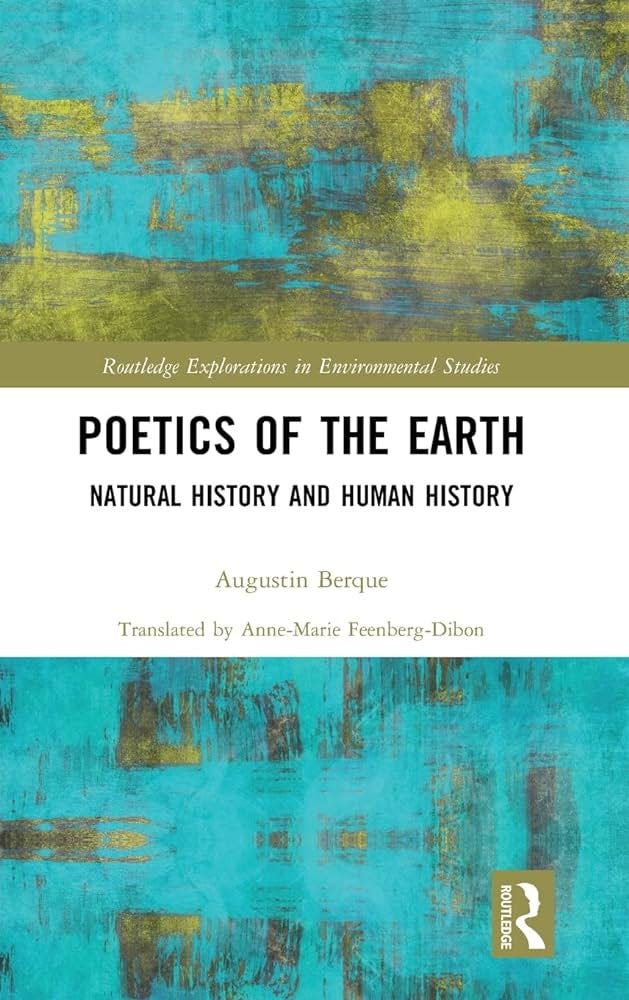
According to Augustin Berque, Jakob von Uexküll, and later Watsuji Tetsurō (和辻哲郎), there is an important distinction between the “milieu” and the “environment”.
For Berque and others, the environment is seen as universal; the same for all beings. For instance, in most environmental sciences, it refers to a collection of ecosystems viewed from the abstract standpoint of modern science.
On the contrary, the milieu is seen as singular. It is specific to each single living species and human culture. Even when the objects are physically the same, the way things are grasped can differ between species and cultures.
What does such a statement mean?
It means that not only can each species of living being or human culture have its own way of grasping an object — whether physical or not — but also that each living being can have its own way of grasping something.
That is probably why your partner, children, or cat can grasp an insignificant domestic event quite differently from you.
It is also why the same international political event can be perceived very differently by government officials of different countries. This is again why different cultures can understand the same things differently.
In future posts, I plan to explain more of Augustin Berque’s ideas. I am sure you will find it interesting.
For the moment, if you know French, you can watch the following video in which Augustin Berque describes how he encountered Eastern thought and drew insights from it to understand the phenomenon he was facing as a geographer.
Thank you for reading. If you enjoyed it and would like to support me, there are several ways, all of which I would greatly appreciate.
- Engage with this article by clapping, commenting, highlighting it.
- Subscribe to my Medium stories.
- Buy me a coffee!