
Biology
What is Life? (# 39)

Article 37 - What is Constructor Theory? - argued that the laws of our universe may be understood as arising out of a set of principles which in turn arise out of the goal of achieving continuous increases in complexity. The origin of this goal arises from the mathematical foundations of the reality that created our universe. The initial foundation consisted of Platonic solids. Article 38 - What is Sacred Geometry? - suggested that this foundation together with its subsequent evolution is evident in the geometry of our world. Both Article 37 and 38 are consistent with the hypothesis that our universe is an ongoing computation.
This article combines the insights from the previous two articles to argue that certain features of life on Earth also support the hypothesis that our universe is an ongoing computation.
Abiogenesis
In evolutionary biology, abiogenesis, or informally the origin of life, is the natural process by which life has arisen from non-living matter, such as simple organic compounds.
While scientists are still researching how life can arise from non-living matter, one of the more recent ideas relevant to the theme of these articles has been put forward by Professor Jeremy England when he was employed by the Massachusetts Institute of Technology. In an interview with Natalie Wolchover of Quanta Magazine, England proposes that life was inevitable from general thermodynamic considerations:
… when a group of atoms is driven by an external source of energy (like the sun or chemical fuel) and surrounded by a heat bath (like the ocean or atmosphere), it will often gradually restructure itself in order to dissipate increasingly more energy. This could mean that under certain conditions, matter inexorably acquires the key physical attribute associated with life.
Wolchover, Natalie (22 January 2014). “A New Physics Theory of Life”. Quanta Magazine.
Although England does not discuss the following idea, his theory may be seen as consistent with the hypothesis that the external source of energy is the Zero Point Field or the energy in the vacuum of space.
As discussed in Article 10 - What are the origins of force fields and mass? - vacuum energy consists of vibrating quantum particles whose structures are consistent with platonic solids. When a group of atoms resonates with the vacuum energy, structures formed out of those atoms would also resonate with the vacuum energy or Zero Point Energy (ZPE). Hence life could be organic structures that resonate with ZPE.
The idea that people may have access to ZPE is a common understanding by many alternative health practitioners. The effectiveness of alternative health therapies, however, is questioned by many scientists. The purpose of pointing out this connection is to note that the origin of our universe as proposed in these articles supports the claims of many practitioners even though those claims are not currently supported by empirical evidence. The lack of empirical evidence could be due to difficulties in applying the scientific method, such as creating empirical measures of the subjective mindsets of participants in experiments.
Last Universal Common Ancestor
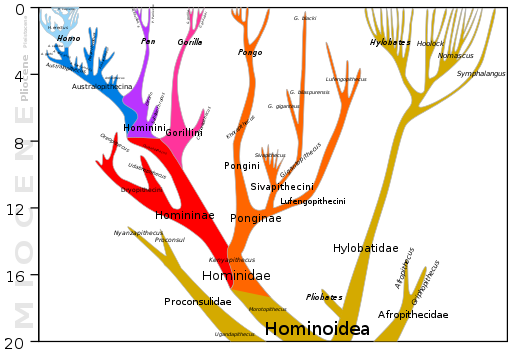

The last universal common ancestor (LUCA) describes the most recent population of organisms from which all organisms now living on Earth have a common descent — the most recent common ancestor of all current life on Earth. Scientists have not been able to explain why LUCA seems to have been a singular event. In the context of Darwin’s Theory of Evolution, it might be expected that there would have been several similar events leading to life.
Applying Constructor Theory (see Article 36) to the issue of why the emergence of life was a singular event, life is a constructor that self replicates using raw materials and itself to produce a copy of itself (as well as leaving itself unchanged) with some waste. A possible principle behind the self-replication process is creating constructors that facilitate continuous increases in complexity.
As far as we know, on Earth, only humans are capable of describing the universe in terms of mathematics. In the context of Gödel’s Impossibility Theorems (see Article 14), only humans may be able to formulate ever more complicated descriptions of our universe i.e. once our universe is fully described mathematically, a new more comprehensive explanation can be formulated.
The principle of facilitating continuous increases in complexity can be achieved by a single life form that can fully describe its universe. The principle does not require more than one such life form. Furthermore, the creation of two such life forms competing with each other may lead to the extinction of both life forms. The principle only requires one life form to maintain a self-replicating process indefinitely.
In brief, one reason why there has only been a singular event leading to life is that the constructor principle may forbid the creation of a second competing life form. The singular event is consistent with our universe being an ongoing computation. Furthermore, our universe may mirror our creator universe when there is one God i.e. only one self-aware entity (see Article 18 - Are you ecstatic?).
Life and Entropy
While life may be how the principle of continuous increases in complexity is experienced in our universe with our laws of physics, the life constructor still needs to be consistent with the principles behind the second law of thermodynamics i.e. minimize as far as possible entropy arising with actions that create more complexity.
Our human lifestyle currently means there is an increase in entropy with every new human being. In Constructor Theory terminology, waste is increasing with every human birth. The principle of facilitating continuous increases in complexity requires a constructor to be able to describe the universe comprehensively, but that constructor does not have to be humanity. If we continue to increase the amount of waste produced, this waste may bring into force another principle that leads to a new constructor i.e. a life form that may not be human. We may need to live more sustainably on Earth or be replaced.
Some analysts have suggested Earth was inhabited by advanced civilizations before the Younger Dryas period i.e. more than 12,000 years ago. There appears to be little evidence of these civilizations apart from some anachronistic sites such as the Great Pyramid at Giza in Egypt. Nevertheless, it is conceivable that an earlier civilization could understand our universe and live with a much smaller environmental impact in conformity with the principles associated with being a life constructor.
Monatomic gold
One purpose of this article has been to raise the idea that life on Earth arose because each of us has a connection with the Zero Point Field i.e. the vacuum energy of the universe. Anecdotal evidence suggests that some people are more aware of this connection and have been able to use the power it gives them to make changes in our world.
According to archaeological evidence, some civilizations living more than 2,000 years ago may have known about unusual forms of matter such as monatomic gold. This knowledge may explain the existence of megalithic sites such as Stonehenge in England. Monatomic gold is discussed in more detail in a subsequent article.
While there is not much evidence supporting the idea that our ancestors had knowledge that we may only now be rediscovering, the ideas in these articles may encourage more experienced researchers to review existing evidence.
The question for this article is:
Could life have developed on Earth in order to understand our universe?
To view the headings of all the articles to be published in this series please click on https://michaeledalton.medium.com/orbiting-stars-and-origin-of-our-universe-338906930f51
To obtain a copy of the book ‘Orbiting Stars’ which contains the first drafts of all these articles, please visit https://www.amazon.com