
What is LIDAR: How it Works & Why Important for Self-driving Car?
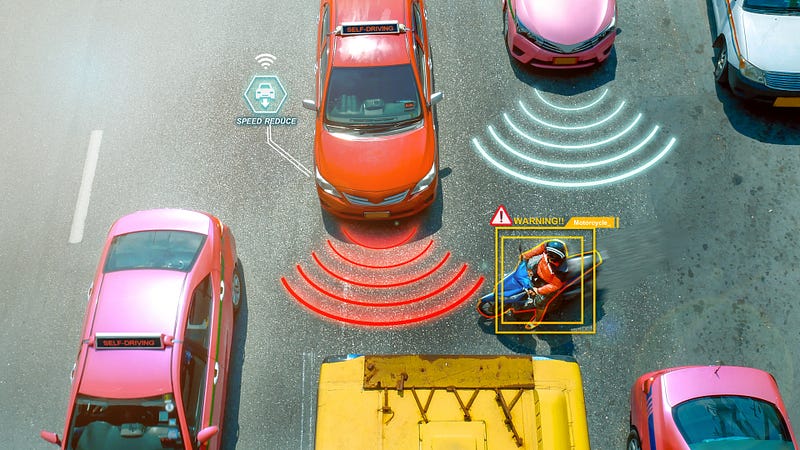
Sensor-based technologies are playing a key role in making artificial intelligence (AI) possible in various fields. LiDAR is one of the most promising sensor-based technology, used in autonomous vehicles or self-driving cars and became essential for such autonomous machines to get aware of its surroundings and drive properly without any collision risks.
Autonomous vehicles already use various sensors and LiDAR is one of them that helps to detect the objects in-depth. So, right here we will discuss LiDAR technology, how it works, and why it is important for autonomous vehicles or self-driving cars.
What is LiDAR Sensor Technology?
The bats and dolphins use the echolocation sensing technique to determine about the location or precise position of an object. LiDAR also use the similar technology to measure ranges (variable distances) to the Earth.
LIDAR stands for Light Detection and Ranging is a kind of remote sensing technology using the light in the form of a pulsed laser to measure ranges (variable distances) to the Earth.
These light pulses — combined with other data recorded by the airborne system — generate precise, three-dimensional (3D) information about the shape of the Earth, it’s surface characteristics, and various objects visible there.
LiDAR can shoot pulses of light up to a million pulses per second that bounce off a surface and return to the sensor. And finally this sensor calculates the time it took for the ray of light to return and which direction it came from.
How Does LIDAR Work in Autonomous Cars?
When observed from distance, LIDAR functions very similarly to sonar systems that emit sound waves that travel outwards in all directions until making contact with an object,resulting in a resonating sound wave that is redirected back to the source.
The distance of that object is then calculated based on the time it took for the echo to return, in relation to the known speed of sound.
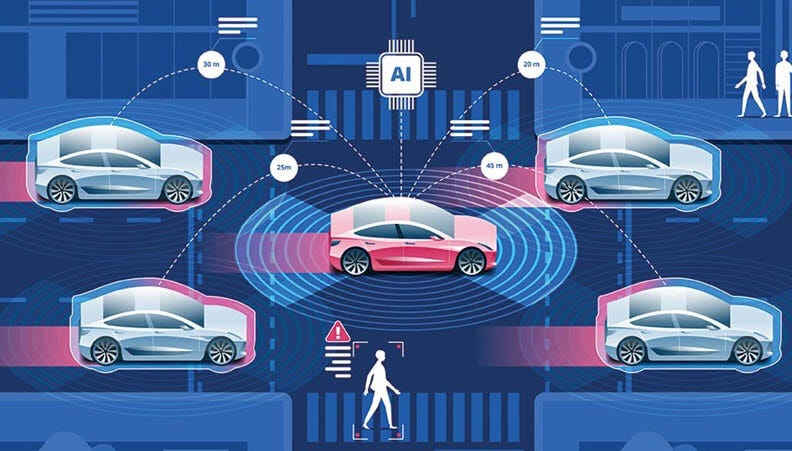
Actually, LiDAR systems operate under this same principle, and to do that the speed of light — more than 1,000,000 times faster than the speed of sound. Instead of producing sound waves, they transmit and receive data from hundreds of thousands of laser pulses every second.
An onboard computer records each laser’s reflection point,converting this rapidly updating “point cloud” into an animated 3D representation of its surroundings.
There are three main components of a LiDAR instrument — the scanner, laser, and GPS receiver. While other elements that play a vital role in the data collection and analysis are the photo detector and optics.
Nowadays, most of the government and private organizations use helicopters, drones, and airplanes for acquiring LiDAR data.
Use of LIDAR in Autonomous Vehicles
In the automotive industry, radar has long been utilized to automatically control speed, braking, and safety systems in response to sudden changes in traffic conditions.
Nowadays, auto manufacturers have started to integrate LIDAR into Advanced Driver Assistance Systems (ADAS) in order to visualize the ever-changing environments their vehicles are immersed in.
Video: How LiDAR Used in Autonomous Vehicles?
The bunch of useful datasets from automotive platform incorporation can allow ADAS systems to make hundreds of carefully-calculated driving decisions each minute precisely.
We are accepting this technology as a key component in developing the new driver assistance features that can guide in delivering self-driving cars with full autonomous features with a safe journey.
How LiDAR is Making Self-Driving Cars Safer?
As we know LiDAR is a detection system similar to radar that uses light waves instead of radio waves to detect objects, characterize their shape, and calculate their distance.
Lidar goes even further: it detects the movement and velocity of distant objects, as well as the vehicles, own motion relative to the ground, and various other objects around it.
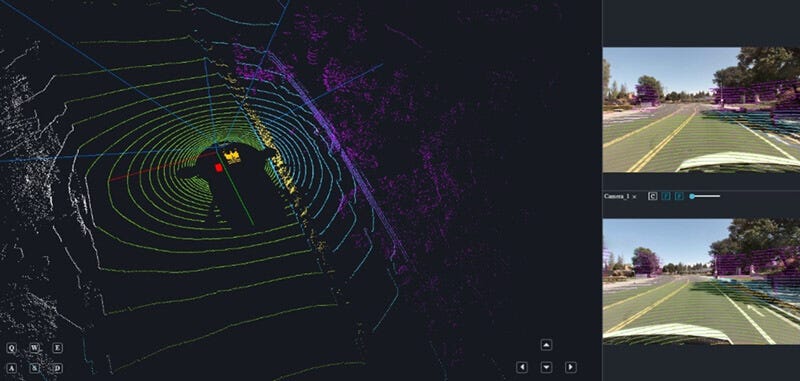
Hence, LiDAR-based 3D sense is a very indispensable technology for enabling the evolution from driver assistance to fully autonomous vehicles. LiDAR helps to gather critical data about the environment’s surrounding that ADAS requires offering reliable safety.
As the functioning of vehicles are becoming more autonomous and taking over the key additional driving functions, ADAS will become increasingly dependent upon LiDAR to enhance perception capabilities in all types of operating conditions.
Why LiDAR is Important for Autonomous Vehicle?
Without a precise and fast object detection system, an autonomous vehicle is not possible. LiDAR is making this possible with a continuously rotating LiDAR system that sends thousands of laser pulses every second. These pulses collide with the surrounding objects and reflect back.
Video: A LIDAR-enabled Self-Driving for Safe Journey
Further, these light reflections are then used to create a 3D point cloud. An onboard computer records each laser’s reflection point and translates this rapidly updating point cloud into an animated 3D representation created through 3D point cloud annotation to make such objects recognizable to autonomous cars through LiDAR sensors.
Why 3D Point Cloud Labeling for LIDARs?
To make the LiDARs sensors detector recognize the objects, it is important to train the AI model with a huge amount of annotated images generated through the LiDARs sensor.
LIDAR point cloud segmentation is the most precise technique used to classify the objects having the additional attribute that a perception model can detect for learning.
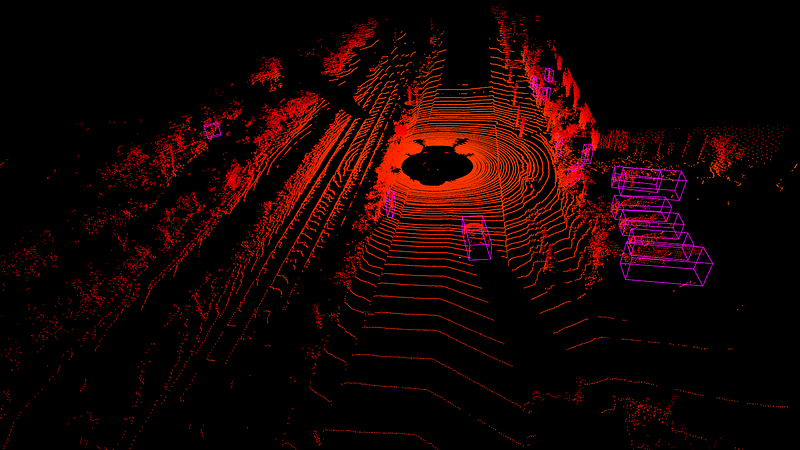
The data annotation for LiDARs helps to detect the road lane and tracking the object with a multi-frame helping the self-driving car detect the lane more precisely and understand the real scenarios around.
And the best part is with LiDARs cloud annotation, the object up to 1 cm can be annotated with 3D boxes labeling the objects at every single point.
Cogito is one of the leading data annotation companies providing image annotation services to AI companies looking for the right training data sets for their machine learning models.
Cogito works with the annotation team having an enriching experience working with point cloud data, 3D Object tracking with 2D mapping, semantic segmentation of point cloud data with applications in intelligent vehicles, and autonomous terrain mapping and navigation.
This article was also featured on www.vsinghbisen.com
If you like this story, don’t forget to clap!!

