
What is it Like Donating Double Red Cells?
My experience making a “Power Red” donation to the Red Cross.
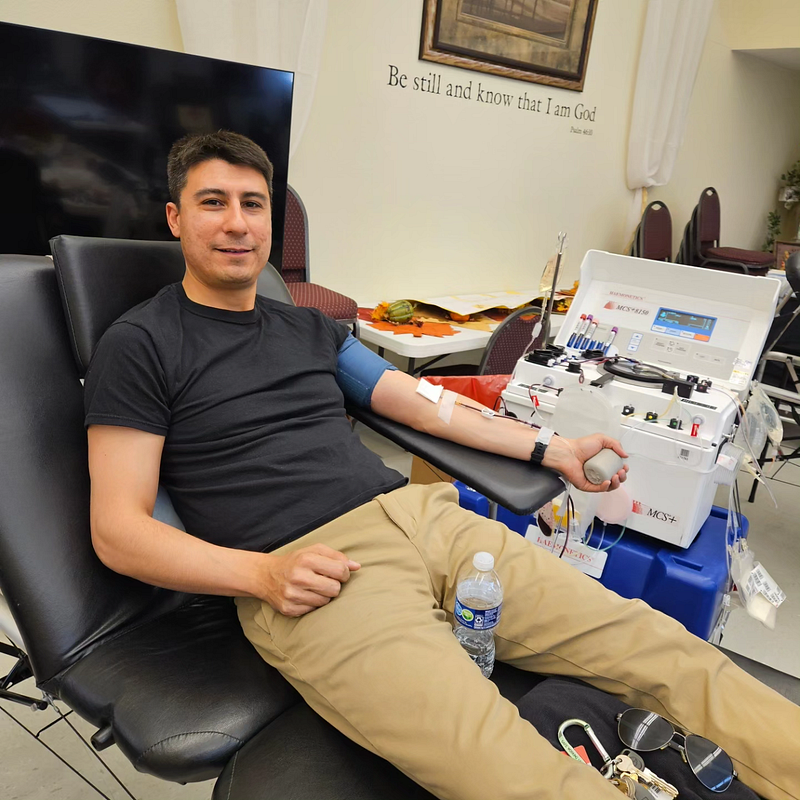
As I’ve written before, I’m a life-long Red Cross blood donor, first starting at age 17 during a blood drive in my high school.
Initially, I gave out of a desire to cure my needle-phobia (which worked, btw). But after seeing the kind of strong impact you can have on patients in need by donating blood, not to mention the positive effects I felt after giving, I started to donate regularly over the years.
Last Thursday, October 18th, was my 31st donation. Generally, I donate whole blood when I visit. During a whole blood donation, you give approximately a pint of blood. The process usually only takes about fifteen minutes. Whole blood of all types is vitally important for millions of people every year. My blood type is O+, which is the most common, according to the Red Cross. This allows my donations to help about 80% of the US population, as O+ is compatible with any positive blood types. But every kind of blood type is always needed.
In addition to donating whole blood, you can also give other blood products, like platelets and plasma. You’ve likely heard of places where you can sell your plasma for cash, or maybe even done so yourself.
You can also donate red blood cells, which are the most needed component in blood. In fact, you can donate double the amount of red cells as you would in a typical whole blood donation. The Red Cross calls this type of donation Power Red.
When I lived around Philadelphia, it was easy to set up regular appointments to donate whole blood. For a few years I went like clockwork almost every two months, as soon as I was eligible. But after moving to North Dakota in 2012, it became more difficult to schedule donations regularly. In fact, the Red Cross doesn’t even have blood drives in the state, but in Minnesota and Montana next door. This meant I not only had to drive quite a distance to each blood drive, but my days off from work had to align as well. As a result, I missed a lot of opportunities to donate due to blood drives and my schedule not lining up right.
However, while you’re eligible to give whole blood every two months (56 days), in a double red cell donation, you’re not eligible for double the time (112 days), while still being able to give the same amount of the most needed component in blood itself. This means fewer trips, which makes Power Red donations more suitable for busy working adults like myself, or for those who have to coordinate road trips to a Red Cross blood drive (also me). Three times a year is quite doable.
Up until last Thursday, I’d only been able to donate Power Red successfully twice, way back in 2013. I’d tried and failed twice since then due to either bad needle sticks, or my vein not cooperating, thereby ruining the chance to give. This put me off the whole process for a while. If I’m making a special trip and possibly taking time off work to give blood, you’re getting my blood and that’s all there is to it.
(I take this whole blood donation thing rather seriously.)
Double red cell donation is a little different than just giving whole blood. For one, the process takes about 30 minutes or so. It also involves using a blood centrifuge. This special machine separates the red blood cells from your blood, leaving the rest of your fluids in a bag. Then afterward it returns those fluids back into the same needle into your vein, along with some saline. The machine performs this twice, each time taking the amount of red blood cells that you would normally give in a whole blood donation.
I’ve posted a short video below I took while the machine was returning my fluids and saline back into my body:
So, what does it feel like? Well, it’s a strange sensation having parts of my blood returning to my body. Even though the saline is at room temperature, and mixing in with your warmer fluids, it still feels cold going back in. Remember, your body’s internal temperature is typically around 98.6 degrees Fahrenheit, so anything even a few degrees lower feels much colder. My lips began to tremble, or at least it felt like they did, while the fluids reentered. This is a reaction due to the brain thinking the body is short on calcium, as the nurse explained it to me.
The process is pretty quiet and smooth. And aside from the needle stick, basically painless. While the machine extracted my blood, I was given a ball to gently squeeze in my hand. On the screen there’s what looks like a little video game “health bar” that would indicate whether the “pump was primed.” A beep sounded if the machine needed me to squeeze the ball to help keep the blood flowing. Then, when the machine switched over to returning my red cell-less fluids, I just needed to relax my arm without squeezing anything.
Other than the coldness and the phantom lip trembling, double red cell feels the same as any other blood donation. Though there are some advantages over whole blood. For instance, I felt less diminished afterward. Usually it takes me a few days, even a week or so, to feel like my normal self again after whole blood. But because my blood “volume” so to speak didn’t change as much due to getting some of my fluids back, I felt normal again in only about two days afterward.
To be clear, in a double red cell donation, you’re still giving TWICE the red cells as you would in a whole blood one, so your body needs twice the time to replenish the red blood cells it lost. Even if you feel good, be sure to consume quality foods rich in iron so your body can recover, as they told me before I left. And of course drink plenty of water.
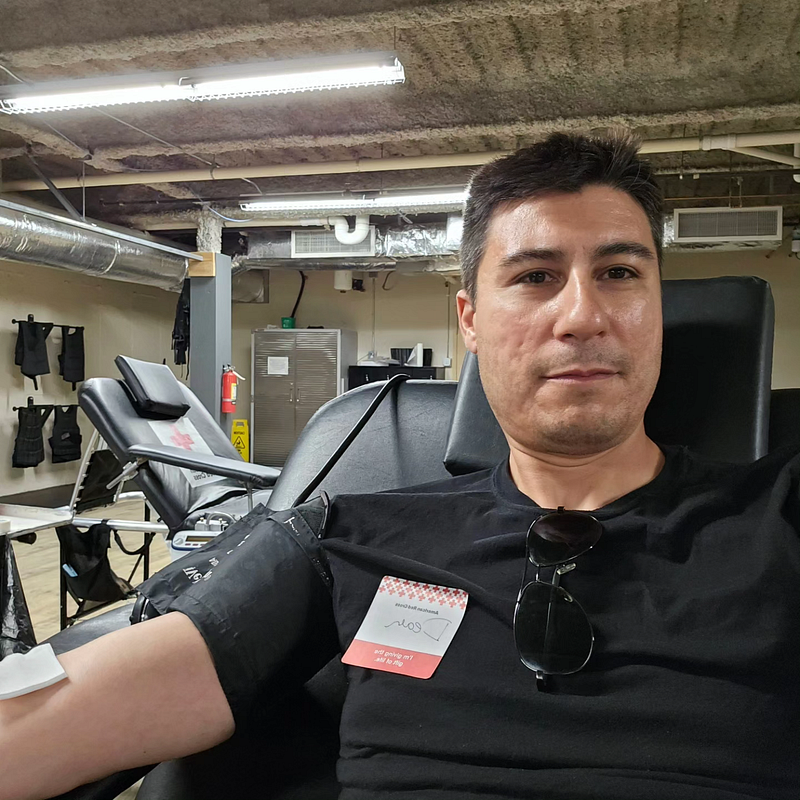
Another benefit is you’ll have fewer needle sticks over time. Like many long-term Red Cross donors, I’ve developed tiny little “battle scars” in the crook of my left arm. While these marks aren’t really noticable, the less time a vein is injected the better. I have a good vein, but it’s flatter than it appears, making it a tricky target to stick for even an experienced nurse or phlebotomist. Combined with my naturally low blood pressure, it can make donating double red cells a delicate operation. Perhaps this is why I had failed at it twice years ago.
When you combine the time efficiency advantages with the physical ones, making a double red cell donation is a pretty good deal overall. I think from now on I’ll try to stick to Power Red. I hope you’ll consider giving it a try, too. :)