What is happening in Yemen?
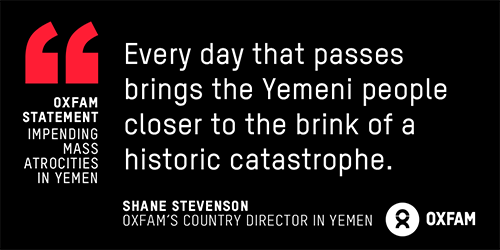
Before I had everything to eat, Now I have just one bite.
— The Guardian on Yemen
Ever wondered why Yemen made so many headlines for quite some time now? The recent incidents have proved that something is turning here. Here I have the answer in this 7 min read!
Here we are 3500 km away! We have Reached Aden!
Hello everyone! Welcome to my Blog. This is my 3rd political article.
Thanks for the overwhelming response and feedback you have given me last time. I have chosen this topic mainly for political and International enthusiasts. Sorry to disappoint my friends who asked me not to write politics :/.
Facts on Yemen
Yemen is a small country in the Middle East. Wait! Small?
It’s not small. It’s the poorest Arab country in the world. So How many Arab countries are there? 22, Wow that’s too much!
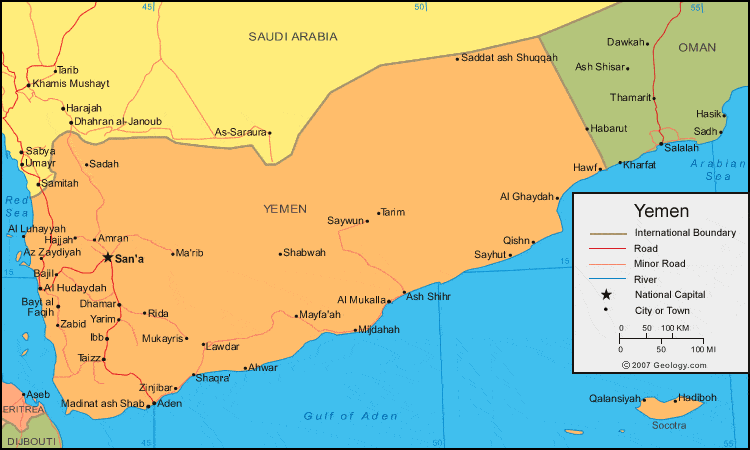
Yemen has 2 land neighbours- Saudi Arabia and Oman. Yemen is now fighting its worst ever civil war since 2015. What is civil war? It’s the war happening within the country generally between government and rebels.
History and the Conflict
Yemen became independent in 1918 after the breakup of Ottoman Empire by the Triple Entente. The British then divided the empire into several small states like Jordan, Palestine, Syria, Turkey, Iraq etc. Yemen also had a lot of territorial disputes with neighbouring Saudi Arabia on the cities of Najran and Jizan, which today is under Saudi control.
After the World war, the Northern Half of Yemen became an Islamic state under Imam Yahya’s rule while Southern half was under British rule. North Yemen was more prosper than the South. In 1948, Yahya was assassinated but his son Ahmed triumphed his opponents and grabbed power.
In 1962, Imam Ahmed dies and Army seizes power giving rise to the Yemen Arab Republic. Egypt backed by the Soviet Union tried to invade Yemen against The army by using proxies named Republicans and in order to stop this, Saudi Arabia tried to fight back by raising Shia militias arming them as Royalists.
In 1967, the British declared the independence of South Yemen and hence in a communist coup, South Yemen was named as People’s Democratic Republic of Yemen. It also self-declared itself as a communist state. In 1970, Egypt due it’s territorial disputes with Israel withdrew from Yemen, despite this Republicans claimed victory.
The situation of South began to deteriorate and suddenly a lot of uprising took place between the North and the South. Thanks to Arab league, a ceasefire was brokered.
In 1978, Ali Abdullah Saleh, President of North Yemen. The power struggle began for reunification, and in 1990 agreed for the reunification of both Yemen. (As Soviet bloc implodes) He later on, became the President of united Yemen. Yemen saw a lot of clashes with its sea neighbour Eritrea.
In 2000, Al Qaeda of Yemen damages USS Cole battleship, in a suicide attack. Ever since, Yemen had a tough time cracking on Islamist groups and Al Qaeda.
2004 saw the rise of Hassan Al Houthi revolting against the govt. He led the Zaydi men or Royalists, which came to be known as Houthi uprising/insurgency after his death. Saleh regime was marked by a lot of corruption and mistrust amongst the people. Houthi was captured and killed by the Yemeni forces, along with some of his followers for revolting against the Govt.
Saleh, later on, made his deputy, Abdurrah Mansour Hadi the President and resigned. That was not enough to subside the issue, as Hadi tried to make Yemen into a federation to accommodate the Houthis, which was widely opposed. The Houthis then forced Hadi to leave the Capital of Sanaa and he fled to Aden. Then he was exiled off to Saudi Arabia asking for International help. Houthis made drastic territorial capture in 2014.
After the Draft of Iran Nuclear deal by P5+1, Situation began to worsen as Saudi rejects the deal calls Iran an unreliable partner and cannot be trusted.
Saudi Arabia knowing that Houthis received Moral support of Iran, found the excuse to enter the war in Yemen in 2015. Saudi later took the help of neighbouring Arab states like UAE, Bahrain, and Qatar forming an international coalition. This coalition had the backing of all Western nations.
Within days, Saudi backed fighters and Emirati backed fighters drove Houthis out of City of Aden and Hadi was installed back as the President.
Later, the coalition imposed a land, sea and air blockade which means that all goods coming from other countries including food and medicine supplies will be blocked from entering the country. They justified saying that Iran was supplying missiles by sea to rebels, which it strongly denies.
Saleh took the backstage and decided to fight alongside to help Houthis against the Yemeni Army but he, later on, proposed to settle the issue with Saudi Arabia, which in turn angered the Houthis leading to his murder by the rebels.
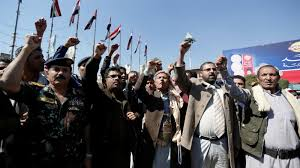
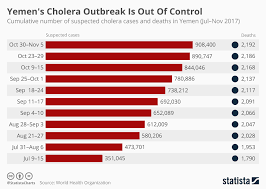
In 2016, a massive cholera outbreak took place. All hospitals were full. They ran out of food and medicines. The hospitals were severely damaged in Coalition airstrikes and bombings. UN claims this to be the worst humanitarian crisis in the World.
Al Qaeda saw a golden opportunity in this chaos to make gains especially on Yemen’s border with Oman. Al Qaeda is still having Tough time with Emirati fighters.
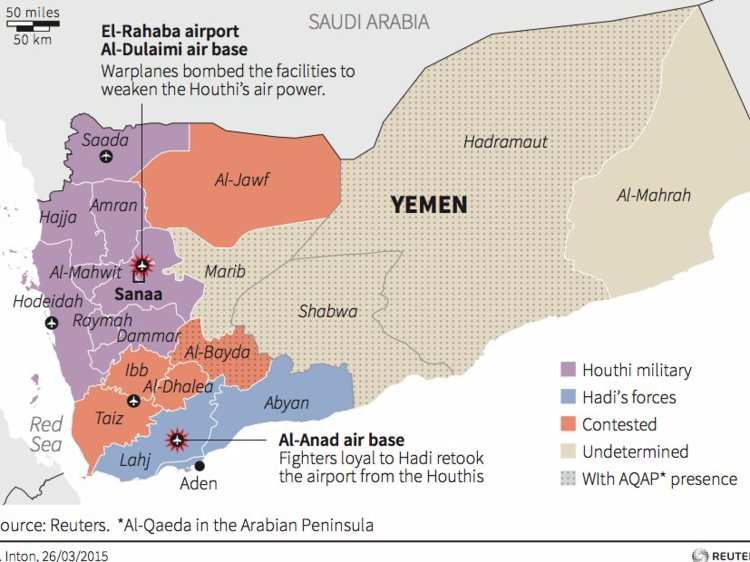
In 2018, Saudi led coalition started the campaign to capture the port city of Hodeidah, the only port through which International aid comes in. This move caught international attention and UN interfered in order to stop the fight. Houthis still dominate the fight. They still control the capital city of Sanaa and large parts of Hodeidah.
2019 saw the big blow to the Yemen army and the Saudi led coalition as a Houthi drone kills the commander of Yemeni army in a military parade held in Aden.
The international pressure on coalition still remains as they committed a lot of war crimes by bombing civilian areas, raiding schools, hospitals, weddings, etc. The US’s diplomatic rift with Saudis over Khashoggi murder still continues. The Democrats are asking the US to abandon its billion-dollar arms deal with Saudi.
Yet no one is there to talk about sufferings of the people of Yemen. Every party are just concerned about their powers, their welfare and diplomacy.
In the recent Headlines
The Saudi led coalition has lost all hopes to win the war. The cracks are now more evident, with UAE now comprising with southern rebels withdrawing. There has been several missile and drone attacks, which were directly aimed at Saudi military assets deep inside the Saudi Territory.
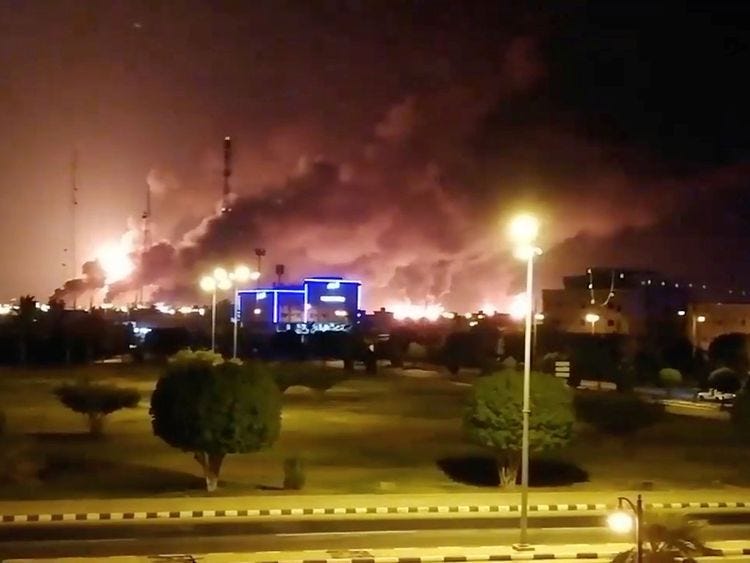
On 14th September 2019, 10 drones hit the world’s largest Petroleum Stabilisation plant in Dammam, located on the eastern coast which is owned by the largest public company in the world- Saudi ARAMCO. The region is known for its vast oil reserves, which are located in the Shia Major regions of Saudi Arabia. Given the fact that Shias are minority in Saudi Arabia, while major oil wells are located in this region. The Kingdom has been handling this situation with care, as not to hurt the Shia minority, which has often been ignited by the Shia major Iran. Handling this crisis will truly be a bigger challenge as the self-proclaimed head of the Islamic World is losing its grip on its own population as well as its own leverage in the region. It is more ironic of the fact of how the Richest Arab country has lost to the Poorest Arab Country.
Now it is more clear that the war is in stalemate and Saudi can’t even gain a bit. This is more similar to the war in Afghanistan, where the US is trying to cover up its loss with a peace deal.
Refugees and Civilians
The poorest Arab country is now facing a big catastrophe. The poverty rates after the war have begun has skyrocketed. The Blockade imposed by the Arab League is plaguing the food and aid supplies. Despite this UN is trying it’s best to make sure there is enough food for everyone.
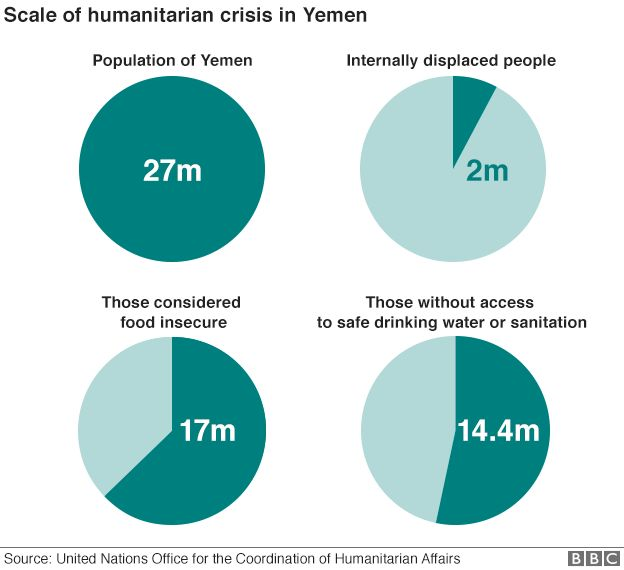
The bigger problem for civilians is that they are being used as human shields and being bombed by airstrikes as well. Human rights violations are termed worse than that of the Syrian Civil War. In east and south, Al Qaeda is gaining.
Oman and Saudi have strict border crossing thus refugees cannot cross it without valid documents.
Analysis
Compared to the Syrian Civil War, the situation in Yemen is much simpler. Although the situation of Yemen has been similar ever since the Arab Spring in 2011, which is common to both cases.
Both the cases are now becoming a spot for Saudi Iran proxy war. Although Iran strongly denies it’s support for Houthis. The Coalition till date has not been able to prove that Iran is supplying arms to Houthi rebels.
US Senate and Congress been critical of giving arms support to Gulf nations which are in turn being used to bomb civilian areas. In the 2017 blockade of Qatar, the situation worsened as Qatar formally was forced to sever its ties with Arab neighbours thus Qatar withdrew from Arab coalition. The US also doesn’t like a coalition without Qatar.
UN has requested all parties to sit together and talk and bring in a peaceful solution. By December 2018 ceasefire was forced where the Houthis and Yemen will redeploy their forces. In January the new set of talks began in Jordan, over the future of the annexation of Hodeidah and the adjoining fights.
It is very important to understand here that, only Houthi Rebels and the Hadi Govt is being talked about every time. No one cares about Human Rights violations and Civilians. They are not being made part of the Negotiations. It’s also important to ask the people on whose side they stand and who will take this country forward.
Only when the ordinary people are made part of decision making and peace process gives it the true effect of it. Until then Global Peace and Security is just miles away.
I thank BBC, Al Jazeera and Reuters for content and Google images for pictures, without which I would have never have completed my blog.
Thanks for taking the time to read this. If there is any factual inaccuracy you inform me. This is still my most researched topic, still, there is a lot to learn about Yemen. This article is just the tip of the iceberg. Go to above-mentioned websites to learn more if you are interested.
.
.
.
If you are liking my blogs and in search of useful content keep following me. You can drop in your feedback either in the comments sections or reach out to me on Social Media- FB Messenger| Instagram|Quora|YKA or drop your input in this link. For my old posts, feel free to scroll down my profile page. Thank you! for continuing to support me. A new article is published every two weeks. So stay tuned….