
What is Frugality, and Why you should use it in Your Startup
What is frugality and why is it so important? This article will talk about the value of Amazon that most impressed me.
First, I discovered this value for the first time just a few months ago. I need to be honest! And I found it thanks to my co-founder at recapiogpt.com, Marc-Etienne.
But what does it mean Frugality?
In one short sentence: do more with less.
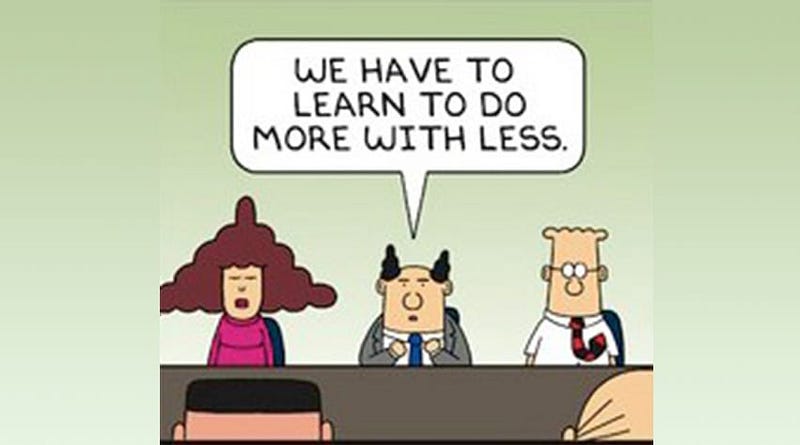
… But the meaning is deeper and more meaningful. Frugality is one of the leadership values of Amazon. This is the page where you can check those values.
Taking as a reference the definition of Amazon, we can then say what frugality is:
Accomplish more with less. Constraints breed resourcefulness, self-sufficiency, and invention. There are no extra points for growing headcount, budget size, or fixed expense.
So the basis is to do more, having less. Each of us can give the meaning that best believes in these words, but that certainly does not mean “save” at the cost of having lower quality.
But I would translate it more like: be efficient.
Being efficient nowadays has become more and more complex, mainly because of the strong competition in any market. To emerge you have to sweat a lot, and find that point of difference so subtle to leverage your users.
We can apply the value of frugality in any area of any company: - Sales, thus acquiring more users by spending less. More efficiency in the acquisition process. - Customer service, so maybe automate some processes of customer relationship so as to devote more “qualitative” time to the end user, only when necessary - Product development, therefore not to develop features that nobody wants, but rather to develop only those required by users themselves - And much more
Where do we apply this value?
I discovered the value thanks to Marc-Etienne, so we always apply it to our startup recapiogpt.com.
How? Here are some examples that you can replicate in your startup!
- Product Features: I learned that you should never develop something you don’t know users are going to use it. That’s so true. How can you accomplish more with less? Then, how can you develop something you’re almost sure 100% of people are going to use it? By having a public roadmap, where users can put their ideas and product features. We’ve it, and it’s here: https://recapiogpt.canny.io/. The last 4 features we developed were always been suggested by the users.
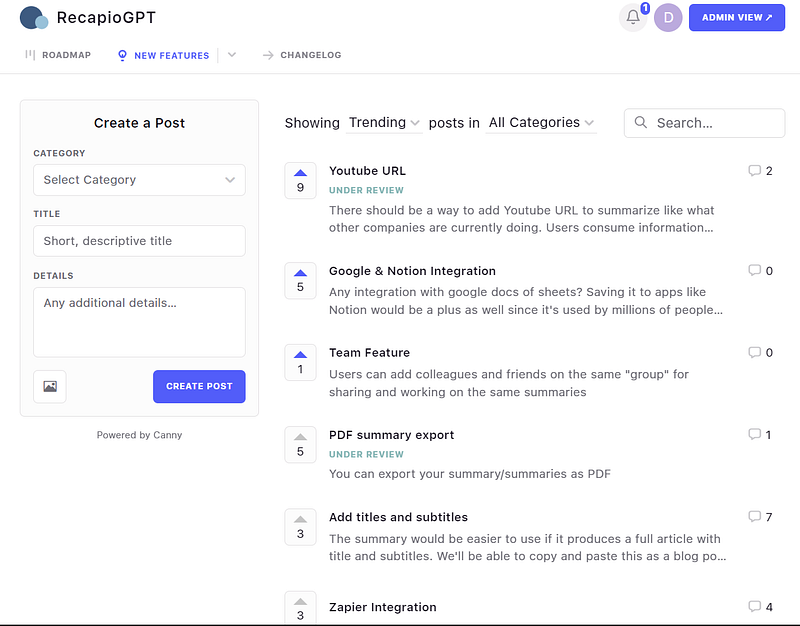
- Economics: well, first of all, I’m a huge fan of spending less for achieving more (but I’m not a tremendous saver). Our economics are proof that you can really reach a lot, by spending less. For example, we validated the first idea of recapiogpt just using a no-code tool (Bubble, free version). And today, we have a cost/revenue impact of about 2%. That’s so low. My tip here is this one: always try to ask yourself if this is the best way for getting more, spending less. If not, you always have another solution that maybe can bring the same results.
- Meet: we don’t have meets. Just 1 every 2 weeks, for a duration of 20–45mns more or less. I agree with people that say “meets are a waste of time”. And that’s true. They are a waste of time for how they are conceived today: so no preparation before the meeting, and talk for hours without arriving at any final conclusion. We exchange messages and ideas about Slack, and therefore avoid many hours of unnecessary meet.
I know there are a lot of ways where you can see the frugality value applied. I’m also curious to know where are you trying to apply this value.
Contact info — you can write to me here
Personal Twitter Profile: https://twitter.com/DG_9_6
Omega Studio Profile: https://twitter.com/theomegastudio