
We All Refer to Childhood Conditioning: Here are the 3 Ingredients of Our Programming.
Our childhood conditioning has 3 components.
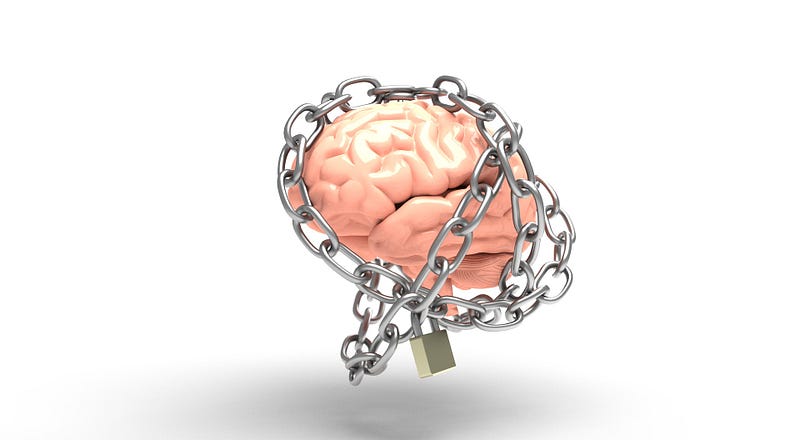
I dreaded high school gym class.
We had a mean teacher who was big on conditioning training every Friday.
As we ran the mile, and did endless push-ups, sit-ups, burpees, and weight training, she informed us that we were conditioning our bodies for more strength, agility, and stamina.
And maybe some knee, back, hip, and joint problems a few decades later.
While conditioning training is more obvious on a physical level, our mental, social, emotional, and psychological conditioning begins in the womb.
Epigenetics is the study of how our genes are “expressed,” which is determined in part by our environment and our experiences.
Research has shown that trauma in animals can be passed down for 14 generations. In humans, studies have found that past events, experiences, and trauma can change the way our genes are expressed, affecting everything from physical health to how someone handles stress. Some of these traumas have been traced back to the time of the American Civil War.
From birth through age 7, our brain is operating in a different, slower frequency.
During this time in our development, the brain is in Delta (0–4 cycles per second) and Theta (4–8 cycles per second) frequencies — the same frequencies when we are in deep REM sleep or under hypnosis.
Everything that happens during these years is taken in by the subconscious mind and leaves deep impressions. This is why children absorb information so well, quickly, and easily.
Around 8 years of age, the frequencies increase to Beta brainwaves, which operate at 8–12 cycles per second. This is when our analytical, critical, and conscious thinking come into play and start to develop — overlaid on top of anything that was learned by the subconscious mind from 0–7 years old — including any trauma.
Childhood conditioning truly begins in the womb. Babies can hear and sense energy while in gestation. If a mother has a lot of outward stress, discomfort, or an environment that is not peaceful, this information gets transferred to the growing baby. Their sensory world will be affected by what is around them.
Understanding the elements of our childhood conditioning can help us dissect our own. We can open up and question why we do, believe, behave and exist the way we do. We can get underneath and purge anything that is not truly ours and is not resonate with the life and mindset we want.
The 3 Elements that Makeup Conditioning:
1. Education — What we’ve been taught
(noun) The process of receiving or giving systematic instruction, especially at a school or university.
In some form or another, people receive education daily. You do not have to be sitting in a classroom to study, observe or ingest information, instruction, or a belief system.
For traditional education, a collective outside of us chooses what will be taught and how. Our lens starts to form on what the rules are, what is shameful and what is celebrated, and what is considered to be right vs. wrong. Keep in mind that all of that is being determined by a set of people who already have deep biases, opinions, and conditioning of their own.
Everything truly is a continuum. Parents pass down their favorite sports team or recipes to their kids; each society passes down its history, traditions, rituals, and belief systems to the next; each generation acquires some of its identity from the one before.
As individuals and as a collective, we are an amalgamation of everyone and everything that came before us. We now get to decide what is truly resonant to take with us going forward.
2. Observation — What we’ve seen people do from peers, siblings, society, and family
(noun) The action or process of observing something or someone carefully or in order to gain information; a judgment on or inference from what one has observed.
The biggest element of observation is the environment (where am I and who is around me?) and atmosphere.
What were our surroundings when our subconscious mind was being formed?
What was the energy or vibe?
What did people talk about/worry about/celebrate or shame?
Was it peaceful or stressful?
Were there religious or spiritual beliefs? What were they?
What was considered moral, just, or fair?
As well as receiving specific instruction on something, a huge way we learn is by observing others. As children, we mimic what those around us do — both physically and emotionally. This becomes our entire universe and what we base the rest of our behavior on.
Whatever we observed is most likely what we still do, without question or examination. It has become like second nature to think, act, process and interact in the way we have been shown by others.
As tribal people, humans copy one another. On the one hand, this creates a sense of community and connection; on the other hand, it can feel incredibly limiting and even paralyzing.
Observing what we observed is a powerful practice to change any behaviors or patterns that we do not like or are no longer serving us.
3. Experience — Shaped by education and observation
(noun) Practical contact with and observation of facts or events.
How we experience or perceive our experiences is largely shaped by our education and observation.
If our parents held or expressed stress about money, regardless of whether they possessed a lot of it or not, it will shape how we interact with money. If someone we grew up with hides their feelings when an uncomfortable moment happens, we learn that that is the way to deal with our feelings when we interact with others.
When we are young, we have no other standard than what other people around us are doing and saying.
Our eyes are seeing the physical world, but our perception is what’s driving the boat. If we were given a pair of glasses with red lenses in them at birth, our perception would be that the world is always some shade of red, regardless of what we are looking at.
It’s the same with beliefs — which came to us through education and observation.
Change the lens, change your life.
Our experiences tend to reinforce our education or observations, mainly because this is the lens we are looking through as we go through life.
This is why two people can be in the same conversation or situation but come away from it with totally different perceptions of what happened or what was said. We will hone in on certain aspects of our experiences based on our belief system or viewpoint — which all came from education and observation of others.
When we understand the lens we are looking through, we can change the things we picked up along the way that we no longer want.
All of us deal with deep conditioning every single day.
Understanding where this comes from and how we have been trained to look at the world is the first step to liberation.
Instead of chastising ourselves, we can begin to ask helpful questions that improve our experiences and our state of being.
We get to know ourselves on a deeper level so we can create a new pathway to feeling more joy, contentment, and peace.
My NEW 60-Day Manifestation Journal is now on sale! Yay!


