
What is ChatGPT?
Introduction: Understanding the AI Revolution with ChatGPT
In this article, we’ll explore ‘What is ChatGPT,’ an AI phenomenon changing digital communication and examine some of the best chat GPT apps harnessing its capabilities.
In the ever-evolving landscape of technology, one innovation stands out for its remarkable impact on how we interact with machines: ChatGPT. Developed by OpenAI, this advanced artificial intelligence language model has not only transformed our approach to digital communication but also led to the creation of various applications that are now considered among the best in the field.
These apps, built on sophisticated algorithms and vast data sets, offer a glimpse into the future of AI and its potential to revolutionize various sectors.
This article delves into the world of ChatGPT, exploring its development, functionality, and the myriad ways it’s reshaping our digital experience through these groundbreaking applications.
Table Of Contents.
∘ Introduction: Understanding the AI Revolution with ChatGPT · Evolution of ChatGPT · Comparative Analysis of ChatGPT Versions · ChatGPT Performance on Standard Benchmarks ∘ Exploring ‘What is ChatGPT’: Development and Background ∘ Understanding ‘What is ChatGPT’: How It Operates ∘ Applications of ChatGPT ∘ Benefits and Limitations of ChatGPT · Pros and Cons of ChatGPT ∘ Ethical Considerations of ChatGPT ∘ Future Prospects of ChatGPT · ChatGPT User Case Studies ∘ Real-World Applications of ChatGPT: Transforming Industries and Enhancing Experiences · FAQs About ChatGPT ∘ Conclusion: Embracing the AI Era with ChatGPT
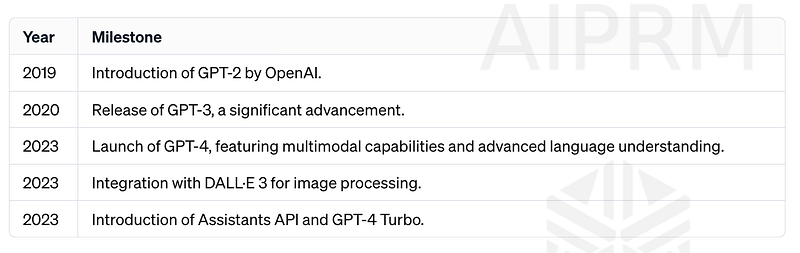
Evolution of ChatGPT
Comparative Analysis of ChatGPT Versions
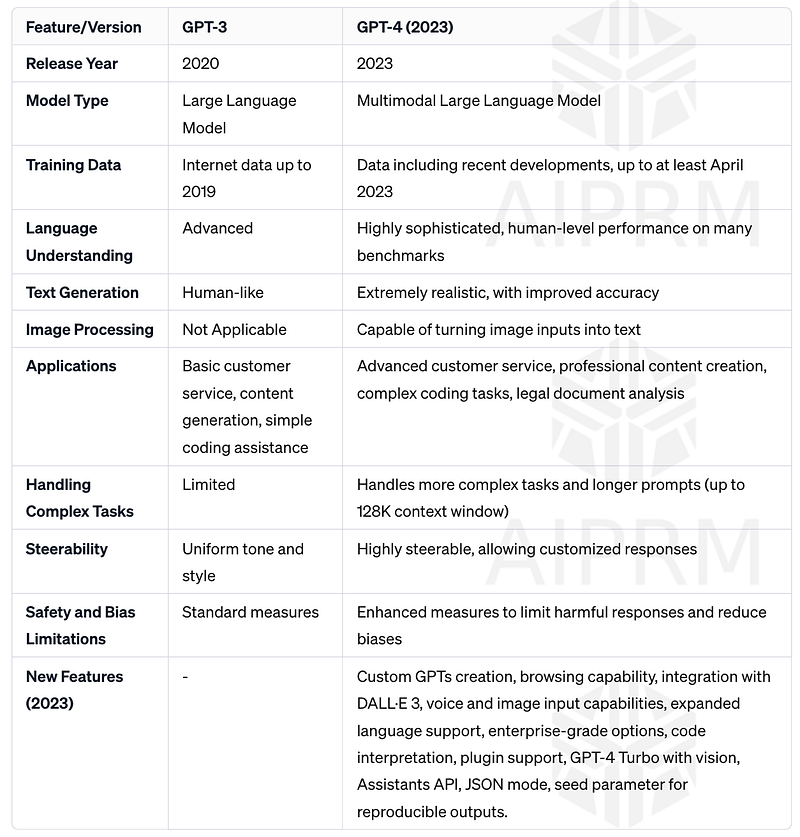
This table showcases the advancements in GPT-4 over GPT-3, highlighting its multimodal capabilities, improved performance metrics, and the introduction of new features in 2023, such as custom GPT versions, advanced browsing features, integration with DALL·E 3 for image responses, voice and image input capabilities, and expanded language support. These enhancements not only demonstrate the technological progression but also the expanding practical applications of ChatGPT in various domains.
ChatGPT Performance on Standard Benchmarks
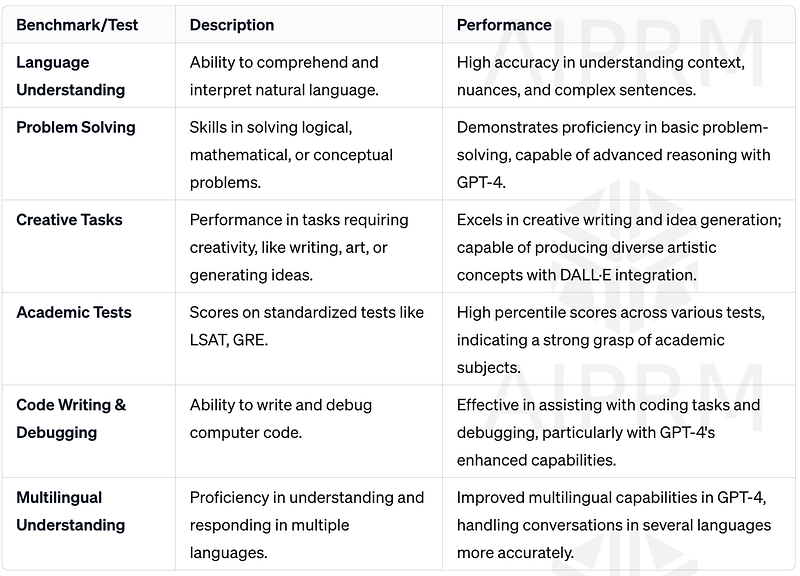
This table provides an overview of how ChatGPT performs in various standard benchmarks, illustrating its capabilities in language understanding, problem-solving, creativity, academic testing, coding, and multilingual communication. This can give readers a clear understanding of the practical effectiveness of ChatGPT in diverse areas.
Exploring ‘What is ChatGPT’: Development and Background
When exploring what is ChatGPT, it’s crucial to start from its origins. This innovative AI model, developed by OpenAI.
The genesis of ChatGPT lies within OpenAI’s ambitious endeavor to advance AI technology. Emerging from a lineage of groundbreaking models, ChatGPT is the latest in a series that includes GPT-3 and the more advanced GPT-4.
Each iteration has marked a leap forward in AI’s ability to process and generate human-like text, making interactions increasingly seamless and intuitive.
These models have been trained on diverse internet text, enabling them to respond accurately to a wide range of queries and prompts.
The evolution of ChatGPT is not just a technical milestone but a testament to the potential and adaptability of AI in the modern world.
Understanding ‘What is ChatGPT’: How It Operates
Addressing what is ChatGPT’ leads us to its core functionality, where advanced machine learning techniques empower it to understand and generate human-like text.
At its core, ChatGPT operates on principles of machine learning and natural language processing.
It has been trained on a vast corpus of text data, allowing it to understand and generate responses in natural language.
The model uses patterns it has learned from this data to construct replies that are contextually relevant and often indistinguishable from those a human might produce.
This process involves complex algorithms that analyze the structure and meaning of text, enabling ChatGPT to engage in conversations, answer questions, and even create content that resonates with human readers.
Applications of ChatGPT
ChatGPT’s versatility makes it a valuable asset across numerous fields. In customer service, it powers chatbots that provide instant, accurate responses to customer inquiries.
Content creators leverage it for generating ideas and drafting articles.
Its proficiency in understanding and generating code is a boon for developers seeking assistance in coding challenges.
In education, ChatGPT serves as a tool for tutoring and creating learning materials.
These applications merely scratch the surface of its potential, showcasing how ChatGPT is not just a technological marvel but a practical tool transforming various industry practices.
Benefits and Limitations of ChatGPT
Benefits:
- Advanced Interaction: ChatGPT’s ability to understand and generate human-like responses has set a new standard for AI communication.
- Considering ‘What is ChatGPT’, it’s essential to balance the discussion by highlighting its remarkable efficiency as well as the challenges like data biases.
- Versatility: Its applications span various industries, from education to software development, showcasing its adaptability.
- Efficiency: Automating tasks with ChatGPT saves time and resources, particularly in customer service and content creation.
Limitations:
- Data Bias: Being trained on internet data, ChatGPT can sometimes reflect biases present in its training material.
- Contextual Limitations: While advanced, it may not always grasp the nuances of complex queries or contexts.
To learn more about the development of AI and overcoming these limitations, consider reading [relevant article or blog post on your website].
Pros and Cons of ChatGPT
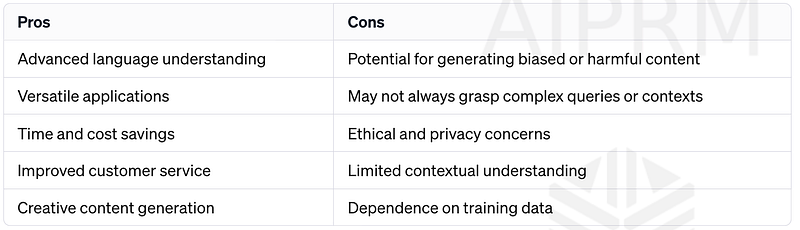
This table provides a balanced view of the advantages and limitations of utilizing ChatGPT. It helps readers understand both the benefits and challenges associated with implementing ChatGPT in various applications.
Ethical Considerations of ChatGPT
The rise of AI like ChatGPT raises important ethical questions. Privacy concerns emerge regarding the data used for training these models.
There’s also the risk of misuse for generating misleading information or deepfakes. It’s crucial for developers and users to address these issues, promoting transparent and responsible AI use.
Initiatives towards AI ethics, such as guidelines for equitable and unbiased AI, are steps towards mitigating these concerns.
Future Prospects of ChatGPT
The potential of ChatGPT and similar AI models is vast and continually evolving. Future developments may see even more sophisticated language understanding and generation capabilities.
Potential advancements include improved context understanding, reduced biases, and enhanced interaction that’s even more indistinguishable from human communication.
The integration of AI like ChatGPT in more industries, such as healthcare for patient communication and legal for document analysis, is also anticipated. These advancements hold the promise of not only streamlining processes but also unlocking new possibilities in AI-human interaction.
ChatGPT User Case Studies
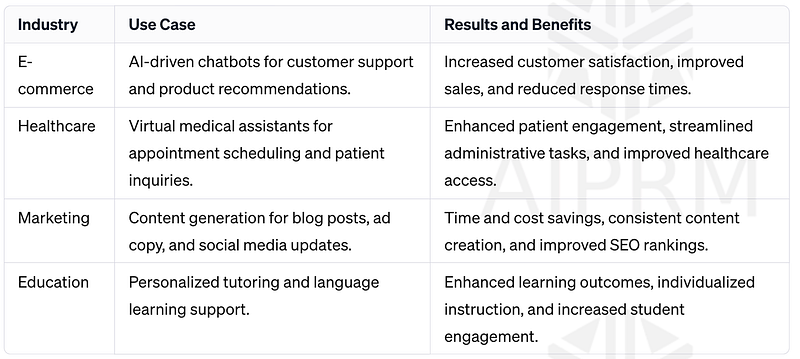
This table presents real-world case studies of ChatGPT implementations in various industries, showcasing the diverse applications and the positive outcomes achieved. It demonstrates how ChatGPT has been instrumental in improving customer support, healthcare services, marketing efforts, and education.
Real-World Applications of ChatGPT: Transforming Industries and Enhancing Experiences
- Customer Service Automation:
- Example: A telecom company uses ChatGPT-powered chatbots to handle customer queries. Customers interact with these chatbots to solve common issues like billing inquiries, plan changes, or technical support. This has reduced wait times and improved customer satisfaction.
2. Educational Tutoring:
- A high school in California integrates ChatGPT into their educational tools, providing students with an AI tutor for homework help. The AI helps students with subjects like mathematics and science, offering explanations and guiding them through complex problems.
3. Content Creation:
- A digital marketing agency employs ChatGPT to generate initial drafts for blog posts and social media content. This streamlines their creative process, allowing writers to focus on refining and personalizing the content.
4. Programming Assistance:
- A software development firm uses ChatGPT to assist junior developers in code debugging and problem-solving. The AI provides suggestions and explanations, helping them understand complex code structures more efficiently.
5. Language Translation and Learning:
- An online language learning platform integrates ChatGPT to offer conversational practice to its users. It simulates real-life scenarios, helping learners practice different languages in a controlled, yet realistic environment.
6. Healthcare Support:
- A healthcare provider uses a ChatGPT-based system to offer preliminary medical advice. Patients describe their symptoms, and the AI provides general advice or recommends if a doctor’s visit is necessary.
FAQs About ChatGPT
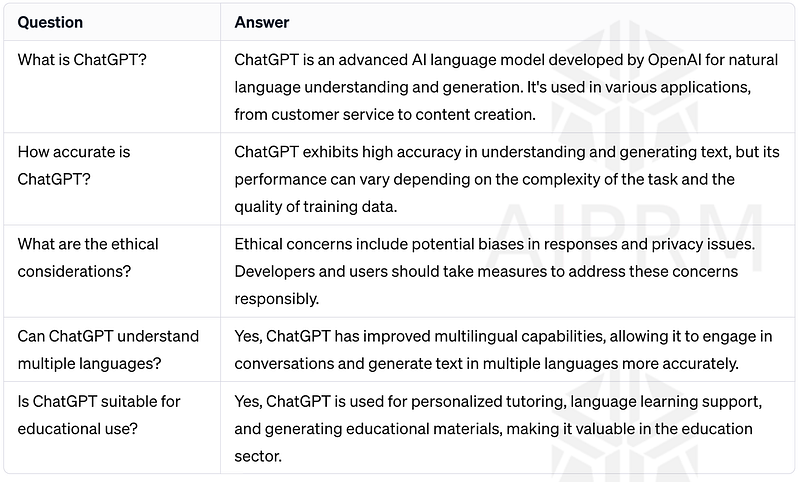
This table presents common questions and concise answers regarding ChatGPT, making it easier for readers to find quick information and understand key aspects of the AI model.
Conclusion: Embracing the AI Era with ChatGPT
ChatGPT represents a significant leap in the field of artificial intelligence, blending the lines between human and machine intelligence.
As we’ve explored, its applications are diverse and its potential for future growth immense. While it brings with it a set of challenges and ethical considerations, the advancements in AI like ChatGPT open new horizons for innovation and efficiency.
As we continue to navigate this AI era, understanding and leveraging tools like ChatGPT will be crucial in shaping a future where technology and humanity coexist in harmony.
Now that we’ve answered the question, ‘What is ChatGPT’, we can see its impact on the future of AI.
Are you curious about how AI might impact your field? Share your thoughts in the comments or explore [related topic] on our blog.
Resources:
- Science in the News — Harvard University:
- Article: “The Making of ChatGPT: From Data to Dialogue”
- URL: The Making of ChatGPT
- This article provides a comprehensive look at the development and capabilities of ChatGPT, making it a valuable resource for readers wanting to understand the technical aspects of the AI model.
2. University of Maryland Global Campus Library:
- Article: “ChatGPT — Artificial Intelligence”
- URL: ChatGPT — Artificial Intelligence
- This source offers insights into the ethical and responsible use of ChatGPT, which is particularly relevant for the sections of your blog post discussing ethical considerations.
3. Columbia University — Journal of International Affairs:
- Article: “OpenAI’s ChatGPT and the Prospect of Limitless Information”
- URL: OpenAI’s ChatGPT and the Prospect of Limitless Information
- This article explores the broader implications of ChatGPT in the context of information access and AI’s role in society.
4. IE University:
- Article: “Unpacking ChatGPT: The Pros and Cons of AI’s Hottest Language Model”
- URL: Unpacking ChatGPT
- This resource delves into the strengths and weaknesses of ChatGPT, which complements your blog section on the benefits and limitations of the AI model.
5. MIT Sloan School of Management:
- Article: “Timely Insights & Use Cases for OpenAI in the Classroom: DALL·E Imagery”
- URL: Timely Insights & Use Cases for OpenAI
- This source discusses the educational applications of OpenAI’s technologies, including ChatGPT, which could be useful for your section on ChatGPT’s applications.