
Education | Nature
What is Australia’s Most Astonishing Feral Animal?
Hint: It’s not native to Australia
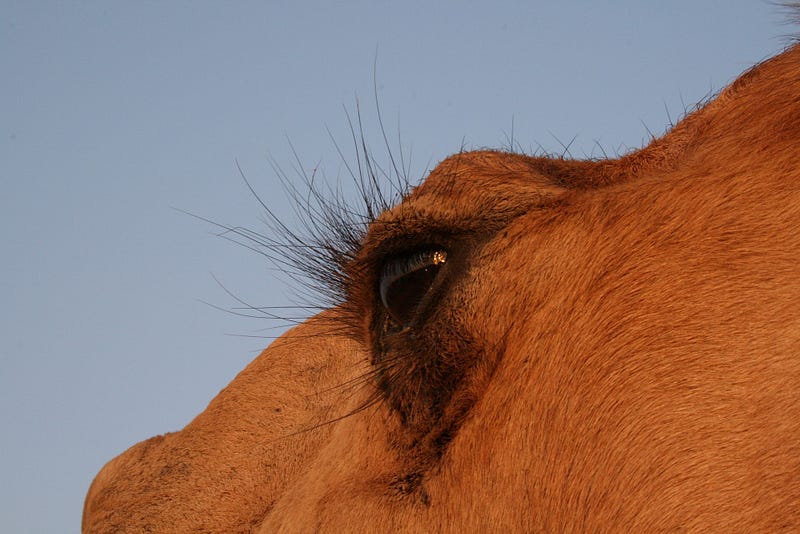
When you think about animals that live in the wild in Australia, you’ll likely think of kangaroos, koalas and the odd venomous snake. But, did you know that Australia has the largest number of wild camels in the world?
It’s true!
Currently, there are around 300–600 thousand feral camels in Australia and their population doubles approximately every 10 years.
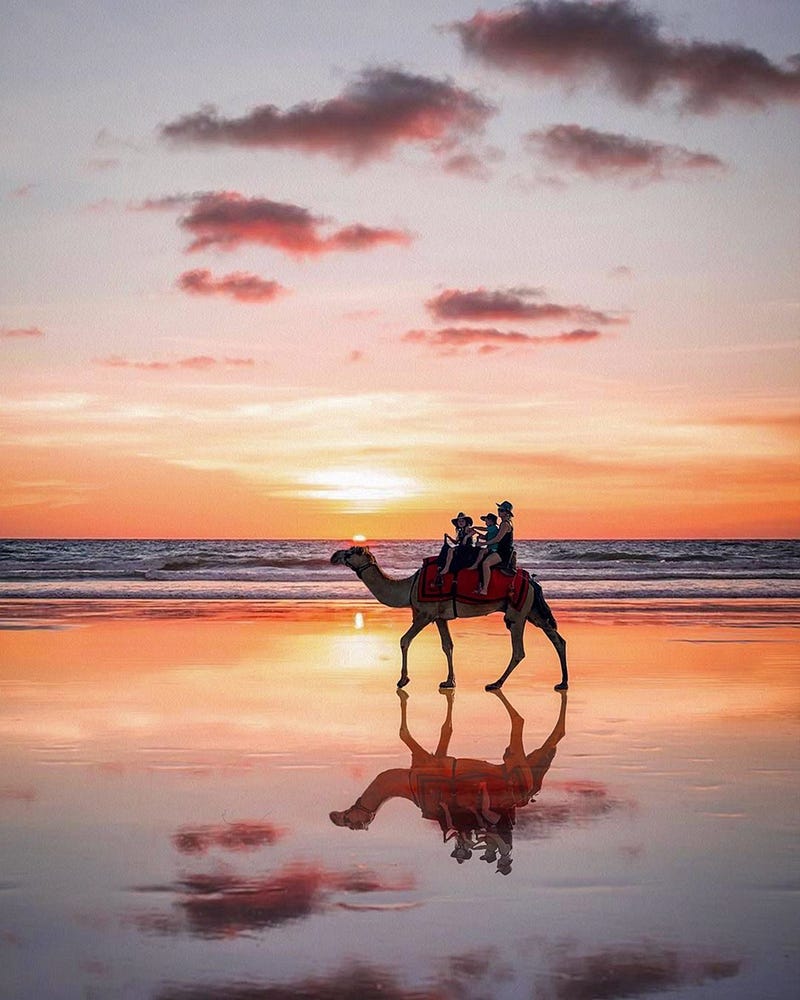
History
Camels were first brought to Australia in the 1840s when English explorers wanted to search inland. Camels were the most suitable animal to use at the time because they can survive over a week without any water and over a month without any food. Approximately 70% of Australia is arid and central Australia has extremely harsh conditions in summer, so donkeys and horses wouldn’t survive as long for the explorers.
As many as 20,000 camels were brought over at the turn of the century to assist settlers in developing roads, houses and other infrastructure. According to the book, Australia’s Muslim cameleers: pioneers of inland, 1860s-1930s, camels became an“integral part of the exploration and transportation systems” in Australia. Actually, we have the Muslim cameleers to thank for many of the towns and for the Ghan railway that still exist here today.
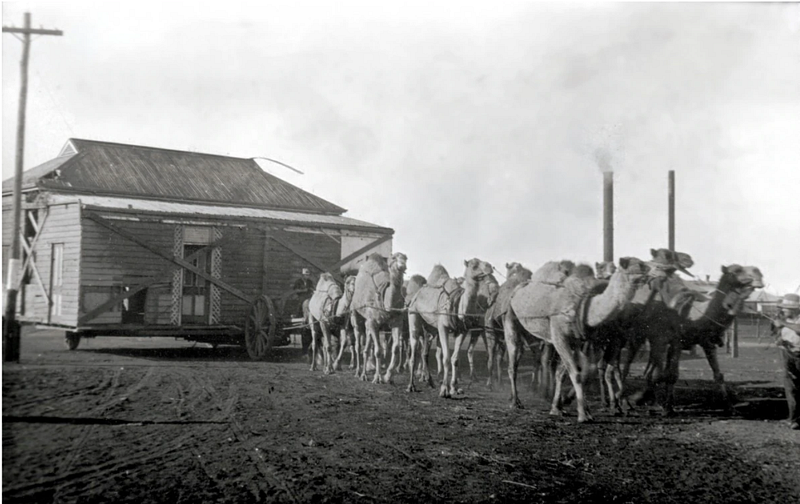
The 1930s saw the introduction of motorised transportation, making the camel industry redundant. Although some of the camels were killed, most were simply released into the wild because there was very little awareness of ecosystems and the natural, Australian environment.
The camels that were released thrived and continued to breed and multiply, giving us the numbers we have here today.
The problem
The camel population in Australia is now a considerable problem for the economy, environment and society.
Australia has an expansive farm life and the economy relies quite heavily on agriculture for export. The wild camels actually compete with the livestock for water and food. They also cause damage to farms themselves by trampling fences, causing livestock to escape.
In addition, camels compete for food and water with the native animals of Australia and eat and destroy native plants. In Central Australia alone, camels consume over 80% of available plants.
Finally, and arguably most importantly, feral camels are destroying the sacred sites and ancient artefacts of the oldest living civilisation in the world. The Aboriginal Peoples in Australia have artworks on a variety of sacred sites that are tens of thousands of years old. It is vital that their heritage is preserved, but camels remain a constant threat.
Simply put, camels are not native to Australia so they don’t live in harmony with the local people, plants and animals.
Is there a solution?
At this stage, there is no positive solution. The Australian government considers feral camels a pest and, sadly, they cull thousands of camels every year. Unfortunately, they don’t have too many options because it is not cost-effective or even possible to find them all and bring them elsewhere, and the current population of camels are honestly endangering a number of species native to Australia. There is no natural competition for camels in Australia, and the outback is sparse, so the animals are able to thrive.
The intention with culling, however, is not to wipe out all feral camels completely, but to keep control of the numbers. As there are limited numbers of camels in other countries, it is better to control the numbers so that wild camels do not become an endangered species.