
What is API Gateway Pattern in Microservices Architecture? What Problem Does it Solve?
The API Gateway can help in managing authentication, request routing, load balancing, and caching in Microservices architecture.
Hello friends, if you are learning Microservices architecture then you must have come across patterns like SAGA, CQRS, API Gateway etc. These are common Microservices patterns which are used to solve common problems which comes on Microservices architecture.
In the past, I have shared Microservices Interview Questions as well as essential Microservices design principles and patterns and in this tutorial we will deep dive into API Gateway pattern.
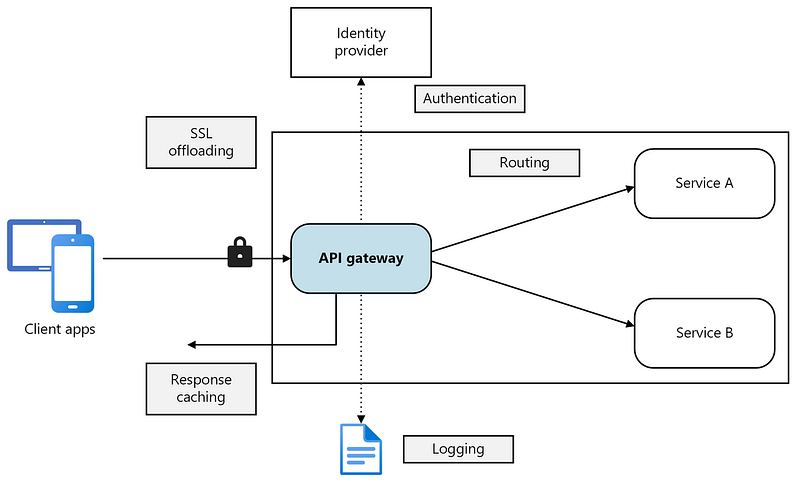
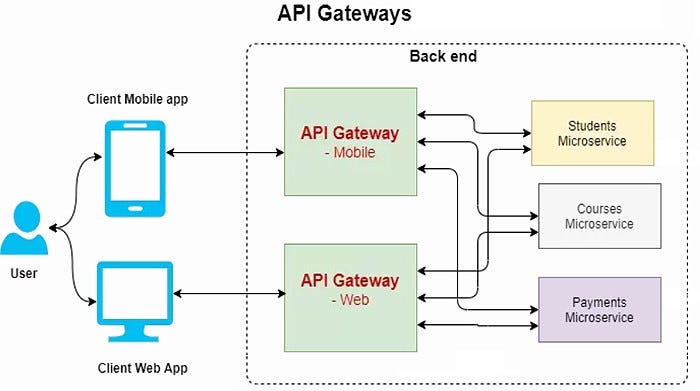
The API Gateway Pattern is a design pattern used in microservices architecture to provide a single entry point for clients to access multiple microservices. In this pattern, a gateway service acts as a facade for all incoming requests from clients and forwards them to the appropriate microservices.
The API Gateway is responsible for handling tasks such as authentication, request routing, load balancing, and caching. By providing a single entry point, the API Gateway simplifies the client’s interaction with the microservices system, as clients don’t need to know the location or details of individual microservices.
In addition, the API Gateway Pattern can also help with implementing cross-cutting concerns such as logging, monitoring, and security in a centralized manner, rather than having to implement these features in each individual microservice.
This can help to reduce development and maintenance costs, as well as improve the overall performance and reliability of the microservices system.
By the way, if you are new to Microservice architecture or just want to revise key Microservice concepts and looking for resources then here are few online courses you can join:
- Master Microservices with Spring Boot and Spring Cloud [Udemy]
- Building Scalable Java Microservices with Spring Boot [Coursera]
- Developing Microservices with Spring Boot [Educative]
- Master Microservices with Java, Spring, Docker, Kubernetes [Udemy]
This list includes both video and text-based courses as well as project based courses for hands-on learning, you can join one or a couple of them to revise Microservices concepts. If you need more choices, you can see the below articles:
And, if you need more options, you can also checkout following resources:
What problem API Gateway Pattern Solve?
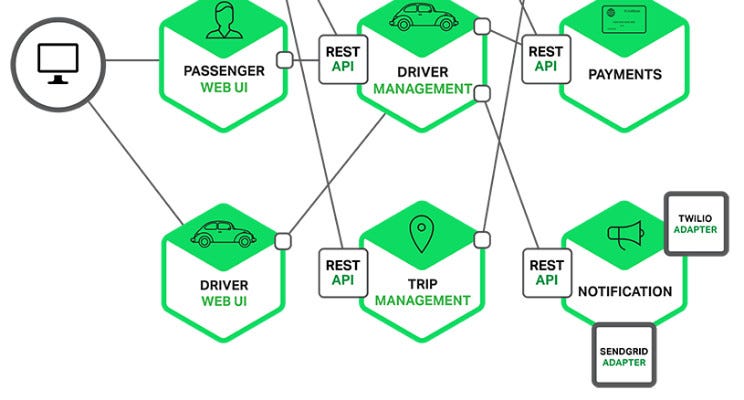
When you first start with Microservices architecture, everything is easy, but when Microservices grows from 10 to 100 then things started becoming more and more difficult.
For example, if your client needs to connect with 10 services, it needs to remember the host and port URL for them, it’s not just a problem at the client side but also on server side you need to implement authentication, authorization and security on each of those Microservices, API Gateway can solve many of these problems
In short, The API Gateway Pattern solves several problems that arise in microservices architecture, including:
- Simplifying the client’s interaction with the microservices system by providing a single entry point.
- Providing a centralized location for implementing cross-cutting concerns such as logging, monitoring, and security.
- Reducing the complexity of the microservices system by hiding the implementation details of individual microservices.
Here is an example to illustrate how the API Gateway Pattern can help solve these problems:
Suppose we have a system with several microservices that perform different tasks, such as authentication, user management, and product catalog management.
A client application needs to access these microservices to perform various tasks, such as logging in, viewing user profiles, and browsing products.
Without an API Gateway, the client would need to know the location and details of each individual microservice and make requests to each one separately. This can be complex and error-prone, especially as the number of microservices in the system grows.
By introducing an API Gateway, the client can make all requests to a single entry point, and the gateway is responsible for routing the requests to the appropriate microservices.
The gateway can also implement cross-cutting concerns such as authentication and caching in a centralized manner, simplifying the implementation of these features in individual microservices.
Overall, the API Gateway Pattern helps to simplify the interaction between clients and microservices, and reduce the complexity and cost of implementing cross-cutting concerns in a microservices system.
How to implement API Gateway Pattern in Java?
Yes, Spring Cloud provides support for implementing API Gateway using the Spring Cloud Gateway project. Spring Cloud Gateway is a lightweight, yet powerful API Gateway that is fully integrated with Spring Boot and Spring Cloud.
To implement API Gateway using Spring Cloud Gateway, you can follow these steps:
- Add the Spring Cloud Gateway dependency to your project:
<dependency>
    <groupId>org.springframework.cloud</groupId>
    <artifactId>spring-cloud-starter-gateway</artifactId>
</dependency>
2. Define the routes for your microservices in a configuration file, such as application.yml:
spring:
  cloud:
    gateway:
      routes:
        - id: service1
          uri: lb://service1
          predicates:
            - Path=/service1/**
        - id: service2
          uri: lb://service2
          predicates:
            - Path=/service2/**
In this example, the API Gateway will route requests to http://<gateway>/service1/** to the service1 microservice and requests to http://<gateway>/service2/** to the service2 microservice.
- Start the API Gateway:
@SpringBootApplication
public class GatewayApplication {

    public static void main(String[] args) {
        SpringApplication.run(GatewayApplication.class, args);
    }

}
This will start the API Gateway and load the configuration file defined in step 2.
Spring Cloud Gateway provides many advanced features, such as circuit breaking, rate limiting, request/response logging, and more, which means you don’t need to reinvent the wheel again. You can also customize the behavior of the API Gateway by writing custom filters and interceptors.

Pros and Cons of API Gateway in Microservices
There is no pattern in this world which only comes with pros and no cons and API Gateway is no exception. API Gateway can provide several benefits to micro services-based architecture, including:
Pros:
Security
An API Gateway can provide a centralized location for authentication and authorization, helping to secure your microservices.
Traffic Management
API Gateway can help manage traffic to your microservices by providing load balancing and routing capabilities.
Scalability
By routing traffic to the appropriate microservices, API Gateway can help ensure that your system is scalable.
Simplified Client Code
API Gateway can simplify the client-side code by aggregating data from multiple microservices and returning the result as a single response.
Analytics
An API Gateway can capture and aggregate analytics data from all of the microservices, providing valuable insights into usage patterns.
Cons:
Single point of failure
The biggest disadvantages of API Gateway is the single point failure. If the API Gateway fails, the entire system could fail.
Increased complexity
Another disadvantage is that An API Gateway can add complexity to your architecture, and if not implemented correctly, it can become a bottleneck.
Additional latency:
API Gateway can also introduce additional latency as requests are routed through the gateway.
Debugging Headache
API Gateway can also make Debugging difficult as requests are passed through the gateway.
Java and Spring Interview Preparation Material
Before any Java and Spring Developer interview, I always use to read the below resources
Grokking the Java Interview
Grokking the Java Interview: click here
I have personally bought these books to speed up my preparation.
You can get your sample copy here, check the content of it and go for it
Grokking the Java Interview [Free Sample Copy]: click here

If you want to prepare for the Spring Boot interview you follow this consolidated eBook, it also contains microservice questions from spring boot interviews.
Grokking the Spring Boot Interview
You can get your copy here — Grokking the Spring Boot Interview

That’s all about API Gateway Pattern in Microservices Architecture. It has a lot of benefit and I believe every developer should be familiar with these pattern if they are working in Microservices architecture.
For Java developers Spring Cloud provides several modules that make it easy to implement an API Gateway, including Spring Cloud Gateway and Netflix Zuul.
You can use these modules provide features such as routing, load balancing, and security, making it easier to implement an API Gateway in your microservices based architecture.
By the way, if you are new to Microservice architecture or just want to revise key Microservice concepts and looking for resources then here are few online courses you can join:
- Master Microservices with Spring Boot and Spring Cloud [Udemy]
- Building Scalable Java Microservices with Spring Boot [Coursera]
- Developing Microservices with Spring Boot [Educative]
- Master Microservices with Java, Spring, Docker, Kubernetes [Udemy]
This list includes both video and text-based courses as well as project based courses for hands-on learning, you can join one or a couple of them to revise Microservices concepts. If you need more choices, you can see the below articles:
And, if you need more choices, you can also checkout following resources:
My Other Articles you may like to read


