
PHILOSOPHY | PSYCHOLOGY
What Is a Thought? And How Is Information Physical?
Thoughts are physical representations or maps. They have shape and weight.
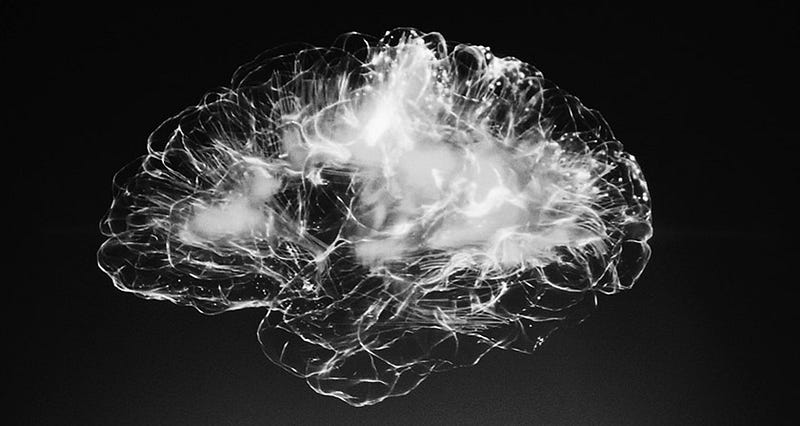
Google the word “thought” and you will find this uninformative, circular definition: “an idea or opinion produced by thinking or occurring suddenly in the mind.” The Merriam-Webster dictionary defines “think” in a similarly unhelpful way: “to form or have in the mind.” But what is a thought?
A thought is a representation of something. A representation is a likeness—a thing that depicts another thing by having characteristics that correspond to that other thing. For example, a picture, image, imprint, or mold of an object is a representation of that object.
A map is another example of a representation. The mind is a kind of map. The brain and its functional product, the mind, evolved as a map of the body’s relation to its external environment. Fundamentally, our thoughts are maps representing and corresponding to things that our brains have either perceived with our senses, felt with our emotions, or formed as an action plan (e.g., forming an image of reaching for ripe fruit on a tree branch). All of these are electrochemically mediated processes. Thoughts may be fleeting, or they may later be consolidated as memories. Additionally, memory is a physical process that uses structural molecular changes in neuronal connections to encode it.
Sensory perceptions and their memories are physical representations or maps, imprinted by an event
Consider how the sense organs convert sensory perceptions into neural signals.
Imagine hearing a clap of thunder that surprises and frightens you. The sound of the thunderclap is transformed from a specific pattern of sound waves in the air to a corresponding pattern of vibrations transmitted through your eardrum and the small bones in your middle ear to your cochlea, to a corresponding pattern of electrochemical impulses along the auditory nerve, and corresponding signals in neurons in the auditory cortex and association cortex. It also activates fear circuitry, relayed via the amygdala, and perhaps also visual circuitry that records what you saw at that moment. Signals are transmitted between neurons by chemical neurotransmitters. The experience at that precise moment is the entire widely dispersed network that this stimulus activated throughout the cerebral cortex.
Since this was such a strong stimulus—a “flashbulb memory” moment—the pattern of connections in this particular network is then made permanently retrievable. This happens through changes in membrane proteins at the connections between all the participating neurons that fired together in response to that stimulus—"neurons" that fire together wire together.”
This is memory; a reminder or some other association cue can reactivate the same approximate network in the future. The pattern of connections is a representation (a “map”) corresponding to the pattern of information that you perceive. It is likely also interwoven with representations of other feelings or memories that you associate with that experience, adding layers of meaning to the experience.
Information is relational
Information is the pattern of organization of matter or energy—the way things are arranged with each other.
Consider computer code. Differences in voltage in the computer’s circuitry, conventionally represented by ones and zeros, represent different alphabet letters when associated with each other in particular patterns: 01000001 represents the letter "A," and 01000010 represents the letter "B." There is nothing inherently meaningful contained in a particular voltage in an isolated part of an electrical circuit. It is from the association or pattern that information emerges.
Likewise, there is nothing inherently meaningful in the arbitrary symbols that comprise the letters of an alphabet or in the sounds of the individual words of a language. They assume meaning only about each other and their pairing or association with real things in the world.
Complex information, such as memory, is distributed
Just like the letter “A” encoded in a computer circuit, your memory of your grandmother is not “contained” in one neuron—a “grandmother neuron,” as opposed to, say, a “president of the United States” neuron. There is a vast network of (often distant) neurons that, in their connections with each other, collectively represent your grandmother's memory.
One particular neuron might perhaps encode a tiny memory fragment of your grandmother, let’s say just one visual aspect of one particular facial contour. That is to say, that particular neuron will fire electrochemically when paired with visual input matching that contour. Nor is that one neuron dedicated solely to holding that piece of your grandmother's memory; the same neuron probably participates in a great many other memories through its membership in a host of different connections with other arrays of neurons.
Furthermore, different aspects of each memory are associated with a multitude of other memories—aspects of your grandmother's memory might be associated with your memory of a particular kind of apple pie. As noted earlier, the particular network of neurons that forms a particular memory is likely the same network that was activated during the initial perceptual experience of the remembered event. Most momentary perceptions are not permanently remembered. Only some do; their salience at the time burns them into long-term memory.
Abstract thoughts are fundamentally physical too
What about more abstract thoughts? How could those possibly be physical?
Thoughts of a more abstract nature are just higher-level representations. They are built from hierarchies or ladders of representations (i.e., representations of representations). One thing reminds us of another because of a similar feature. At the bottom are still the physical sense perceptions and movements, upon which all other thoughts are built. Abstract thoughts are, in essence, still fundamentally just “maps” corresponding to the external environment and the individual’s position in it.
Language is replete with examples of how thought is built from analogy-making. Our words for things that don’t exist “out there” in nature are built from words that represent concrete things that we can perceive with our senses.
Here is a sampling of some of the simpler analogies and metaphors from an elaborate collection: “the legs of a table; the spine of a book; . . . the tongue spoken by the islanders; . . . the window of opportunity for doing something; the field one studies; a marginal idea; salaries that fall within a certain bracket . . .”
In a similar vein, our language draws on our five main senses to explain abstract phenomena using relatable physical concepts. For example, “one can be touched by a kind gesture, struck by a beautiful scene, or hurt by a jabbing remark.” Or: “One can taste the joy of victory, find a movie to be tasteless, be in a sour mood, or make a bitter remark.” Happiness and unhappiness are represented in vertical space (to raise someone’s morale; to plunge into despair; to be very down). Abstract notions are often conveyed through comparisons to familiar human activities (her experiment gave birth to a new theory; the facts speak for themselves; . . . a religion dictates certain behaviors; his fatigue caught up with him.)”
The conscious sense of self emerges from loops of self-referent symbolic representations
Elsewhere, science has explored the question of how, through self-reference and formal rules, systems can acquire meaning despite being made of “meaningless” elements. And how the psychological self emerges from abstract feedback loops of self-referent symbolic representations, recursively reflecting on itself in a reverberating circuit—a cybernetic loop. Quite a dizzying concept.
Weighty thoughts
The brain requires an inordinate amount of energy to do its work, utilizing 20% of the body’s energy consumption at rest, despite accounting for only 2% of the body’s weight. The brain’s rate of caloric burning increases when engaged in cognitively demanding tasks. Energy and mass are interchangeable (E=mc2). Since thoughts are energy signals, the energy transmitting a thought therefore has mass. The ions and molecules encoding the energetic signal have mass too. But can we calculate the weight of a single thought? Certainly, it would be an infinitesimally tiny number. But not zero.
Information is physical and relational, and we are networks of information
Thoughts are not ethereal. They are representations of matter and are encoded in matter. They have shape and weight. Abstract ideas are analogically built from more concrete sensory representations. The sense of self is built on self-representation. Thoughts are forms of information, and all information is physical and relational. It “feels” like something to “have” a thought and to “be” a self because we are that information, recursively reflecting on itself in an infinite regress.
© Greg Wilson 2024
Please follow me for more thoughtful articles. Thank you!


