
What is a Polypill, and Should You Be Taking One?
The recent publicity about the success of a polypill to prevent more heart attacks has caused renewed interest in this form of drug delivery.
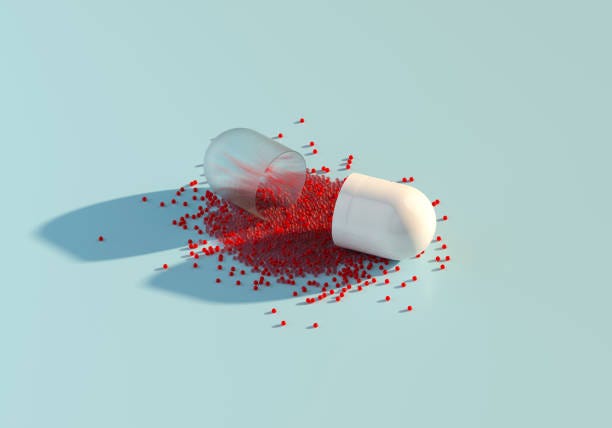

Over the past year, there has been excitement in medical and lay media about a heart pill that packs three medicines into one capsule. The original paper was published in the New England Journal of Medicine (NEJM) last September. It concluded those taking the pills after a heart attack had significantly less chance of future heart deaths, heart attacks, stroke, or need for a stent or bypass surgery.
The pill, still unavailable in the USA, was recently named by the World Health Organization (WHO) as an “essential medicine.” Following the pandemic, the WHO may not be the most reliable organization for accurate health information, but nonetheless, what they say carries weight. What many people may not know is this new polypill contains various amounts of three generic medications: aspirin (for blood thinning), ramipril (an ACE inhibitor for blood pressure control), and atorvastatin (a synthetic statin to lower cholesterol levels.)
The medication “should” be inexpensive since all the components are older, generic drugs. However, the FDA has not approved it, and thus pricing information is unavailable. The polypill took 15 years to develop and research. In the above-noted study, there was a three percent reduction in cardiac death in those who took it compared to the placebo group.
The Polypill Usefulness Dilemma
I take a lot of pills daily. I need many vitamins and minerals due to my Crohn’s disease, as recommended by my physician. I am not alone. In one study, 90% of older adults take one pill per day, 80% take two, and 36% take five or more.
In older patients, mistakes are often made in pill administration. This is due to limitations in sight, eye-hand coordination and fine motor skills. Thus, one can argue for manufacturing a polypill with two or more medications inside. As an example of difficulty counting and holding pills, my generic statin medication is slightly larger than a pinhead.
The problem with any polypill is that “one size does not fit all.” People respond differently to medications, and it is not uncommon for dosages to be titrated or changed during the course of therapy. However, a polypill contains drugs of one set strength, so multiple pills inside one delivery pill make such adjustments difficult. This new heart polypill has different strengths to minimize this problem, but making dosage adjustments can still be challenging.
If we use this new heart polypill as an example, let’s say a patient is doing okay with the aspirin dose, but they have “low,” not high, blood pressure and their cholesterol levels are still high. If the doctor wants to increase the statin dose, then that means increasing the ramipril dose and risking harmful blood pressure lowering. There are many permutations of this problem in the real world.
And what if a patient cannot tolerate one of the three drugs? Depending on the study, anywhere from 10–30% are “intolerant” (not allergic) to statins. And there is this study where up to 30% of patients cannot tolerate an ace inhibitor, such as ramipril. The above-noted NEJM study showed that 25% of study patients could not tolerate the polypill, confirming the pill’s potential limitation.
Statistical Mirage
The “statistical” benefits to an individual patient, inferred from this study, are more apparent than real. The three percent reduction in cardiac death is when hundreds or thousands of patients are studied. Thus, your individual risk reduction is likely well less than that number. Most people don’t understand this when studies are quoted and marketed via the media.
You Probably Have Taken a Polypill Many Times
If you have ever taken NyQuil, DayQuil, or Tylenol Cold and Flu, you have ingested a polypill. Many of these are liquid but also come in a tablet or capsule. Most over-the-counter (OTC) cold and flu medications combine two or more drugs. Sales statistics for cold and cough medicine were about $11B, most recently in the USA, suggesting millions of people take them. Thus, the polypill concept is nothing new and is used by millions frequently.
History
Although cramming more than one drug into a single pill was first proposed in 2003, NyQuil liquid was invented in 1860 by the Vicks company. Since 2000, there have been six iterations of NyQuil, purported for different symptoms.
One important goal of cold and flu medications is to treat nasal congestion. However, almost all decongestants, like Sudafed (pseudoephedrine), keep people awake and make them hyper. Therefore, it is often paired with an anti-histamine that makes people sleepy to blunt the side effects of a pure decongestant. Ironically, an antihistamine usually alleviates allergy symptoms, not those of a cold or flu virus. Some medicines incorporate one or two cough suppressants if one of your symptoms is a cough.
During my medical practice in the 1990s, congestive heart failure and high blood pressure were often treated with two diuretics inside one pill. The rationale was that these diuretics worked in different parts of the kidney. Later, the FDA developed and approved similar pills, with more than one drug inside, to treat high cholesterol levels.
Benefits
The major benefit of a polypill is simplifying the post-hospitalization treatment plan and improving drug adherence for patients following heart attacks or strokes. This is not unimportant. A 2020 study suggested almost one-half of patients fail to take their medications correctly upon hospital discharge. In this respect, the new medication might prove superior to our current standard of care. Also, since the medications inside the polypill are generic, the drug should be inexpensive.
Takeaways
- Polypills contain two or more, usually generic, drugs inside one tablet or capsule.
- A new polypill to reduce future heart events and death following a heart attack shows promise but is not yet approved for usage in the US.
- Polypills are not a new concept; millions have already taken one in some form, most notably as over-the-counter cold, flu, and cough medications.
- Although the polypill should help with medication compliance, the difficulty in titration is a real problem.
I am a retired MD passionate about culture, medicine, science, health, sports, and food.
Get an email whenever I publish by clicking this link:https://davidmokotoff.medium.com/subscribe
I will never spam you or give out your address.