
What is a microbiome — a scientist’s explanation of how our newest organ affects us
A decade ago, I’d never heard of a microbiome. Today, I hear about them constantly.
Okay, yes, I hear a lot about microbiomes because it’s part of my job title. I’m a microbiome scientist, and I work on building computer programs to study this environment, how it interacts with our bodies, and its effects on health — or disease. But even outside my job, I see microbiomes, and the probiotics that are supposed to affect them, mentioned everywhere.
Television commercials. Ads in magazines. Even my friends and family talk about how they’re trying some new probiotic, or how they read that their microbiome is making them tired, or sick, or maybe even giving them cancer.
But just what is a microbiome? Why do we care about them so much, and why have they only become a hot topic of discussion in the last few years?
Microbiomes, in the broadest description
The term “biome” has been around for a long time. In science, a biome is an environment with living things. A tropical rainforest is a biome, with trees, parrots, jaguars, frogs, and snakes. A suburban backyard is also a biome, with grass, rose bushes, ants, blue jays, and the occasional rabbit or squirrel.
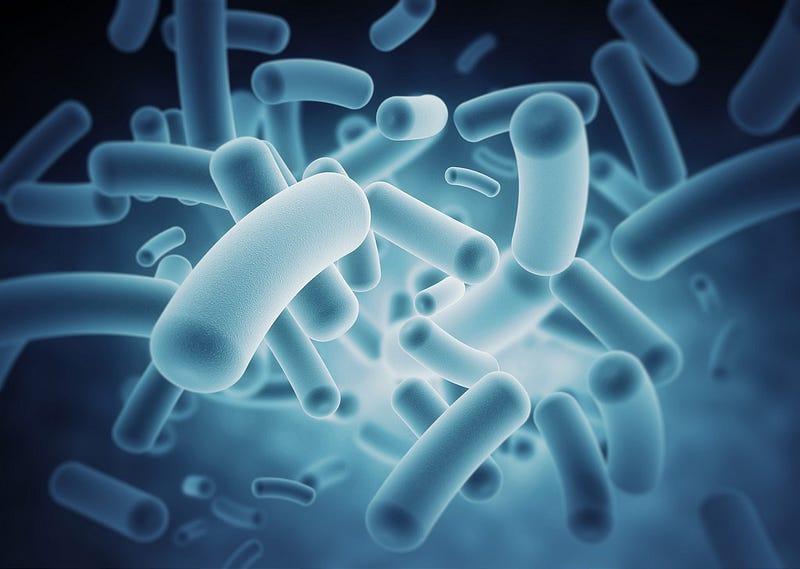
But while a biome refers to an environment on the macro scale, something we can see with our bare eyes, a microbiome describes life on a microscopic scale. While a biome contains plants and animals, a microbiome’s members are single-celled microbes — bacteria, archaea, fungi, and viruses.
Anywhere that bacteria can grow, there’s a microbiome:
- On your skin? Microbiome.
- In the dirt of your front yard? Microbiome.
- In the ocean seawater? Microbiome.
- Inside our mouth, or our intestinal tract? You guessed it, microbiome.
Some of these places are harsh environments, deserts where it’s hard to grow. The floor of a dusty conference room at work, for example, doesn’t get a lot of nutrients, so there won’t be tons of different microbes thriving there.
Anywhere that bacteria can grow, there’s a microbiome.
Other environments, however, are an Eden to bacteria. Think about our intestinal tract. It’s kept warm and wet, and gets flooded with rich, varied, delicious food every six to twelve hours. It has lots of nooks and crannies, perfect little hidey-holes for microbes.
In fact, our gut has a huge range of different microbes growing inside it, in massive numbers! Your gut, right now, contains trillions of happily thriving bacteria. You have more bacteria living inside your intestine than there are human cells making up your entire body! If each cell got a vote, bacteria would have democratic control of your body.
Just like our fingerprints, the makeup of our gut microbiomes is unique to each of us — I have different bacteria living in my gut than my friends or relatives.
So why do we care about these bacteria?
Until about fifteen years ago, we didn’t pay much attention to the microbiome. Most of the bacteria alive today aren’t culturable — we can’t grow them in isolation, in petri dishes in a laboratory. If we can’t grow these bacteria, we can’t study them. They might as well not be there.
But everything changed with huge scientific advantages in DNA sequencing. Suddenly, just in the last couple of decades, it became cheap enough to just dump everything, all the different bacteria, into a sequencer. Instead of trying to culture individual bugs, we can sequence them all at once, and then sort it out on a computer.
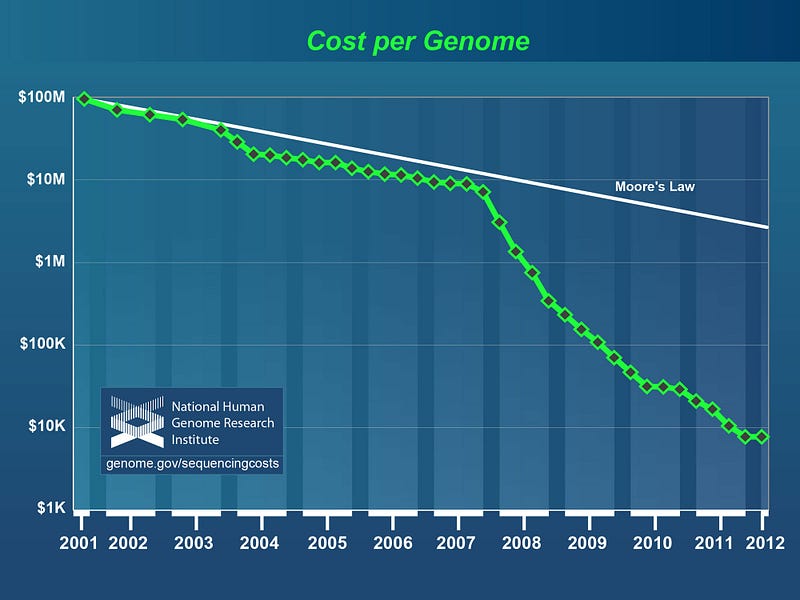
Now that it’s affordable to look at the gut microbiome, researchers have discovered possible links to various different aspects of our daily lives. Scientists have discovered correlations between our gut microbiome composition and obesity, mental health, cancer, and bowel diseases, such as Irritable Bowel Syndrome (IBS) and Crohn’s Disease. Companies have sprung up, offering probiotics, foods that contain live bacteria, intended to directly or indirectly improve the health of our microbiomes.
But are these links real? Does having the wrong bacteria in our gut raise our risk of being fat, or dumb, or cancerous? Can we just eat the right bacteria, and make these risks go away?
Unfortunately, it’s not that simple.
Does having the wrong bacteria in our gut raise our risk of being fat, or dumb, or cancerous? Can we just eat the right bacteria, and make these risks go away?
If microbiomes do so much, why aren’t we finding microbe-based cures?
One of the biggest problems with many studies on the gut microbiome is that they only measure correlation, not causation. If a person is overweight, they may have more of a certain group of microbes than a thin person — but are the microbes making the person fat, or are they there because the person is fat? We don’t know if the microbes are a cause of a condition, or just attracted after the condition already exists.
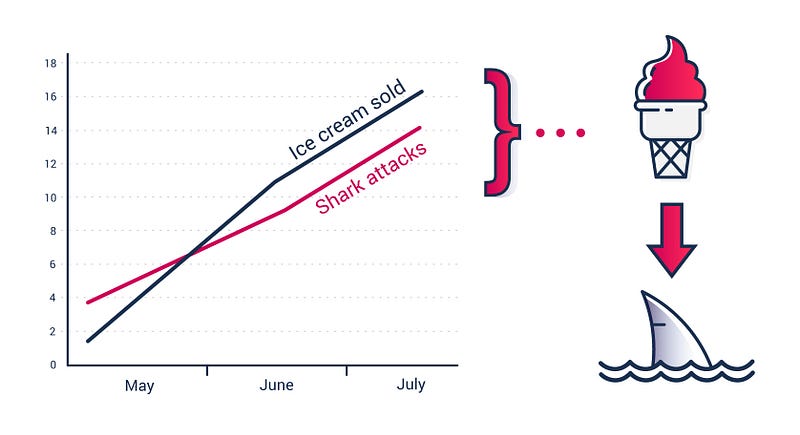
Finding a correlation is easy — sequence the microbiomes of healthy people, then the microbiomes of sick people, and see which bacteria are different.
Finding causation is harder. We can feed laboratory mice antibiotics, kill off their old gut microbiome, and then give them a new one. If we transplant the microbes from an obese mouse into a healthy one, the mouse gets fatter. But don’t expect to lose weight from a fecal transplant any time soon — we still don’t know which bacteria make the mouse fat, and whether the same effects are observed in humans.
This, then, is the real problem with microbiome study — we can make guesses about the effects of a microbiome as an aggregate whole, but we can’t tell which effects come from which individual microbes. With so many different species present, all interacting with each other, it’s very tough to point at any one type of bacterium and label it as the source of an illness.
Over the last thousand years, medicine has focused on finding the root cause of a disease. We’ve searched for the reductive solution — what one factor causes a disease? We know that the Variola virus causes smallpox in humans. We know that the Plasmodium bacterium causes malaria. One cause, one effect.
This is the real problem with microbiome study — we can make guesses about the effects of a microbiome as an aggregate whole, but we can’t tell which effects come from which individual microbes.
With the microbiome, we can’t yet point to one species as causing an effect. These large-scale effects — obesity, mental health, bowel diseases, regularity, cancer — result from complex interactions.
Study of microbiomes is a rapidly growing field, fueled by advances in our ability to look at what bacteria are there — but until we’ve developed better methods for understanding what these bacteria are doing, most therapies will be rudimentary and largely ineffective. There’s a ton of promise, however, and I expect huge advances in changing our bugs for the better over the next decade.
Sam Westreich is a microbiome scientist working in Silicon Valley, and has spent years immersing himself in science and the nerdiest of pursuits. He blogs about science, biology, and his thoughts on graduate school and finding success.


