avatarFrances A. Chiu, Ph.D. | writing coach | editor

Free AI web copilot to create summaries, insights and extended knowledge, download it at here

4676

Abstract

i>.</p> <figure id="7c78"> <div> <div> <img class="ratio" src="http://placehold.it/16x9"> <iframe class="" src="https://cdn.embedly.com/widgets/media.html?src=https%3A%2F%2Fwww.youtube.com%2Fembed%2FcUwtBpnlZgM%3Ffeature%3Doembed&amp;display_name=YouTube&amp;url=https%3A%2F%2Fwww.youtube.com%2Fwatch%3Fv%3DcUwtBpnlZgM&amp;image=https%3A%2F%2Fi.ytimg.com%2Fvi%2FcUwtBpnlZgM%2Fhqdefault.jpg&amp;key=a19fcc184b9711e1b4764040d3dc5c07&amp;type=text%2Fhtml&amp;schema=youtube" allowfullscreen="" frameborder="0" height="480" width="854"> </div> </div> </figure></iframe></div></div></figure><p id="738f">These angry (white) women are all undeniably true-blue, no-quibble Karens. What all have in common is a sense of privilege, justice be damned.</p><p id="3de8">The belief people of other ethnicities are not quite human and should be subordinated to the likes of <i>her</i>. In fact, this applies to anyone — even another white woman — who serves her in a restaurant or shop.</p><p id="d1b5">Let’s make this clear: this is not empowerment as some feminists like to assert, but rather entitled assholery. There <i>is</i> a difference!</p><h2 id="67f5">Rights — and wrongs</h2><p id="431d">But what about a woman who complains to a manager because a customer who came after her was served first? Or an angry white customer who is ignored because a better-dressed one happens to saunter in? The woman who complains to the manager because the sales associate looks down her nose at her saying, “I think this is out of your budget?”</p><p id="8148">Or a customer who is steered to the sales section immediately?</p><p id="9e68">The same applies to diners at a restaurant. For instance, a woman arrives first but is served last — a common experience among <a href="https://www.longmontleader.com/local-news/dining-while-black-preventing-tableside-racism-in-boulder-county-7198116">Blacks</a>. Or in the back or next to the bathroom — despite ample seating everywhere else: not to mention when the waiter persistently ignores her! Let me add that many Asians can vouch for this as well. All too often, the phenomena of <a href="https://www.cnbc.com/2020/07/05/as-black-buying-power-grows-racial-profiling-by-retailers-remains-a-problem.html">“dining/shopping while Black</a>” is a form of discrimination extending well beyond the Black community.</p><p id="659c">You see, this disparity is the price that we visible minorities pay in a world of <a href="https://www.american.edu/student-affairs/counseling/upload/understanding-white-privilege.pdf">white privilege</a>. That is why we have every right to be outraged. Every reason to complain. Neither warrants the Karen moniker.</p><p id="0db0">But there are also instances of just complaints where color and status are not involved.</p><p id="432d">What about a woman who grumbles because her neighbor is blaring loud music at 2 am? Who calls the police because a dog is barking next door in the wee hours of the morning? Someone who complains because the neighbor doesn’t bother to pick up after his dog?</p><p id="6f29">Or simply someone who criticizes an overpriced, bungled-up repair job?</p><p id="e0dc">The answer is no: all of us, whether women or men, white or visible minority, have the right to be treated fairly and equitably. First come, first serve should be a mantra. Everyone who enters a store has the right to be treated as a potential customer, not a shoplifter or cheapskate.</p><p id="e996">We also have the right to be concerned about other people’s pets fouling our property.</p><p id="0dd3">We have the right to rail when noise disrupts our sleep. After all, <a href="https://www.healthline.com/health/sleep-deprivation/effects-on-body">sleep deprivation</a>, as many should be aware, can exacerbate health issues — both physically and mentally. (For this, I got called a Karen!)</p><p id="2d2f">In other words, these are all legitimate reasons for complaining. When our rights are infringed upon, we have every reason to “speak to the manager” or any authority at hand–no more, no less.</p><p id="1bf5">And we deserve to have our concerns addressed in as thorough a manner as necessary. In fact, let me also emphasize that anyone who thinks any of these expectations is unreasonable or unrealistic <i>is</i> a Karen.</p><h2 id="1d34">Calling all the Miss Anns, Permit Pattys and BBQ Beckys</h2><p id="3631">Now, as I’ve broached race as well as rights, let’s head to the very issues of misogyny and class prejudice. Is the Karen moniker sexist?</p><p id="0262">At first glance, it would appear so as it appears t

Options

o be directed primarily at white, middle-class women (perhaps a balancing figure of speech to “Don’t be a dick” directed at men?). Even more misleading is when these Karens accuse others of “discrimination” and “violating my rights.”</p><p id="63be">Yet, it is not the first time that this alleged anti-white-woman trope has been used in American history.</p><figure id="3db8"><img src="https://cdn-images-1.readmedium.com/v2/resize:fit:800/1*QY9pln15nWsVpxG_e8SAMQ.jpeg"><figcaption>Photo by <a href="https://unsplash.com/@clevelandart?utm_content=creditCopyText&amp;utm_medium=referral&amp;utm_source=unsplash">The Cleveland Museum of Art</a> on <a href="https://unsplash.com/photos/a-painting-of-a-woman-sitting-in-a-chair-3K7KdHeWFeA?utm_content=creditCopyText&amp;utm_medium=referral&amp;utm_source=unsplash">U</a></figcaption></figure><p id="dc06">The expression “Miss Ann,” after all, had been used in Black communities for nearly a century to refer to <i>an arrogant, unreasonable white woman</i> long before the “Karen” moniker emerged.</p><p id="bce3">Not to mention that shortly before the time “Karen” came into use, epithets like <a href="https://www.usatoday.com/story/tech/2018/07/18/bbq-becky-permit-patty-and-why-internet-shaming-white-people-who-police-black-people/793574002/">“Permit Patty” and “BBQ Becky”</a> were already circulating. But for some reason, Karen stuck.</p><p id="31b6">More importantly, let’s not forget that the Karen moniker is directed at <i>behavior</i>, rather than <i>being</i> — and particularly, behavior that is largely self-directed.</p><p id="2082">The Karen epithet is not directed at white women as a whole, at least not in the way that derogatory terms like “ho,” “angry Black woman,” “submissive Oriental lady,” “Asian dominatrix,” or “lazy Latina” have been foisted upon women of color. Instead, “Karen” refers only to a certain group of women, albeit mostly white.</p><p id="6003">So why is there such an outcry when only a certain type of white women is mocked–especially when the race of the Karen is never even stated explicitly?</p><p id="b6b1">Or when the type of woman being mocked is often weaponizing her privilege as a white, middle-class woman<i> against others? A</i>nd in potentially dangerous ways, no less?</p><p id="314b">I dare say that this is where white privilege comes into play. How dare we criticize a white woman?</p><p id="67a1">This is why so many of us women who happen to be visible minorities feel uncomfortable with white feminism. Because, to be perfectly honest, to defend a (white) Karen is to defend injustice that has been baked into centuries of American slavery and discrimination against nonwhites.</p><p id="285d">To criticize a Karen, in fact, is to defend the privilege of white “ladies” who lorded their power over others — including, yes, women of their own race.</p><p id="83dd">So complain about the use of the name Karen if you will.</p><p id="0378">But don’t complain about the criticism of women who have long practiced the various Miss Anns, Pattys, Beckys, or what-have-you privileges to the detriment of others. Just as “That which we call a rose by any other name would smell as sweet,” the infamous stinky flower — the so-called corpse flower — smells just as foul regardless of name. And indeed, the same goes for any woman who acts up to preserve her pride, prejudice, privilege and power.</p><p id="f514">© Frances A. Chiu, November 3, 2023. All Rights Reserved.</p><div id="a731" class="link-block"> <a href="https://aninjusticemag.com/racism-in-the-ivory-tower-68b275db79d9"> <div> <div> <h2>Racism in the Ivory Tower</h2> <div><h3>When Black, Brown, and Yellow graduate students and faculty are “beyond the pale”</h3></div> <div><p>aninjusticemag.com</p></div> </div> <div> <div style="background-image: url(https://miro.readmedium.com/v2/resize:fit:320/1*qKNqA2MeijEcJrYtRoMfew.jpeg)"></div> </div> </div> </a> </div><div id="fb4d" class="link-block"> <a href="https://readmedium.com/what-is-feminism-cef8d715926c"> <div> <div> <h2>What is Feminism?</h2> <div><h3>Girl power is NOT about the “Girl Boss!”</h3></div> <div><p>medium.com</p></div> </div> <div> <div style="background-image: url(https://miro.readmedium.com/v2/resize:fit:320/1*CeAbQQdfbPTdr82vgJswCQ.jpeg)"></div> </div> </div> </a> </div></article></body>

What is a Karen?

Calling out pride, prejudice, privilege, and power

Image by bookdragon from Pixabay

“What a Karen!”

This expression is almost automatically accompanied by an eye roll. Unless you’ve been hibernating for the last three years or so, you’ll know that the term is used almost ubiquitously for a woman — generally white and over 30 — who complains loudly.

She’s often unjustifiably railing against visible minorities or anyone she considers beneath her. That often includes those in the service professions, regardless of race.

But more disturbingly, the trope has been applied to any woman who complains, even when there is an appropriate cause for it. Indeed, yours truly — despite being Asian — has been called a Karen on a few occasions.

The trope, as all tropes go, has naturally encountered pushback, with some claiming that it’s misogynistic. That there is no counterpart for men while conveniently forgetting the double-entendre in the form of “don’t be a dick” or “that man is such a dick.”

So what precisely constitutes a Karen? And why is the claim of misogyny a misleading one?

As a scholar of rights and an author of a book that addresses the history of rights in the West, I think it’s high time to delve into the use of this term.

Let’s take this one step at a time.

Angry (white) woman?

Waiving aside the question of whether or not the name Karen should be used, I think we should begin by defining the trope.

This is typically a woman who is unjustifiably suspicious of any visible minority. She takes advantage of her whiteness to assail such persons: for instance, contesting anything they say, rightly or wrongly — as was amply demonstrated in the case of Amy Cooper.

Here, she notoriously threatened to call the cops on a Black man. How dare he reprimand her for allowing her dog to run unleashed despite rules against such?

It’s a woman who calls the cops on Black or other minority neighbors, thinking they don’t belong in her building or neighborhood.

Sometimes, it’s a woman who rails against foreigners speaking their native language, whether it be Spanish, Chinese, or Hungarian.

Incidentally, let me add that this category of xenophobic Karens also includes highly educated women, like a chief of cardiovascular medicine, who scolded Nobel Laureate Katalin Kariko for speaking Hungarian with a colleague. (Yes, the educated can be just as intolerant as the uneducated. See links at the end of the article.)

A Karen can also be someone who complains unreasonably.

For instance, someone who refuses to wear a mask where masks are stipulated. Someone who complains about waiting five minutes for her coffee during extremely busy periods. Or someone who insists on bringing her pet to an establishment where they are not permitted.

A Karen, in other words, wants to be accommodated regardless of rules or regulations. The world revolves around her.

These angry (white) women are all undeniably true-blue, no-quibble Karens. What all have in common is a sense of privilege, justice be damned.

The belief people of other ethnicities are not quite human and should be subordinated to the likes of her. In fact, this applies to anyone — even another white woman — who serves her in a restaurant or shop.

Let’s make this clear: this is not empowerment as some feminists like to assert, but rather entitled assholery. There is a difference!

Rights — and wrongs

But what about a woman who complains to a manager because a customer who came after her was served first? Or an angry white customer who is ignored because a better-dressed one happens to saunter in? The woman who complains to the manager because the sales associate looks down her nose at her saying, “I think this is out of your budget?”

Or a customer who is steered to the sales section immediately?

The same applies to diners at a restaurant. For instance, a woman arrives first but is served last — a common experience among Blacks. Or in the back or next to the bathroom — despite ample seating everywhere else: not to mention when the waiter persistently ignores her! Let me add that many Asians can vouch for this as well. All too often, the phenomena of “dining/shopping while Black” is a form of discrimination extending well beyond the Black community.

You see, this disparity is the price that we visible minorities pay in a world of white privilege. That is why we have every right to be outraged. Every reason to complain. Neither warrants the Karen moniker.

But there are also instances of just complaints where color and status are not involved.

What about a woman who grumbles because her neighbor is blaring loud music at 2 am? Who calls the police because a dog is barking next door in the wee hours of the morning? Someone who complains because the neighbor doesn’t bother to pick up after his dog?

Or simply someone who criticizes an overpriced, bungled-up repair job?

The answer is no: all of us, whether women or men, white or visible minority, have the right to be treated fairly and equitably. First come, first serve should be a mantra. Everyone who enters a store has the right to be treated as a potential customer, not a shoplifter or cheapskate.

We also have the right to be concerned about other people’s pets fouling our property.

We have the right to rail when noise disrupts our sleep. After all, sleep deprivation, as many should be aware, can exacerbate health issues — both physically and mentally. (For this, I got called a Karen!)

In other words, these are all legitimate reasons for complaining. When our rights are infringed upon, we have every reason to “speak to the manager” or any authority at hand–no more, no less.

And we deserve to have our concerns addressed in as thorough a manner as necessary. In fact, let me also emphasize that anyone who thinks any of these expectations is unreasonable or unrealistic is a Karen.

Calling all the Miss Anns, Permit Pattys and BBQ Beckys

Now, as I’ve broached race as well as rights, let’s head to the very issues of misogyny and class prejudice. Is the Karen moniker sexist?

At first glance, it would appear so as it appears to be directed primarily at white, middle-class women (perhaps a balancing figure of speech to “Don’t be a dick” directed at men?). Even more misleading is when these Karens accuse others of “discrimination” and “violating my rights.”

Yet, it is not the first time that this alleged anti-white-woman trope has been used in American history.
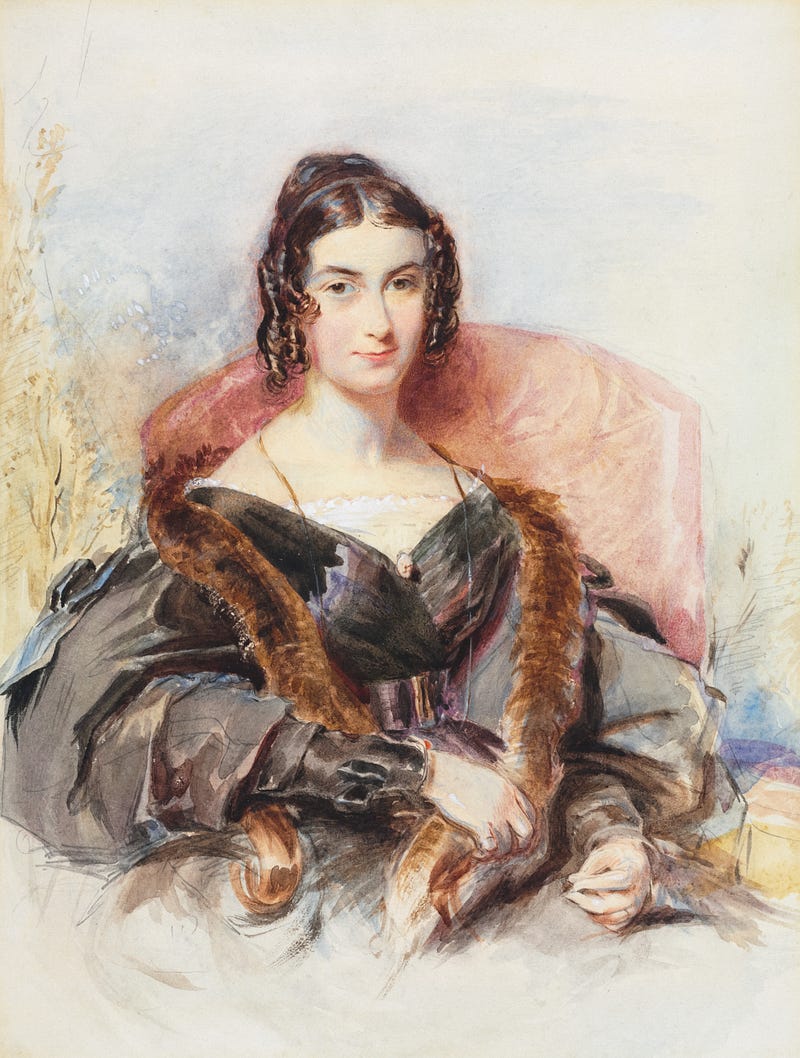
Photo by The Cleveland Museum of Art on U

The expression “Miss Ann,” after all, had been used in Black communities for nearly a century to refer to an arrogant, unreasonable white woman long before the “Karen” moniker emerged.

Not to mention that shortly before the time “Karen” came into use, epithets like “Permit Patty” and “BBQ Becky” were already circulating. But for some reason, Karen stuck.

More importantly, let’s not forget that the Karen moniker is directed at behavior, rather than being — and particularly, behavior that is largely self-directed.

The Karen epithet is not directed at white women as a whole, at least not in the way that derogatory terms like “ho,” “angry Black woman,” “submissive Oriental lady,” “Asian dominatrix,” or “lazy Latina” have been foisted upon women of color. Instead, “Karen” refers only to a certain group of women, albeit mostly white.

So why is there such an outcry when only a certain type of white women is mocked–especially when the race of the Karen is never even stated explicitly?

Or when the type of woman being mocked is often weaponizing her privilege as a white, middle-class woman against others? And in potentially dangerous ways, no less?

I dare say that this is where white privilege comes into play. How dare we criticize a white woman?

This is why so many of us women who happen to be visible minorities feel uncomfortable with white feminism. Because, to be perfectly honest, to defend a (white) Karen is to defend injustice that has been baked into centuries of American slavery and discrimination against nonwhites.

To criticize a Karen, in fact, is to defend the privilege of white “ladies” who lorded their power over others — including, yes, women of their own race.

So complain about the use of the name Karen if you will.

But don’t complain about the criticism of women who have long practiced the various Miss Anns, Pattys, Beckys, or what-have-you privileges to the detriment of others. Just as “That which we call a rose by any other name would smell as sweet,” the infamous stinky flower — the so-called corpse flower — smells just as foul regardless of name. And indeed, the same goes for any woman who acts up to preserve her pride, prejudice, privilege and power.

© Frances A. Chiu, November 3, 2023. All Rights Reserved.

Karen
Feminism
Racism
Bitchy
Women
Recommended from ReadMedium