
What is a First Responder and Can We Be One?
In this time of the COVID-19 crises, we may all be on the front-lines helping despite the risks.
Many years ago, my dad was the owner of a mechanic shop and tow-truck company. One rainy evening, he was on a call when he observed a horrific traffic accident. A semi-truck which jackknifed on the slick roads hit a family of four.
My dad turned around to offer any service he could provide. He used the hydraulic cable on the tow-truck to raise the roof of the car and extract the victims. The father and son were deceased in the backseat. My dad held the mother’s broken body together in his arms, giving mouth-to-mouth resuscitation until she died. Ultimately, though, he saved the life of the little girl he pulled out of the car from certain death.
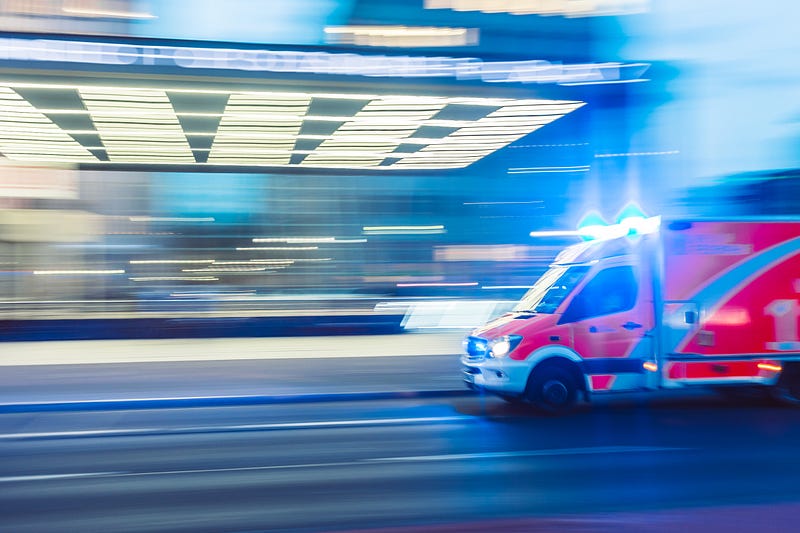
Can you imagine a world without first responders? The trained responders like my brother who is an EMT, or my daughter, an ICU nurse, on the front lines of our medical emergencies. Or even citizen responders who arrive first on a scene like my dad.
My Brother
My family has specialty-trained responders among our ranks. My brother was the Fire Chief /EMT of his community for twenty years and is currently an EMT instructor.
He is a self-professed germ-o-phobe. I asked my brother how prepared he is and what should we do to support him and others. His answers were, “I am prepared at all times.” and “Do not shake hands, ever! Do wash your hands, always!”
Even before the coronavirus, my brother told me if he went into a public restroom that had no paper towels, he waited until someone came in, and then he would exit because he refused to touch the door handles. It is no longer rude to not extend a hand. He told me our society has to change the rules of etiquette.
My Daughter
My daughter is a nurse in ICU, and my mother was a dispatcher who routed calls that came into the hospital before 911 was implemented. (I’m not sure which category she would fall into.)
When I asked my daughter if she had come into contact with any COVID-19 patients, her reply was, “Not that I know of.” Now, that is a scary thought because she is a single mother of four children. I keep two when she is working three twelve-hour shifts in a row. The way she keeps everyone safe is to isolate in her bedroom and run the household through the door. Thank goodness she has two older children to help.
Otherwise, she would have to stop working unless I moved in with her. That would be difficult because I am homebound, and my husband helps take care of me. Two ways to help nurses, she told me, is to donate masks and give blood to the Red Cross that is in short supply because of COVID-19.
Citizen First Responders
First responders can also include case managers and disaster relief workers. I fulfilled the role of a mental health first responder when I worked as a case manager for a nation-wide non-profit agency.
One day I met with one of my clients who was suicidal, I helped her to de-escalate and retrieved the gun she had on her person to kill herself. I could not wait for the police, so I used my mental health training to diffuse the situation.
In another instance, I worked disaster relief in the wake of the May 3, 1999 tornado in Moore, Oklahoma. We went into the field and encountered many who were experiencing crises in the aftermath. Over and over, the victims called us angels of mercy as we responded to their financial emergencies and crises of faith.
We can consider people who work hotlines in this category, especially suicide hotlines. Agencies train the workers to assess the threat and act accordingly. If the client has no direct plan of action, often the specialists can talk the client down and make referrals.
Supporting First Responders
Today, you and I have to get creative to find ways to support our responders and each other. I thought of several things we can do.
- Make homemade masks. I think funny masks would be great. You can spread a bit of humor. The CDC has directions about everything you need to know about masks here.
- Donate money. One of the best places to donate is the Salvation Army. They are providing child care to first responders for free across the nation, feeding the poor, and helping seniors.
- Start a laugh-line. You can create a hash-tag about laughter or telling jokes on Twitter. Start a U-tube channel for funny first responders scenarios.
First responders are a vital part of the global community, and without them, we would be lost. We depend on their sacrifices to save lives. People reaching out to become a keeper of their brothers and sisters.
It appears that during a crisis, even COVID-19, the brotherhood of humanity shines through. Let’s not forget these angels. Support our first responders — be they trained or citizen. Call them to offer encouragement, make masks, get creative. We are all in this thing together.
*For help managing stress during COVID-19: Disaster Distress Helpline 800–985–5990*
Want Debbie’s 4-Step Action Plan (DAP) to create a vision for your life during the COVID-19 crisis?
Debbie Walker is a great-grandmother, blogger, and writer with a BA in Psychology. Her vision is to help others live the life they desire to live…one word at a time. Visit her at [email protected]