avatarElena Pavlovic

Free AI web copilot to create summaries, insights and extended knowledge, download it at here

1263

Abstract

4CH690JK2UlQqIPf"><figcaption>Image created by Author on <a href="http://www.fenorri.com/">Fenorri</a></figcaption></figure><p id="2efc">Most organisations have transitioned relatively well into remotely delivering their products and services by utilising communication and collaboration tools that are widely available to them. Others have unfortunately met their demise, with heavy revenue losses and wide-scale layoffs of their employees.</p><p id="ef9b">Those that have transitioned with minimal disruption to operations are realising that working remotely in most cases is not only achievable but comes with its own benefits, some of which include:</p><ul><li>A reduction in overheads: ditching the office model removes the costs associated with it;</li><li>Better work-life balance: less time spent on things such as commuting to work;</li><li>Increased productivity: fewer distractions from open-office layouts;</li><li>Employee retention: retention rates increase by 10 per cent in organisations that embrace remote working according to research by Gartner.</li></ul><p id="f9a5">One thing stands clear — firms will never return to the pre-pandemic normal.</p><p id="178e">As weeks turn to months, it is imperative that businesses develop a successful wor

Options

k-from-home strategy.</p><p id="5b1e">The once-complementary communications and collaboration technologies are now front and centre of the epic shift towards providing a highly-optimised digital experience within our organisations, in order to motivate, excite, engage and above-all cultivate a compelling culture within a dispersed workforce.</p><figure id="a8d1"><img src="https://cdn-images-1.readmedium.com/v2/resize:fit:800/0*rK7Y0rFXl2z8FVhl"><figcaption>Image created by Author on <a href="http://www.fenorri.com/">Fenorri</a></figcaption></figure><p id="d85a">Without the right tools and infrastructure, more and more businesses will see a decline in productivity and employee engagement, resulting in a decline in work efficiency which directly correlates to economic downturns for organisations and industry sectors.</p><p id="d719">Operational continuity is paramount to surviving (and succeeding) in the new decade of uncertainty and investing time and effort in implementing the right infrastructure will ultimately make or break an organisation’s future success.</p><p id="dd68">We are <a href="https://fenorri.com/">Fenorri</a>, and we can make your transition into a new work environment an effortless and enjoyable experience.</p></article></body>

What if You Don’t Want to Go Back to the Office?
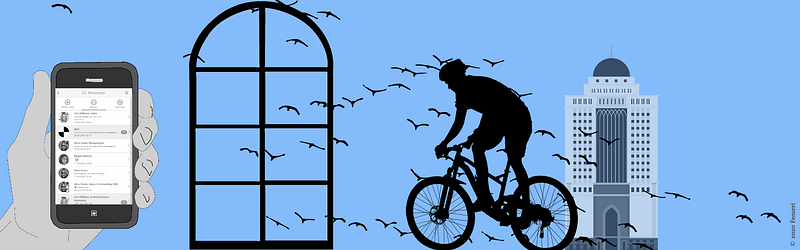
Image created by Author using vectors from Pixabay

Welcome to 2020, a prologue to a new decennial defined by great economic ambiguity, and rife with incredible uncertainties in government, business, and society as a whole. In the wake of the COVID-19 pandemic, fundamental changes are about to take place.

With businesses, schools, and governments around the world in lockdown, remote-based programmes are emerging as the new normal.

Over the past decade, the steady shift towards providing employees with greater flexibility and freedom within their traditional working environments has all of a sudden been exponentially accelerated by the recent unprecedented global events.

The long-held (now legacy) belief that one could never provide the same level of service without being tethered to their office desk, has ultimately been shattered.
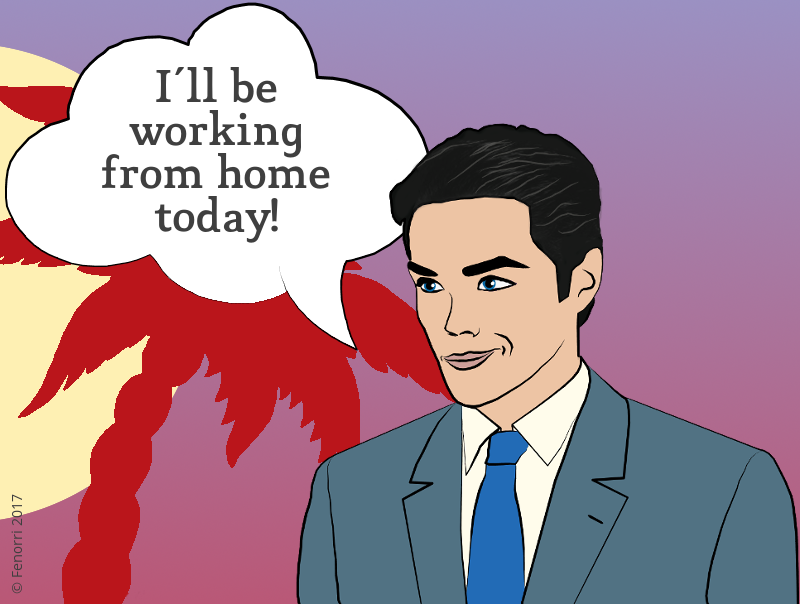
Image created by Author on Fenorri

Most organisations have transitioned relatively well into remotely delivering their products and services by utilising communication and collaboration tools that are widely available to them. Others have unfortunately met their demise, with heavy revenue losses and wide-scale layoffs of their employees.

Those that have transitioned with minimal disruption to operations are realising that working remotely in most cases is not only achievable but comes with its own benefits, some of which include:

  • A reduction in overheads: ditching the office model removes the costs associated with it;
  • Better work-life balance: less time spent on things such as commuting to work;
  • Increased productivity: fewer distractions from open-office layouts;
  • Employee retention: retention rates increase by 10 per cent in organisations that embrace remote working according to research by Gartner.

One thing stands clear — firms will never return to the pre-pandemic normal.

As weeks turn to months, it is imperative that businesses develop a successful work-from-home strategy.

The once-complementary communications and collaboration technologies are now front and centre of the epic shift towards providing a highly-optimised digital experience within our organisations, in order to motivate, excite, engage and above-all cultivate a compelling culture within a dispersed workforce.

Image created by Author on Fenorri

Without the right tools and infrastructure, more and more businesses will see a decline in productivity and employee engagement, resulting in a decline in work efficiency which directly correlates to economic downturns for organisations and industry sectors.

Operational continuity is paramount to surviving (and succeeding) in the new decade of uncertainty and investing time and effort in implementing the right infrastructure will ultimately make or break an organisation’s future success.

We are Fenorri, and we can make your transition into a new work environment an effortless and enjoyable experience.

Remote Working
Future
Coronavirus
Remote Work
Social Change
Recommended from ReadMedium