
What If The Police Revolt?
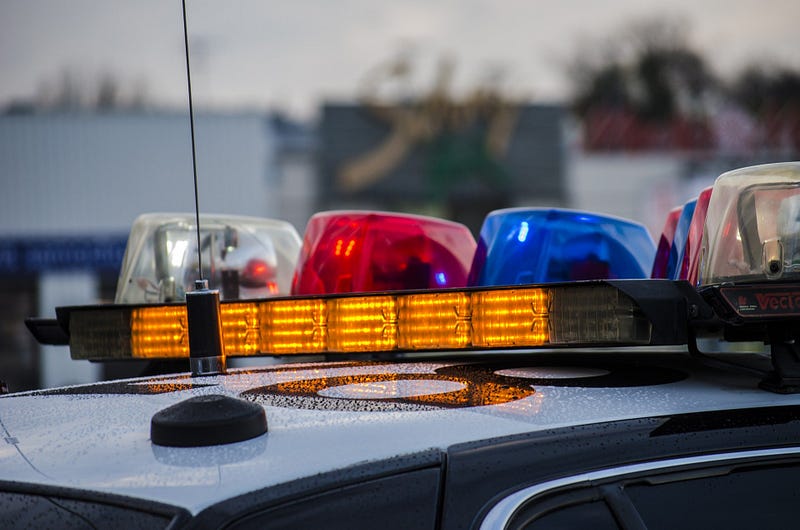
Two ways that anti-police sentiment could go very wrong
A certain amount of stress will lead to reform, but too much and police departments could break. Pressure mounts across the US and police are caught in a crucible. Police around the country provide security at mostly peaceful demonstrations that call them racists. If a demonstration turns to arson and looting, they work extended shifts for days on end. Crowds throw bricks and bottles while cable news broadcasts every suspicious use of force around the world.
In addition to pressure on the street, city administrations that failed for decades to reform their police departments now seek to slash budgets and reinvest in social causes. After September 11th, 2001, America put its military and first responders of all flavors on pedestals. Now, like Confederate statues, the police topple from their places of reverence.
Men and women of generally good conscience excuse the destruction. Let it burn, they write. Nonviolence doesn’t work. It’s just property. They ignore that disorder will inevitably beget violence against real people; mothers and children on both sides will cry for their lost loved ones and hearts will harden.
Already, we see troubling signs of stress among police with more than average quitting or refusing to take part in response functions. Departments remain far from their breaking point, but what would that look like? What happens if the stress becomes too much? In one possible scenario, police slow down, strike, or abandon areas. Results range from a likely quick resolution to a possible but unlikely permanent dystopian landscape of no-go zones, vigilance committees, local warlords, and corporate armies.
A worse scenario stems from a turn from casual and occasional police malpractice to systematic and intentional violence. Imagine police torturing suspects for information at secret rendition sites. Perhaps then agitators and ringleaders disappear.
America has ample precedent for both scenarios.
What if the police stop showing up?
Police do not exist to enforce laws, catch bad-guys, and write parking tickets. These tasks reflect subsets of the overarching mission of police: to keep order in society. Under our social contract, we give up certain rights to the sovereign in exchange for certain benefits. We agree not to bash each other in the head with rocks and live by other rules as well. Otherwise, as Thomas Hobbs explained, we would live in a “state of nature” where life would be “solitary, poor, nasty, brutish, and short.”
In America, police enforce the social contract. Peaceful change of government embodies the true miracle of democracy. Disorder erupts when enough people lose faith in their ability to make meaningful change through democracy. Then, enter the police. There may be alternatives, but as a whole, the country prefers its order delivered by law enforcement professionals. Not long ago, the country feared crime so much that Bill Clinton made putting 100,000 now officers on the street a centerpiece of his legacy. This gives the police an enormous amount of raw power.
Police labor actions are successful
When police go on strike, they usually win. The most likely outcome of police labor unrest is quick resolution in favor of the police officers. The consequences can hurt individual officers but police forces as a whole tend to win concessions and solve their problems. Politicians realize that if things are bad enough for the police to strike, then the problems won’t go away even if all the strikers are fired.
The September 1919 Boston Police Strike is the most famous police labor action. Striking for higher pay, seventy percent of the police department walked out. Vandalism and looting ensued across the city. Calvin Coolidge sent in the state militia, which shot at least eight people over the next few days. The strike was unpopular, coming towards the end of the Red Summer of white rioting and at the beginning of the Red Scare. All striking officers were fired and replaced, with the State Guard staying on until December. Despite the firings, wages and benefits were raised substantially and a pension was instituted.
In the modern era, when finally roused to fight, police labor activity proves successful without mass firings.
- In New York City, in 1971, virtually the entire police department stopped patrolling, responding only to major crimes. Strikers were eventually fined but won pay concessions and back pay to a disputed contract.
- In Baltimore, Maryland, in 1974, hundreds of police officers went on strike. The city ultimately gave in to pay concessions, though the union was disbanded and participating probationary officers were fired
- In Boston, Massachusetts, in 1975, hundreds of police officers called in sick or skipped work to avoid enforcing bussing or suppressing protests; national guard troops deployed to keep the peace
- In Milwaukee, Wisconson, just before Christmas in 1981, police went on strike after an alderman made statements in support of a suspect accused of killing two officers; after sixteen hours the city council repudiated the statement and increased police funding.
- In Columbus, Ohio, in 1993, hundreds of police and firefighter called in sick, quickly winning contract concessions and a 5% raise.
A few of these labor actions led to looting and arson, others did not. In almost every case, police were able to win concessions. The police, when they choose to exercise their voice, are inordinately loud. Citizens demand order and elected officials generally reverse course and respond.
But what if a slowdown or strike lingers?
The 1971 police strike by the NYPD led to little unrest. The public did not notice. During a 1997 slowdown and also during a 2014–2015 slowdown in New York City, crime did not spike, and may even have declined a bit. Results could be different when a city is already on edge. What are the worst-case scenarios? What could happen if police forces across the country withdraw their services through strikes, slowdowns, or abandonment of areas?
Society will keep order by other means. We also vest the authority to use force in our military and the people themselves. We would turn to these other avenues to fill the vacuum.
Military intervention. Extended general strikes during disorder will bring in the National Guard, or even federal tools. The US military has thousands of trained law enforcement personnel, but not nearly enough to police dozens of major cities at once. Even the trained law enforcement personnel will only assist with keeping order; routine police work and criminal investigation will come to a standstill. As Abu Ghraib taught, when the untrained military are pressed into law enforcement service dangers increase even more.
Using the National Guard or federal troops works for the short term at best. Unlike in Boston in 1919, cities cannot simply go hire a thousand unemployed veterans, give them uniforms, and put them to work. Law enforcement is vastly more complicated and expectations much higher. Long-term military intervention will lead to the souring of the American people’s support for the military. The use of force by the military against Americans except in extraordinary circumstances will indicate that dictatorship has arrived.
Citizen enforcement. Before police departments, citizens themselves banded together to enforce laws. In the North, this might have been a sheriff supported by a night watch. In the South, slave patrols chased runaways seeking freedom. In the West, vigilance committees banded together for the common safety, eventually spawning the word vigilante. When citizens no longer feel the government provides adequate security they form associations to do it themselves.
What does this look like? Consider that George Zimmerman was a citizen-watchman. Regardless of what one believes about the events of that night, if Zimmerman had been a trained police officer there is a good chance that Trayvon Martin would be alive. New Mexico has long had militias patrolling for illegal immigrants; now citizen militias are appearing at demonstrations with possibly lethal consequences. Citizen patrols look a lot like three guys in a pickup truck chasing down Ahmaud Arbery because he doesn’t look like he’s in the right neighborhood.
Warlords. The country is glued to the TV watching the police-free area in Seattle. Variously called the Capitol Hill Autonomous Zone (CHAZ) or the Capitol Hill Organized Protest (CHOP), police presence in the area mostly disappeared. Reports conflict as to whether the police even enter for 911 calls and mob rule may take over at night.
Imagine if three or four autonomous zones were established in Seattle. Then a dozen in Las Angeles, then cities around the country. Before too long such areas might become fortified enough that police wouldn’t bother either routine or emergency enforcement. Demagogues and strongmen with followers become the law. Police only patrol ‘civilized’ neighborhoods, and large corporations expand their security for their campuses and company neighborhoods.
These outcomes are farfetched, but a grain of possibility within exists within each based on American and world history.
What if the police go rogue?
Nearly 300 NYPD members sustained injuries during the George Floyd riots out of around 36,000 officers. What would happen if thirty died and 3,000 sustained injuries? What would happen if 300 officers lost their lives in the space of a few days? What happens if police families are attacked?
Police departments represent the largest armed and organized groups in society. Citizens assume and depend on their adherence to rules. Despite cries of systematic oppression, few believe that police officers leave their homes every day with the specific intent to hunt and kill someone. But what if they did?
The first sign would be suspected ringleaders, or associates of suspected ringleaders disappearing. They could be interrogated and tortured at police black sites around the city. Sound farfetched? Perhaps, but Chicago supported exactly this type of operation for decades under Jon Burge. From the early 1970s until 1991 he and his subordinates tortured confessions out of young black men, possibly as many as 200 victims. No evidence has surfaced for ongoing torture in Chicago, but reports about the Homan Square facility seem to indicate that the city still engages in shady practices.
When lives are on the line, especially when families are perceived to be in danger, the distance between torture at a black site and permanent disappearance shrinks. Vast swaths of the United States could devolve to extra-judicial torture and murder as we’ve seen in Chile, Venezuela, Iraq, and a dozen other countries. Splinter groups of police could even go completely rogue like the Zetas cartel in Mexico, which originated from members of an elite military unit.
The most likely result of continued pressure on the police will be police reform. If a few departments reach a breaking point we may see limited strikes and labor disruptions. The ‘defund’ activists may have valid points in that we should not use people with guns to do social work. Most police would probably like to be freed from those responsibilities. But as America travels down this road, we need to remember that the police provide a service we demand, the maintenance of order. There are opportunities to use less force to maintain that order, but the alternative to order is anarchy.
You might also like:
Brian E. Wish works as a quality engineer in the aerospace industry. He has spent 29 years active and reserve in the US Air Force, where he holds the rank of Colonel. He has a bachelor’s from the US Air Force Academy, a master’s from Bowie State, and a Ph.D. in Public and Urban Administration from UT Arlington. The opinions expressed here are his own. Learn more at brianewish.com.


