avatarMatthew Iles

Free AI web copilot to create summaries, insights and extended knowledge, download it at here

25169

Abstract

rdinate the output of the group as a by-product of the operating of the system.”</p><p id="012a">Pre-blockchain, Internet-enabled complex systems such as Wikipedia were achieved sheerly through volunteer effort, but blockchain enables organizations to fuse economic incentives with network-strengthening actions and economic disincentives for network-weakening actions.</p><p id="7699">The enabling concept here is to think of the decentralized network like a traditional company where members want to earn or buy equity in the organization because 1) ownership bestows agency through shareholder voting, and 2) the equity’s liquid value is expected to increase over time.</p><p id="76d7">Long-time Bitcoin/blockchain executive Fred Ehrsam calls this “projects creating own economic ecosystems to make the entire thing tick.”</p><blockquote id="5704"><p>“Businesses that are based on network effects will start to be built ‘decentralized first.’ This will look much like how some businesses started to be built ‘internet first’ in the late 1990s or ‘mobile first’ in the late 2000s.”</p></blockquote><blockquote id="e448"><p>“In this model there is no central controlling company, and has shared contributions and ownership by all involved. <b>This business model is uniquely enabled by the combination of the internet and cryptocurrency.</b></p></blockquote><blockquote id="c938"><p>“You give people partial ownership of the network. Just like equity in a startup, it is more valuable to join the network early because you get more ownership. Decentralized applications do this by paying their contributors in their token. And there is potential for that token (partial ownership of the network) to be worth more in the future.”</p></blockquote><p id="a0e2">I believe the answer to a new operating model for journalism lies within cryptocurrency and decentralized ownership.</p><h1 id="70a0">What if the news were run by the people?</h1><p id="95b7" type="7">Civil wants to be a massively decentralized, democratically operated and member-owned news organization.</p><p id="faea">What if we could require contributors to take a “Hippocratic oath for journalism”, which could be programmatically defined, upheld and amended by the community at large through smart contracts, with violators facing network-access and economic sanctions?(5)</p><p id="f53e">What if all Civil members have responsibility to the community at large?Think of it like jury duty. Maybe sometimes you’ll be asked to fact-check some content or take a new poll before gaining access to the rest of the app. Every time you strengthen the network, you earn a little bit of newly minted tokens. This token would have functional attributes within the network and could also be bought/sold for other currencies (Bitcoin, U.S. dollars, etc.) in a market-driven exchange.</p><p id="5726">Best of all, because Civil members would effectively own shares in the organization, everyone should want to earn as much as possible from strengthening the network because they stand to gain from its long-term stability and growth.</p><p id="b15b">Taken all together, I believe this model — <b>fusing journalistic governance into a blockchain-operated information exchange</b> — could severely challenge echo chambers, bubbles and propaganda; effectively enforce strict sourcing and attribution policies at scale; provide better access and annotations to primary sources such as public datastreams as well as official government and corporate documents; conduct large-scale and verifiable public opinion polls; give life once more to local journalism via neighborly contributions; enable remote media creators to spontaneously form groups to tell rich, multimedia stories; support a good living for full-time contributors; and much, much more.</p><h1 id="7d01">Let’s change the world</h1><blockquote id="3e31"><p>How we can make Civil happen together</p></blockquote><p id="c980">I’m not <i>exactly</i> sure where to go from here, but that’s the beauty of being decentralized first! I’m not supposed to come up with all the answers on my own. That’s where you come in.</p><p id="f2dd">As I see it, there are 3 phases to building Civil:</p><p id="4d8c"><b>Phase 1: Community formation and governance — </b>We need a large group of people to demonstrate interest in Civil. The more people who pledge to participate in some way, the more valuable the network promises to eventually become, which will draw more people to pledge, and so on. This will help overcome the chicken-and-egg problem that all new networks face.</p><p id="3ab6" type="7">Civil’s primary objective is to draft and adopt a constitution.</p><p id="6551">We will get this wrong! What’s important is that we keep it as lean as possible so as not to choke the system with too many rules upfront, and encode enough flexibility and agility into it so we can make amendments as we go. We’ll also need to determine the platform’s cryptocurrency policy upfront, which will prepare us for the next phase.</p><p id="b93a"><b>Phase 2: Cryptocurrency crowdsale</b> — Think of this like backing a Kickstarter project, except you’ll become a part-owner in the platform. This is how we’ll fund the project, instead of relying on venture capitalists.</p><p id="e70f"><b>Phase 3: Product launch</b> — With an invested community, ratified governance and value-exchange mechanism in place, then we’ll be able to launch a product interface to make the whole thing work. In fact, I imagine open-sourcing the underlying data infrastructure itself and inviting free-market competition for front-end apps to sit on top (much like how all those Twitter clients helped fuel Twitter’s growth in the early days).</p><p id="308e">I’m sure these objectives can be worked on in parallel to some degree, and I know we’ll make tons of mistakes along the way.</p><p id="f9a4"><b>As long we work together in pursuit of a shared purpose, there is no doubt we can change the world together.</b></p><h1 id="8e1e">Calls to action</h1><ol><li>Get on the <a href="http://joincivil.com">mailing list</a> and <a href="https://civil-slack-signup.herokuapp.com/">join our Slack community</a>.</li><li>Email me at [email protected] if you’re interested in contributing to Civil. Soon, I’ll open a project roadmap for everyone to see what needs to get done, propose new ideas, and pitch in.</li><li>Recommend this article and share it via Facebook, Twitter or email. We need lots of supporters to make this work.</li><li>Ask questions, poke holes, offer solutions! Tell me one major concern you have with this concept, and how we might potentially solve it.</li></ol><h2 id="87e1">About me</h2><p id="82a4">I’m Matthew Iles. Learn more about me on <a href="https://www.linkedin.com/in/matthewiles/">LinkedIn</a>. Feel free to connect!</p><h2 id="685d">Credits</h2><p id="3793"><a href="undefined">Sean Blanda</a>, <a href="undefined">Fred Ehrsam</a>, <a href="undefined">Frederic Laloux</a>, Yves Moreiux, <a href="undefined">Larry Sanger</a>, <a href="undefined">Clay Shirky</a>, Alex Tapscott, <a href="undefined">Don Tapscott</a>, <a href="undefined">Bettina Warburg</a>.</p><h2 id="ead1">Inspiration</h2><p id="afb0">I didn’t reference any of their work specifically here, but these people have been highly influential to my thinking: <a href="undefined">Eric Ries</a>, <a href="undefined">steve blank</a>, <a href="undefined">Brian Robertson</a>, <a href="undefined">Jay Rosen</a>, <a href="undefined">Charlie O'Donnell</a>, <a href="undefined">Fred Wilson</a>, <a href="undefined">Marc Andreessen</a>, <a href="undefined">bhorowitz</a>, <a href="undefined">Chris Dixon</a>, <a href="https://www.amazon.com/Zero-One-Notes-Startups-Future-ebook/dp/B00J6YBOFQ/ref=sr_1_1?s=digital-text&amp;ie=UTF8&amp;qid=1488577991&amp;sr=1-1&amp;keywords=zero+to+one">Peter Thiel</a>, <a href="undefined">Vitalik Buterin</a>, <a href="undefined">Frederic Filloux</a>, <a href="undefined">Alex Moazed</a>, <a href="https://www.amazon.com/dp/B017RC8CBC/ref=dp-kindle-redirect?_encoding=UTF8&amp;btkr=1">Nicholas L. Johnson</a>, <a href="undefined">Sangeet Paul Choudary</a>, <a href="undefined">Jason Fried</a>, <a href="undefined">DHH</a>, <a href="https://www.amazon.com/Wooden-Leadership-Create-Winning-Organization/dp/0071453393/ref=sr_1_4?ie=UTF8&amp;qid=1488577943&amp;sr=8-4&amp;keywords=john+wooden">John Wooden</a>.</p><h2 id="4ccf">Acknowledgements</h2><p id="1939">I have to thank my close friends Chris Crowley, Matt Coolidge, Ryan Zampardo, Alex Hardy, Ed Staples, Steph Soussloff, Lillian Ruiz, Jono Schafler, Eric Richmond, Stefan Pepe as well as my family for all their support and oxygen-like feedback.</p><h2 id="a068">Dedication</h2><p id="fef6">This research and this vision is dedicated to my immensely supportive and remarkably brilliant wife, Katie Neufeld Iles. You are the most amazing woman in the world. I love you.</p><h2 id="16b5">Footnotes</h2><p id="fc49">(1) I used as a template here Yves Morieux’s incredible explanation of the obsolescence of both hard and soft management pillars in his TED Talk “<a href="https://www.ted.com/talks/yves_morieux_as_work_gets_more_complex_6_rules_to_simplify/transcript?language=en">As work gets more complex, 6 rules to simplify</a>.”</p><p id="77fd">(2) On new organizational models: <a href="https://www.zapposinsights.com/about/holacracy">Zappos</a>, <a href="https://blog.medium.com/management-and-organization-at-medium-2228cc9d93e9#.yt0ipz7zu">Medium</a>, Harvard Business Review (<a href="https://hbr.org/ideacast/2016/07/the-zappos-holacracy-experiment">i</a>, <a href="https://hbr.org/2016/07/beyond-the-holacracy-hype">ii</a>), <a href="https://readmedium.com/the-rise-of-emergent-organizations-76e67e5860f0#.ugzpugez9">Beth Comstock</a>, <a href="http://aug.co/">August</a>, <a href="http://chaptersf.com/">Chapter</a>.</p><p id="f23b">(3) There’s already an organization trying to decentralize ridesharing with varying degrees of success and controversy called Arcade City. Read more about it <a href="https://blog.arcade.city/decentralization-and-the-future-of-ridesharing-29d8f84a4ea7#.2v0os7v0o">here</a>, <a href="https://readmedium.com/arcade-city-arc-token-audit-9071fa55a4e8#.t39t22vtu">here</a> and <a href="https://cointelegraph.com/news/arcade-city-parts-ways-with-controversial-founder-raises-almost-620000">here</a>.</p><p id="4d65">(4) I first heard of this idea in <a href="undefined">Lara Setrakian</a>’s TED Talk “<a href="http://--- What if the news were run by the people? “If you are trying to solve an unconventional problem, dare to try an unconventional solution.” — Larry Sanger, Wikipedia Co-Founder I have been trying to develop a new operating system for journalism because it seems so obvious we need one. Questions I think worth asking: Why is it so hard to fund good journalism, especially when Facebook, Snapchat and other advertising/media-tech players seem to be doing well? Why is the system flooded with fake news, trolls and so much noise?  Why does our collapsing media model seem so connected to our increasingly polarized world? At first, I thought social media itself held the answer. I’ve always been fascinated with the world-changing potential of social media, inspired most by Clay Shirky. Excerpts from his talk “How social media can make history” via TED Global (emphasis mine): “The Internet is the first medium in history that has native support for groups and conversation at the same time.” “Media is increasingly less just a source of information, and it is increasingly more a site of coordination, because groups that see or hear or watch or listen to something can now gather around and talk to each other as well.” “The choice we face, I mean anybody who has a message they want to have heard anywhere in the world, isn’t whether or not that is the media environment we want to operate in. That’s the media environment we’ve got. The question we all face now is, “How can we make best use of this media? Even though it means changing the way we’ve always done it.” This was July 2009, nearly 8 years ago. For context, Facebook was 5 years old, Twitter had just turned 3, and Instagram, Pinterest and Snapchat didn’t exist yet.  So have we made the best use of this media? Frankly, I don’t think we’ve seen the half of it yet. One major problem with social media companies today is that their business model doesn’t care about journalism. Most networks don’t ask many questions about what flows through their pipes, just as long as it pays. I mean, how else can you explain Outbrain and Taboola? Many people have already written about the challenges facing journalism today, but I don’t think anyone has hit it on the head more than Sean Blanda in “Medium, and The Reason You Can’t Stand the News Anymore” (emphasis mine): The methods used to fund modern journalism simultaneously undermine trust in the news outlets. You can draw a straight line from the bad incentive structure forced upon news outlets to the unprecedented diviseness in our country. A piece of news content that spreads has a better business value to the news outlet than one that is journalistically sound…. News outlets have to do well on social media in order to make money…. It’s better to have more content than less, so lots of disposable stuff is written quickly, with little regard to what it adds to discourse. Virality requires a visceral emotional reaction by the reader, regardless of nuance or truth. Americans are being played against one another because our media consumption is reinforcing the idea that we’re more different than alike. Because that’s what shares. Because that’s what builds their social media reach. Because that’s what results in better scale for native and programming advertising. Because news outlets have to do this to survive. Facebook collects the ad money. Advertisers get the clicks. News outlets live to fight another day. No group has any incentive to change and the rest of us are left fighting it out. Facebook, Google and Twitter (but especially Facebook) don’t make any more money by supporting journalism. The worst “fake news” ever written is that these companies somehow have a reason to care about good journalism. So if you’re convinced, like Sean and me, that advertising is an intrinsically poisonous way to fund journalism, then what? This journalism-business-model debate has raged for years, of course, but always comes down to two pillars: advertising and subscription.  Advertising — commercials, programmatic, sponsored, native.  Subscriptions — deliveries, bundles, paywalls, micropayments.  But subscriptions don’t worth either! First, they don’t eliminate echo chambers, bubbles and propaganda because people can just subscribe to perspectives they like and ignore the rest. Second, subscriptions are inherently exclusionary, and I believe journalism should be a common good accessible to all.  It’s true, certain outlets have and will build strong businesses on subscription models — I especially expect direct-to-consumer personality brands to start proliferating more — but it’s not a system-wide solution to the existential threat facing journalism as a whole. So if every news institution wrestles between these two forms of survival, advertising and subscription, then the real issue is these pillars are obsolete.* That’s the big question: How can we fund quality journalism if not through advertising or subscription?  (For what it’s worth, individual non-profits can do fantastic journalism, but I don’t believe philanthropy is a viable system-wide solution because it’s not self-sustaining.) My answer to this riddle in just a moment. But first, a tangent on complex adaptive systems! I first became fascinated in this space when I read Holacracy by Brian Robertson. Just some remarkable insights into common organizational failures and bold ideas for how to fundamentally reshape how companies work. This led me to Frederic Laloux and Reinventing Organizations. You can’t miss the first 25 minutes. He stunningly codifies the history of human organizations into 4 discrete breakthroughs — new social technologies. The rest of the video and his book describe a pattern for a new organizational model emerging independently among a diverse set of companies from all around the world. What Laloux coined “teal organizations” and the idea of emergent/adaptive organizations has been a topic of interest from Zappos to Medium to Harvard Business Review to Beth Comstock at GE to organizational consultancies like August and Chapter. TK Laloux explains that teal organizations share 3 totally new organizing principles. The first one is self-management. I’ll let Laloux explain: “These organizations manage to operate at very large scales, some of them have thousands, tens of thousands of people, entirely without the pyramid, entirely without anyone being the boss of anyone else.” “What I found out is that the truth is: Yes, you need structure, but no, you don’t need a boss.” “Hierarchy kind of works okay in environments with low complexity…. But as soon as you have high complexity, hierarchy is simply out of its depth. Because you see, hierarchy always stacks up in a pyramid, and pushes all that complexity up to the top, and there’s only so much complexity the few people at the top can handle, can work with.” “If you look at all truly complex systems that exist in the world today, they all operate with mechanisms more powerful than hierarchy.” He goes on to explain examples such as: The global economy A human cell The human brain Morning traffic “There’s structure, there’s coordinating mechanisms, but there’s no boss…. It’s a self-regulating system.” His last example is the most poetic: A forest (emphasis mine). “A forest is an incredibly complex ecosystem. It looks kind of simple. We see these big trees. But there’s really everything from massive trees to billions of micro-organisms. And all of that works in some sort of magic. If the winter comes in early, all of that system will change at the same time and exchange information. There isn’t one massive tree that says, ‘Hey, I’m the CEO’. That says to everyone else, ‘Hey, you! Freeze! Don’t do anything! Me and my buddy trees from the executive committee, we’ll come up with a plan. And when we’re ready, we’ll tell you what to do.’ That’s just not how complex systems work. And so I have no doubt that as the world is becoming more and more complex, we will naturally have to shift the way we run organizations to principles that underlie all of these complex systems. The extraordinary thing is that this is already happening. There are organizations who have cracked the code, they have found ways to import this into organizations, and they have become radically more powerful thanks to it. As a result, these organizations had to reinvent pretty much everything: Organizational structure Decision-making Information flows Meetings Performance management Project management Staff functions Investments Compensation and incentives Job titles and job descriptions Conflict management Dismissal Crisis management OK, but what does this actually look like? Back to Clay Shirky, in another TED Talk titled “Institutions vs collaborations”. “How do you organize a group of individuals so that the output of the group is something coherent and of lasting value, instead of just being chaos? And the economic framing of that problem is called coordination costs.” “We’ve had a classic answer for coordination costs, which is, if you want to coordinate the work of a group of people, you start an institution, right? You raise some resources. You found something. It can be private or public. It can be for profit or not profit. It can be large or small. But you get these resources together. You found an institution, and you use the institution to coordinate the activities of the group.” “More recently, because the cost of letting groups communicate with each other has fallen through the floor — and communication costs are one of the big inputs to coordination — there has been a second answer, which is to put the cooperation into the infrastructure, to design systems that coordinate the output of the group as a by-product of the operating of the system, without regard to institutional models.” “You’ll have experienced this in your life whenever you bought your first mobile phone, and you stopped making plans. You just said, “I’ll call you when I get there.” “Call me when you get off work.” Right? That is a point-to-point replacement of coordination with planning.” “We’re now able to do that kind of thing with groups. To say instead of, we must make an advance plan, we must have a five-year projection of where Wikipedia is going to be, or whatever, you can just say, let’s coordinate the group effort, and let’s deal with it as we go, because we’re now well-enough coordinated that we don’t have to take on the problems of deciding in advance what to do.” He goes on to describe some of the emergent phenomenon that’s been observed in these environments (emphasis mine): “A power-law distribution [often appears] in unconstrained social systems where people are allowed to contribute as much or as little as they like.” “This is the math underlying the 80/20 rule. Right? Whenever you hear anybody talking about the 80/20 rule, this is what’s going on. Right? 20 percent of the merchandise accounts for 80 percent of the revenue, 20 percent of the users use 80 percent of the resources.” “The institutional response is, I can get 75 percent of the value for 10 percent of the hires — great, that’s what I’ll do. The cooperative infrastructure model says, why do you want to give up a quarter of the value? If your system is designed so that you have to give up a quarter of the value, re-engineer the system. Don’t take on the cost that prevents you from getting to the contributions of these people. Build the system so that anybody can contribute at any amount.” “Institutions hate being told they’re obstacles. One of the first things that happens when you institutionalize a problem is that the first goal of the institution immediately shifts from whatever the nominal goal was to self-preservation…. So, when institutions are told they are obstacles, and that there are other ways of coordinating the value, they go through something a little bit like the Kubler-Ross stages of reaction, being told you have a fatal illness: denial, anger, bargaining, acceptance. Most of the cooperative systems we’ve seen haven’t been around long enough to have gotten to the acceptance phase.” “I think this is a revolution. I think that this is a really profound change in the way human affairs are arranged. And I use that word advisedly. It’s a revolution in that it’s a change in equilibrium. It’s a whole new way of doing things, which includes new downsides.”  “The shield laws are our laws — pretty much a patchwork of state laws — that prevent a journalist from having to betray a source. This is happening, however, against the background of the rise of Web logging. Web logging is a classic example of mass amateurization. It has de-professionalized publishing. Want to publish globally anything you think today? It is a one-button operation that you can do for free. That has sent the professional class of publishing down into the ranks of mass amateurization. And so the shield law, as much as we want it — we want a professional class of truth-tellers — it is becoming increasingly incoherent, because the institution is becoming incoherent.” “There are people in the States right now tying themselves into knots, trying to figure out whether or not bloggers are journalists. And the answer to that question is, it doesn’t matter, because that’s not the right question. Journalism was an answer to an even more important question, which is, how will society be informed? How will they share ideas and opinions? And if there is an answer to that that happens outside the professional framework of journalism, it makes no sense to take a professional metaphor and apply it to this distributed class. So as much as we want the shield laws, the background — the institution to which they were attached — is becoming incoherent.” “The more [cooperative infrastructure models] forego traditional institutional imperatives — like deciding in advance what’s going to happen, or the profit motive — the more leverage they’ll get. And institutions are going to come under an increasing degree of pressure, and the more rigidly managed, and the more they rely on information monopolies, the greater the pressure is going to be. And that’s going to happen one arena at a time, one institution at a time. The forces are general, but the results are going to be specific.” What if we baked a version of Shirky’s definition of journalism — the transparent exchange of vetted information and civil debate so people can make sense of the world and how to operate within it — into the fabric of a brand new social media network? What if we could — together — define the rights, respon
Options

sibilities and privileges of rule-abiding members, and the processes for adjudication and amendment? What if we could encode journalistic values such as honesty, transparency, accountability and civility into the operating system itself? What would that even look like? I believe the answer lies in blockchain, the revolutionary technology underlying Bitcoin. Don Tapscott, author of Wikinomics and (with son Alex) The Blockchain Revolution, explained the potential in a recent TED Talk called “How the blockchain is changing money and business” (emphasis mine): TK “The technology likely to have the greatest impact on the next few decades has arrived. And it’s not social media. It’s not big data. It’s not robotics. It’s not even AI. You’ll be surprised to learn that it’s the underlying technology of digital currencies like Bitcoin. It’s called the blockchain. Blockchain.” “Today, we rely entirely on big intermediaries — middlemen like banks, government, big social media companies, credit card companies and so on — to establish trust in our economy. And these intermediaries perform all the business and transaction logic of every kind of commerce, from authentication, identification of people, through to clearing, settling and record keeping. And overall, they do a pretty good job. But there are growing problems.” I’m closely paraphrasing his examples here: They’re centralized, so they can be hacked. They exclude people from the global economy who can’t afford to open a bank account. They slow things down — it can take days or weeks for money to move through the banking system. They take a big piece of the action — 10 to 20 percent just to send money to another country. They capture our data, and that means we can’t monetize it or use it to better manage our lives. Our privacy is undermined. They’ve appropriated the largesse of the digital age asymmetrically: we have wealth creation, but we have growing social inequality. “What if there were not only an internet of information, what if there were an internet of value — some kind of vast, global, distributed ledger running on millions of computers and available to everybody. And where every kind of asset, from money to music, could be stored, moved, transacted, exchanged and managed, all without powerful intermediaries? What if there were a native medium for value?” “[With blockchain,] people everywhere can trust each other and transact peer to peer. And trust is established, not by some big institution, but by collaboration, by cryptography and by some clever code.” He next introduces Vitalik Buterin’s ethereum, the second-largest cryptocurrency network after Bitcoin and the most innovative and enabling force for imagining other uses for blockchain outside of finance (emphasis mine). “This blockchain has some extraordinary capabilities. One of them is that you can build smart contracts. It’s kind of what it sounds like. It’s a contract that self-executes, and the contract handles the enforcement, the management, performance and payment — the contract kind of has a bank account, too, in a sense — of agreements between people. And today, on the Ethereum blockchain, there are projects underway to do everything from create a new replacement for the stock market to create a new model of democracy, where politicians are accountable to citizens.” “A lot of writers talk about Uber and Airbnb and TaskRabbit and Lyft and so on as part of the sharing economy. This is a very powerful idea, that peers can come together and create and share wealth. My view is that these companies are not really sharing. In fact, they’re successful precisely because they don’t share. They aggregate services together, and they sell them.” “What if, rather than Airbnb being a $25 billion corporation, there was a distributed application on a blockchain, we’ll call it B-Airbnb, and it was essentially owned by all of the people who have a room to rent. And when someone wants to rent a room, they go onto the blockchain database and all the criteria, they sift through, it helps them find the right room, and then the blockchain helps with the contracting, it identifies the party, it handles the payments just through digital payments — they’re built into the system. And it even handles reputation, because if she rates a room as a five-star room, that room is there, and it’s rated, and it’s immutable. So, the big sharing-economy disruptors in Silicon Valley could be disrupted, and this would be good for prosperity.” (There’s already an organization trying to do this to ridesharing called Arcade City. Read more about it here, here and here.) TK Back to Dan (emphasis mine): “The most powerful asset of the digital age is data. And data is really a new asset class, maybe bigger than previous asset classes, like land under the agrarian economy, or an industrial plant, or even money. And all of you — we — create this data. We create this asset, and we leave this trail of digital crumbs behind us as we go throughout life. And these crumbs are collected into a mirror image of you, the virtual you. And the virtual you may know more about you than you do, because you can’t remember what you bought a year ago, or said a year ago, or your exact location a year ago. And the virtual you is not owned by you — that’s the big problem.” “So today, there are companies working to create an identity in a black box, the virtual you owned by you. And this black box moves around with you as you travel throughout the world, and it’s very, very stingy. It only gives away the shred of information that’s required to do something. A lot of transactions, the seller doesn’t even need to know who you are. They just need to know that they got paid.” “And then this avatar is sweeping up all of this data and enabling you to monetize it. And this is a wonderful thing, because it can also help us protect our privacy, and privacy is the foundation of a free society. Let’s get this asset that we create back under our control, where we can own our own identity and manage it responsibly.” “There are a whole number of creators of content who don’t receive fair compensation, because the system for intellectual property is broken. It was broken by the first era of the internet. Take music. Musicians are left with crumbs at the end of the whole food chain. You know, if you were a songwriter, 25 years ago, you wrote a hit song, it got a million singles, you could get royalties of around 45,000 dollars. Today, you’re a songwriter, you write a hit song, it gets a million streams, you don’t get 45k, you get 36 dollars, enough to buy a nice pizza.” “So Imogen Heap, the Grammy-winning singer-songwriter, is now putting music on a blockchain ecosystem. She calls it “Mycelia.” And the music has a smart contract surrounding it. And the music protects her intellectual property rights. You want to listen to the song? It’s free, or maybe a few micro-cents that flow into a digital account. You want to put the song in your movie, that’s different, and the IP rights are all specified. You want to make a ringtone? That’s different. She describes that the song becomes a business. It’s out there on this platform marketing itself, protecting the rights of the author, and because the song has a payment system in the sense of bank account, all the money flows back to the artist, and they control the industry, rather than these powerful intermediaries.” “This is not just songwriters, it’s any creator of content, like art, like inventions, scientific discoveries, journalists. There are all kinds of people who don’t get fair compensation, and with blockchains, they’re going to be able to make it rain on the blockchain. And that’s a wonderful thing.” Blockchain research Bettina Warburg connects the technological potential back to Laloux’s comments on managing complex systems and Shirky’s comments on institutions in the TED Talk “How the blockchain will radically transform the economy” (emphasis mine). “There is a new, technological institution that will fundamentally change how we exchange value, and it’s called the blockchain.” “Institutions were really just formal rules like a constitution, and informal constraints, like bribery. These institutions are really the grease that allow our economic wheels to function, and we can see this play out over the course of human history.” “As our societies grew more complex and our trade routes grew more distant, we built up more formal institutions, institutions like banks for currency, governments, corporations. These institutions helped us manage our trade as the uncertainty and the complexity grew, and our personal control was much lower. Eventually with the internet, we put these same institutions online. We built platform marketplaces like Amazon, eBay, Alibaba, just faster institutions that act as middlemen to facilitate human economic activity.” “I believe we are now entering a further and radical evolution of how we interact and trade, because for the first time, we can lower uncertainty not just with political and economic institutions, like our banks, our corporations, our governments, but we can do it with technology alone.” “Blockchain technology is a decentralized database that stores a registry of assets and transactions across a peer-to-peer network. It’s basically a public registry of who owns what and who transacts what. The transactions are secured through cryptography, and over time, that transaction history gets locked in blocks of data that are then cryptographically linked together and secured. This creates an immutable, unforgeable record of all of the transactions across this network. This record is replicated on every computer that uses the network. It’s not an app. It’s not a company. I think it’s closest in description to something like Wikipedia. We can see everything on Wikipedia. It’s a composite view that’s constantly changing and being updated. We can also track those changes over time on Wikipedia, and we can create our own wikis, because at their core, they’re just a data infrastructure…. [Blockchain is] this public registry that stores transactions in a network and is replicated so that it’s very secure and hard to tamper with.” “Blockchains allow for us to create an open, global platform on which to store any attestation about any individual from any source. This allows us to create a user-controlled portable identity. More than a profile, it means you can selectively reveal the different attributes about you that help facilitate trade or interaction, for instance that a government issued you an ID, or that you’re over 21, by revealing the cryptographic proof that these details exist and are signed off on. Having this kind of portable identity around the physical world and the digital world means we can do all kinds of human trade in a totally new way.” “Blockchains allow us to write code, binding contracts, between individuals and then guarantee that those contracts will bear out without a third-party enforcer…. I think this is one of the most exciting ways that blockchains lower our uncertainties, because it means to some degree we can collapse institutions and their enforcement. It means a lot of human economic activity can get collateralized and automated, and push a lot of human intervention to the edges, the places where information moves from the real world to the blockchain.” “Blockchains give us the technological capability of creating a record of human exchange, of exchange of currency, of all kinds of digital and physical assets, even of our own personal attributes, in a totally new way. So in some ways, they become a technological institution that has a lot of the benefits of the traditional institutions we’re used to using in society, but it does this in a decentralized way. It does this by converting a lot of our uncertainties into certainties.” “We are about to face a world where distributed, autonomous institutions have quite a significant role.” I believe blockchain can be used in 3 significant ways to design a massively decentralized, democratically operated and member-owned news organization. Content is immutable. Everything everyone publish publicly is on the record, meaning no one can edit or delete anything, only amend.  Identity is immutable…. So everyone will always know what everyone else has published, forever. Think of the policies we could design to thwart bad behavior such as spreading misleading, fake and hateful content!  …but identity is also totally private. Whereas I imagine income-earning contributors to the platform would necessarily disclose their identities so people know who’s providing their news, I see everyday people being able to take advantage of all the data-driven benefits of network effects such as personalized content and author discovery algorithms without ever having to give up their true identity to anyone. This concept has many potential applications within journalism, such as sourcing and attributions: someone could conceivably provide verifiable proof they are who they say they are (e.g. works for X, is connected to Y) without having to disclose their identity to anyone, including the journalist, in order to validate a quotation. Finally, there’s cryptocurrency policy, the most important attribute of blockchain systems by far. Pre-blockchain, Internet-enabled complex systems such as Wikipedia were achieved sheerly through volunteer effort, but blockchain enables organizations to fuse economic incentives with network-strengthening actions (including how to ‘mint’ more currency over time and at what rate), and economic disincentives for network-weakening actions. People can literally invest their time and resources into strengthening the network, then watch that investment accumulate economic value over time. I believe the answer to all of this lies within cryptocurrency and decentralized ownership. Remember, in this operating model, we’re all responsible for the quality of journalism on the platform. Think of it like jury duty. What if members have enforceable responsibility to the community at large? Maybe sometimes you’ll be asked to fact-check some content or take some new poll before gaining access to the rest of the app. Because we can model growth curves for total members, contributors and content production, we can design a monetary policy where new currency is ‘minted’ every time unverified content is vetted thoroughly by the community.  What if every time you fact-checked something, you earned a little bit of newly minted currency? Early adopters may be asked to do a lot of heavy lifting in the beginning, but eventually as more and more people join the network over time, you’d hardly get asked to fact-check anything anymore. This also means there’s a real financial incentive for being an active, early adopter. I believe this model could give life once more to local journalism via neighborly contributions; enable remote groups of media creators to spontaneously form to tell rich, multimedia stories; effectively enforce strict sourcing and attribution policies at scale; conduct large-scale and verifiable public opinion polls; provide better access and annotations to primary sources such as public datastreams as well as official government and corporate documents; and much, much more. I believe this model could also allow contributors to take a “Hippocratic oath for journalism”**  us to programmatically define, uphold and amend a “Hippocratic oath for journalism”.  Some examples of potential policies that could work for Civil: Any member can broadcast emergency footage for network security purposes, but generally speaking, only crowd-vetted contributors can broadcast content on the platform. Any member can apply to become a contributor with Civil. We ask for 5 things:  Your true identity, A description or demonstration of high-quality media skills, A description or demonstration of knowledge and expertise for a specific beat, An as-yet-to-be-written Hippocratic oath for journalism, A political opinion survey. Afterward, applications are rated by randomly selected members. Statistically high scorers for both media skills and an in-demand beat are invited to contribute. New contributors face a limited-time probation and watchful eye  Violators will be punished somehow to deter bad behavior. From here, I can easily imagine a vibrant and passionate community adopting a charter to guide Civil’s pursuit of what Laloux would call its “evolutionary purpose”.  But none of this explains how anyone can make any money. That’s where blockchain comes in. Blockchain is the underlying technology that powers Bitcoin, and it’s been hailed by many industry soothsayers to be as transformative if not more so than the Internet itself. What if there was a place where anyone could be a paid journalist; where honesty, transparency, accountability and civility were defended systematically; where advertisers, executives and government held no outsized influence; and where the more people participating and contributing, the more societal and financial benefits for everyone? What if the news were run by the people? I’ve been trying to answer this question in one format or another since I became fascinated with platform businesses, emergent organizations and complex adaptive systems. I started to wonder how an organization could harness social media’s potential to achieve journalism’s democratic purpose. I call it Civil, and there are 3 steps to make it happen. Step 1: Redefine the purpose of journalism Traditional news organizations focus their mission statement on broadcasting information, albeit with a spirit of purpose. “The core purpose of The New York Times is to enhance society by creating, collecting and distributing high-quality news and information.” — New York Times “To ensure that the concept of self-government outlined by the U.S. Constitution remains a reality into future centuries, the American people must be well informed in order to make decisions regarding their lives, and their local and national communities. “It is the role of journalists to provide this information in an accurate, comprehensive, timely and understandable manner.” — Society of Professional Journalists Social media organizations focus their mission statements on connecting people in new ways, albeit from a purely utilitarian perspective. “To give people the power to share and make the world more open and connected” — Facebook “To give everyone the power to create and share ideas and information instantly, without barriers.” — Twitter “To empower people to express themselves, live in the moment, learn about the world, and have fun together.” — Snapchat Civil wants to combine the technology of social media with the mission of journalism. To do this, we think it makes sense to define journalism in a new way. At Civil, we believe journalism is the practice of information exchange and civil debate so that people can make sense of the world and how to operate within it. Shifting from a top-down, linear relationship (institutions -> audience) to a distributed network relationship means journalism is all of our responsibility.  So what if we baked this definition of journalism into the operating fabric of a new social media network? Step 2: Crowd-governance (aka democracy) for social media “The choice we face, I mean anybody who has a message they want to have heard anywhere in the world, isn’t whether or not that is the media environment we want to operate in. That’s the media environment we’ve got. The question we all face now is, “How can we make best use of this media? Even though it means changing the way we’ve always done it.” — Clay Shirky, XXX Whereas mission statements and corporate values guide employee behavior within institutions, Civil will adopt a constitution and governance model to guide member behavior as a decentralized organization. This means adopting a charter to describe the rights, responsibilities and privileges for members as well as the processes for adjudication and amendment. From our definition of journalism, we can derive our own mission, foundational principles and even  Civil wants to be a massively decentralized, democratically-operated and member-owned news organization, making sense of the world together. People all over the world are fighting for freedom, justice and opportunity, and they’re fed up with being lied to, manipulated and ignored. Worst of all, they feel powerless to stop it or change it. This is because we still operate within a crumbling “institutional press” model, which increasingly works against in-depth reporting, media literacy and civil debate, while allowing for pernicious bias, obfuscation and “fake news”.  The operating model debate has raged for years, of course, but always comes down to two pillars. Subscriptions — deliveries, bundles, paywalls, micropayments. Advertising — commercials, programmatic, sponsored, native. Every news institution wrestles with these two forms of survival, betting on one or the other or their combination. But the real issue is — and this is the answer to the big question — these pillars are obsolete. There’s been a resurgence of interest in subscription models as people grasp for anything to fix the news. But putting aside people’s fickle taste for paying for news, subscription models are inherently exclusionary and ripe for echo chambers (pay for perspectives you like, ignore what you don’t). Much has been written on advertising’s effect on journalism already, so I won’t rehash. Sean Blanda has the best explanation so far (emphasis his): “Americans are being played against one another because our media consumption is reinforcing the idea that we’re more different than alike. Because that’s what shares. Because that’s what builds their social media reach. Because that’s what results in better scale for native and programming advertising. Because news outlets have to do this to survive…. “Facebook, Google and Twitter (but especially Facebook) don’t make any more money by supporting journalism. The worst “fake news” ever written is that these companies somehow have a reason to care about good journalism.” I believe we need to design a system that 1) massively decentralizes the news-making and news-vetting process, 2) democratically upholds (and systematically defends) a purposeful community constitution, and 3) vests financial ownership and opportunity to all members. Decentralizing the news: Or fighting fire with fire “The choice we face, I mean anybody who has a message they want to have heard anywhere in the world, isn’t whether or not that is the media environment we want to operate in. That’s the media environment we’ve got. The question we all face now is, “How can we make best use of this media? Even though it means changing the way we’ve always done it.” — Clay Shirky, XXX The Internet is the only media technology where broadcast (one-to-many) and communication (one-to-one) were natively supported, and of course this is what gave rise to the first social media platforms. These companies proved highly disruptive to the publishing industry, and now vanguard institutions depend on Facebook and others to pay the rent.  Every revolution in broadcast media technology led to a revolution in journalism: printing press, radio, television. “Journalism” and “media” are often used synonymously, and this explains  I believe we can design a new social media network that combines the technological power we’ve already seen from platforms like Facebook and Twitter with  I’ve been obsessed with this question in one format or another since Twitter gained momentum in the late 2000’s. I believe a new operating system for journalism is not only possible, but necessary. The Internet is a revolutionary force in how people communicate, coordinate and act, but it’s still incredibly young and we’re still just figuring it out. Media inventions happen fast, but media transformations take time. For example, it took 150 years from the founding of the printing press for people to invent the scientific journal, which enabled the widespread adoption of the scientific method. Business is bad for news.  still practically rookies when it comes to harnessing this power for something both transformative and good. Media inventions happen fast, but media transformations take time. It took 150 years from the founding of the printing press for people to invent the scientific journal. Fight fire with fire. Social media is destroying the news. Social media will save the news. --- *Used Yves Morieux’s incredible explanation of the obsolescence of both hard and soft management pillars as a template. **">3 ways to fix a broken news industry</a></p><p id="acde">(5) Fred Ehrsam first introduced me to the term “decentralized-first” <a href="https://blog.coinbase.com/app-coins-and-the-dawn-of-the-decentralized-business-model-8b8c951e734f#.10n8y557i">here</a>.</p></article></body>

What if the news were run by the people?

“If you are trying to solve an unconventional problem, dare to try an unconventional solution.” — Larry Sanger, Wikipedia co-founder

I’ve been trying to develop a new operating model for journalism, because it seems so obvious we need one. I’ve thought on and off about this idea for several years, more intensely over the past few months.

Some questions I think worth asking:

  • Why is it so hard to fund good journalism, especially when Facebook, Snapchat and other advertising/media-tech players are doing well?
  • Why is the news ecosystem flooded with fake news, trolls and noise?
  • Why does our fragmenting media landscape seem so connected to our increasingly polarized world?
Credit: FairPress.eu

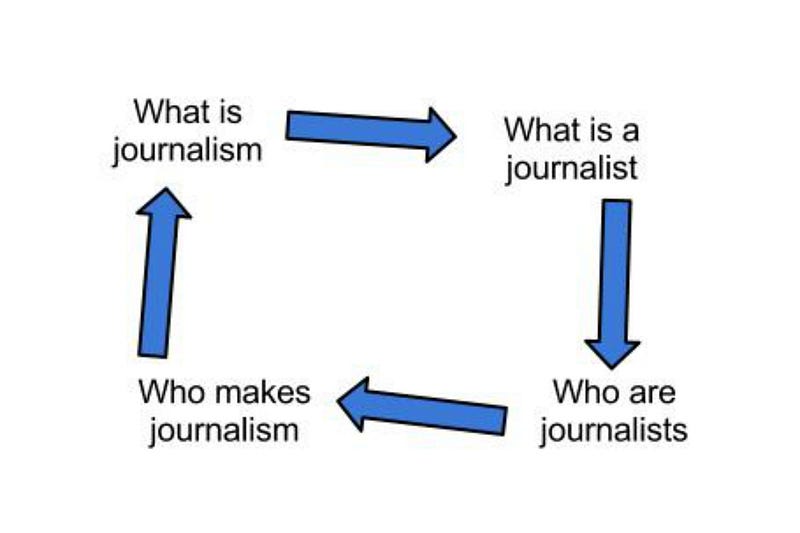
I believe we need a radically new paradigm for journalism, which I define as the transparent exchange of vetted information and civil debate so people can make sense of the world and how to operate within it.

I will describe a new model that fuses journalistic governance into a decentralized, member-owned information exchange.

I believe this could severely challenge echo chambers, bubbles and propaganda; effectively enforce strict sourcing and attribution policies at scale; provide better access and annotations to primary sources such as public datastreams as well as official government and corporate documents; conduct large-scale and verifiable public opinion polls; give life once more to local journalism via neighborly contributions; enable remote media creators to spontaneously form groups to tell rich, multimedia stories; support a good living for full-time contributors; and much, much more.

I call this project Civil.

“The media environment we’ve got”

“Increasingly more a site of coordination” — Clay Shirky, Internet sociologist

At first, I thought social media itself held the answer. I’ve always been fascinated with the world-changing potential of social media, inspired most by Clay Shirky.

Excerpts from his talk “How social media can make history” via TED Global (emphasis mine):

“The Internet is the first medium in history that has native support for groups and conversation at the same time.”

“Media is increasingly less just a source of information, and it is increasingly more a site of coordination.”

“[It] isn’t whether or not that is the media environment we want to operate in. That’s the media environment we’ve got. The question we all face now is, ‘How can we make best use of this media?’ Even though it means changing the way we’ve always done it.”

This was July 2009, nearly 8 years ago. Facebook was 5 years old, Twitter had just turned 3, and Instagram, Pinterest and Snapchat didn’t exist yet.

So have we made the best use of this media? Frankly, I don’t think we’re even close.

One major problem is that network business models don’t care about good journalism. News institutions rely on social media and other clicks-for-cash platforms to accumulate and monetize reach, which creates economic incentives and disincentives in gross misalignment with journalistic principles.

After all, most networks don’t ask many questions about what flows through their pipes, just as long as it pays. I mean, how else can you explain Outbrain and Taboola?

No reason to care about good journalism

“Because news outlets have to do this to survive.” — Sean Blanda, Former Director 99U

Many people have written about the business model challenges facing journalism today, but no one articulates it better than Sean Blanda in “Medium, and The Reason You Can’t Stand the News Anymore” (emphasis mine):

“The methods used to fund modern journalism simultaneously undermine trust in the news outlets.”

“You can draw a straight line from the bad incentive structure forced upon news outlets to the unprecedented divisiveness in our country.”

“A piece of news content that spreads has a better business value to the news outlet than one that is journalistically sound…. News outlets have to do well on social media in order to make money…. It’s better to have more content than less, so lots of disposable stuff is written quickly, with little regard to what it adds to discourse. Virality requires a visceral emotional reaction by the reader, regardless of nuance or truth.”

“Americans are being played against one another because our media consumption is reinforcing the idea that we’re more different than alike. Because that’s what shares. Because that’s what builds their social media reach. Because that’s what results in better scale for native and programming advertising. Because news outlets have to do this to survive.”

“Facebook collects the ad money. Advertisers get the clicks. News outlets live to fight another day. No group has any incentive to change and the rest of us are left fighting it out.”

“Facebook, Google and Twitter (but especially Facebook) don’t make any more money by supporting journalism. The worst ‘fake news’ ever written is that these companies somehow have a reason to care about good journalism.”

So if you’re convinced, like Sean and me, that advertising is an intrinsically poisonous way to fund journalism, then what?

This journalism-business-model debate has raged for years, of course, but always comes down to two pillars: advertising and subscription.

  • Advertising — commercials, programmatic, sponsored, native.
  • Subscriptions — deliveries, bundles, paywalls, micropayments.

But subscriptions don’t work either! First, they don’t eliminate echo chambers, bubbles and propaganda because people can just subscribe to perspectives they like and ignore the rest. Second, subscriptions are inherently exclusionary, and journalism should be a common good accessible to all.

It’s true, certain outlets have and will build strong businesses on subscription models — I especially expect direct-to-consumer media personality brands to start proliferating more — but it’s not a system-wide solution to the existential threat facing journalism as a whole.

(For what it’s worth, individual non-profits can do fantastic journalism as well, but I don’t believe philanthropy is a viable system-wide solution either because it’s not self-sustaining.)

So if every news institution wrestles between these two forms of survival — advertising and subscription — then the real issue is that these two pillars are obsolete.(1)

This means we need to operationalize quality journalism without advertising or subscription. But how?

Upgrading journalism’s tolerance for complexity

“Journalism was an answer to an even more important question, which is, how will society be informed?”— Clay Shirky

I figure the answer must lie in reimagining how people organize and work together toward effectuating journalism. I’m specifically a fan of ‘emergent organizational theory.’

I first became fascinated in this space when I read “Holacracy” by Brian Robertson. He has remarkable insights into common organizational failures and bold ideas for reshaping how companies work. This led me to Frederic Laloux and his book “Reinventing Organizations.”

You can’t miss the first 25 minutes. Laloux stunningly codifies the history of human organizations into 4 discrete breakthroughs. Then he describes a pattern for a new organizational model emerging independently among a diverse set of companies all around the world. Laloux coined these “teal organizations,” but more widely the idea of emergent/adaptive organizations has been discussed from Zappos to Medium to Harvard Business Review to Beth Comstock at GE and to organizational consultancies like August and Chapter.(2)

Laloux explains that teal organizations share 3 totally new organizing principles. The most important one here is self-management. I’ll let Laloux explain (emphasis mine):

“These organizations manage to operate at very large scales, some of them have thousands, tens of thousands of people, entirely without the pyramid, entirely without anyone being the boss of anyone else…. What I found out is that the truth is: Yes, you need structure, but no, you don’t need a boss.”

“Hierarchy works okay in environments with low complexity…. But as soon as you have high complexity, hierarchy is simply out of its depth.”

“Hierarchy always stacks up in a pyramid, and pushes all that complexity up to the top, and there’s only so much complexity the few people at the top can handle, can work with.”

“If you look at all truly complex systems that exist in the world today, they all operate with mechanisms more powerful than hierarchy.”

When I hear ‘complexity’ today, I immediately think of journalism. There’s now new information about everything from everywhere all the time, and we can’t parse it all so we rely on hierarchical institutions to synthesize what is going on. But our only available business models to support these institutions come with tremendously negative externalities.

Laloux explains examples of emergent complex systems such as the global economy, the human brain, and morning traffic, but his last one — a forest — is the most poetic (emphasis mine):

“A forest is an incredibly complex ecosystem. It looks kind of simple. We see these big trees. But there’s really everything from massive trees to billions of micro-organisms.”

“All of that works in some sort of magic. If the winter comes in early, all of that system will change at the same time and exchange information.”

“There isn’t one massive tree that says, ‘Hey, I’m the CEO’. That says to everyone else, ‘Hey, you! Freeze! Don’t do anything! Me and my buddy trees from the executive committee, we’ll come up with a plan. And when we’re ready, we’ll tell you what to do.’ That’s just not how complex systems work.”

“I have no doubt that as the world is becoming more and more complex, we will naturally have to shift the way we run organizations to principles that underlie all of these complex systems.”

To understand how this could work for journalism, let’s go back to Clay Shirky in a TED Talk titled “Institutions vs collaboration” (emphasis mine):

“Because the cost of letting groups communicate with each other has fallen through the floor — and communication costs are one of the big inputs to coordination —[we can] put the cooperation into the infrastructure, to design systems that coordinate the output of the group as a by-product of the operating of the system, without regard to institutional models.”

“I think this is a revolution. I think that this is a really profound change in the way human affairs are arranged.”

“As much as we want it — we want a professional class of truth-tellers — it is becoming increasingly incoherent, because the institution is becoming incoherent.”

“There are people in the States right now tying themselves into knots, trying to figure out whether or not bloggers are journalists. And the answer to that question is, it doesn’t matter, because that’s not the right question.

“Journalism was an answer to an even more important question, which is, how will society be informed? How will they share ideas and opinions?”

“If there is an answer to that that happens outside the professional framework of journalism, it makes no sense to take a professional metaphor and apply it to this distributed class.”

I envision baking Laloux’s and Shirky’s ideas of complex systems and coordinated individual efforts into a social media network with the sole purpose of effectuating a network-level definition of journalism, which I define as:

Journalism is the transparent exchange of vetted information and civil debate so people can make sense of the world and how to operate within it.

What if we decentralized as much of the journalistic process as possible to sidestep the institutional externalities, while implementing enough structure to derive coherence and to enforce must-have principles such as integrity and civility?

What if we could — together — define what valuable participation on this platform looks like, thus enabling a new operating model altogether?

A decentralized-first solution to journalism

“This business model is uniquely enabled by the combination of the internet and cryptocurrency.” — Fred Ehrsam, co-founder Coinbase (5)

I believe the answer lies in blockchain, the revolutionary technology underlying Bitcoin. The key things I want to draw from this are 1) programmatically enforceable governance (“smart contracts”), and 2) an economic ecosystem to grease the transparent exchange of vetted information and civil debate.

Don Tapscott, author of Wikinomics and (with son Alex) Blockchain Revolution, explained how blockchain works in a recent TED Talk called “How the blockchain is changing money and business” (emphasis mine):

“What if there were not only an internet of information, what if there were an internet of value — some kind of vast, global, distributed ledger running on millions of computers and available to everybody. And where every kind of asset, from money to music, could be stored, moved, transacted, exchanged and managed, all without powerful intermediaries? What if there were a native medium for value?”

“It’s called blockchain. People everywhere can trust each other and transact peer to peer. And trust is established, not by some big institution, but by collaboration, by cryptography and by some clever code.”

He introduces Vitalik Buterin’s ethereum, the second-largest cryptocurrency network after Bitcoin and the most innovative and enabling force for imagining other uses for blockchain outside of finance because of its use of smart contracts (emphasis mine):

“It’s a contract that self-executes, and the contract handles the enforcement, the management, performance and payment — the contract kind of has a bank account, too, in a sense — of agreements between people.”

“What if, rather than Airbnb being a $25 billion corporation, there was a distributed application on a blockchain, we’ll call it B-Airbnb, and it was essentially owned by all of the people who have a room to rent. And when someone wants to rent a room, they go onto the blockchain database and all the criteria, they sift through, it helps them find the right room. The blockchain helps with the contracting, it identifies the party, it handles the payments just through digital payments — they’re built into the system. It even handles reputation, because if she rates a room as a five-star room, that room is there, and it’s rated, and it’s immutable.”(3)

Blockchain researcher Bettina Warburg connects blockchain’s potential to Laloux on managing complex systems and Shirky on institutions in the TED Talk “How the blockchain will radically transform the economy” (emphasis mine):

“As our societies grew more complex and our trade routes grew more distant, we built up more formal institutions, institutions like banks for currency, governments, corporations. These institutions helped us manage our trade as the uncertainty and the complexity grew, and our personal control was much lower. Eventually with the internet, we put these same institutions online. We built platform marketplaces like Amazon, eBay, Alibaba, just faster institutions that act as middlemen to facilitate human economic activity.”

“We are now entering a further and radical evolution of how we interact and trade, because for the first time, we can lower uncertainty not just with political and economic institutions, like our banks, our corporations, our governments, but we can do it with technology alone.”

“I think it’s closest in description to something like Wikipedia.”

“Blockchains allow for us to create an open, global platform on which to store any attestation about any individual from any source.”

“Blockchains give us the technological capability of creating a record of human exchange.”

If you’re like me, these technological possibilities should be ringing your journalistic bells. Let me articulate 3 significant ways I imagine Civil leveraging blockchain to usher in a new paradigm for journalism.

First, content is immutable. Everything everyone publishes publicly on Civil is on the record, meaning no one can edit or delete anything, only amend.

Second, identity is immutable…. So everyone will always know what everyone else has published, forever.

What if data collected on contributors could provide greater transparency for members, so you always know the full identity and political leanings of your news sources?

What if we could programmatically recommend content and authors from “both sides” so people are always exposed to opposing viewpoints as well?

Think of the policies we could design to thwart negative externalities such as bias, echo chambers and fake news!

…but identity is also totally private. I imagine income-earning contributors necessarily disclosing their identities and personal biases so people know who’s providing their news, but I see everyday people taking advantage of all the data-driven benefits of large networks such as personalized discovery algorithms without ever having to give up their true identity to anyone.

What if someone could provide verifiable proof they are who they say they are (e.g. works for X, is connected to Y) without having to disclose their full identity to anyone, including the journalist, in order to validate a quotation?

Third, cryptocurrency policy designs network behavior.

Cryptocurrency is the most important attribute of blockchain systems by far. It’s the programmatic and economic way to (per Shirky) “design systems that coordinate the output of the group as a by-product of the operating of the system.”

Pre-blockchain, Internet-enabled complex systems such as Wikipedia were achieved sheerly through volunteer effort, but blockchain enables organizations to fuse economic incentives with network-strengthening actions and economic disincentives for network-weakening actions.

The enabling concept here is to think of the decentralized network like a traditional company where members want to earn or buy equity in the organization because 1) ownership bestows agency through shareholder voting, and 2) the equity’s liquid value is expected to increase over time.

Long-time Bitcoin/blockchain executive Fred Ehrsam calls this “projects creating own economic ecosystems to make the entire thing tick.”

“Businesses that are based on network effects will start to be built ‘decentralized first.’ This will look much like how some businesses started to be built ‘internet first’ in the late 1990s or ‘mobile first’ in the late 2000s.”

“In this model there is no central controlling company, and has shared contributions and ownership by all involved. This business model is uniquely enabled by the combination of the internet and cryptocurrency.

“You give people partial ownership of the network. Just like equity in a startup, it is more valuable to join the network early because you get more ownership. Decentralized applications do this by paying their contributors in their token. And there is potential for that token (partial ownership of the network) to be worth more in the future.”

I believe the answer to a new operating model for journalism lies within cryptocurrency and decentralized ownership.

What if the news were run by the people?

Civil wants to be a massively decentralized, democratically operated and member-owned news organization.

What if we could require contributors to take a “Hippocratic oath for journalism”, which could be programmatically defined, upheld and amended by the community at large through smart contracts, with violators facing network-access and economic sanctions?(5)

What if all Civil members have responsibility to the community at large?Think of it like jury duty. Maybe sometimes you’ll be asked to fact-check some content or take a new poll before gaining access to the rest of the app. Every time you strengthen the network, you earn a little bit of newly minted tokens. This token would have functional attributes within the network and could also be bought/sold for other currencies (Bitcoin, U.S. dollars, etc.) in a market-driven exchange.

Best of all, because Civil members would effectively own shares in the organization, everyone should want to earn as much as possible from strengthening the network because they stand to gain from its long-term stability and growth.

Taken all together, I believe this model — fusing journalistic governance into a blockchain-operated information exchange — could severely challenge echo chambers, bubbles and propaganda; effectively enforce strict sourcing and attribution policies at scale; provide better access and annotations to primary sources such as public datastreams as well as official government and corporate documents; conduct large-scale and verifiable public opinion polls; give life once more to local journalism via neighborly contributions; enable remote media creators to spontaneously form groups to tell rich, multimedia stories; support a good living for full-time contributors; and much, much more.

Let’s change the world

How we can make Civil happen together

I’m not exactly sure where to go from here, but that’s the beauty of being decentralized first! I’m not supposed to come up with all the answers on my own. That’s where you come in.

As I see it, there are 3 phases to building Civil:

Phase 1: Community formation and governance — We need a large group of people to demonstrate interest in Civil. The more people who pledge to participate in some way, the more valuable the network promises to eventually become, which will draw more people to pledge, and so on. This will help overcome the chicken-and-egg problem that all new networks face.

Civil’s primary objective is to draft and adopt a constitution.

We will get this wrong! What’s important is that we keep it as lean as possible so as not to choke the system with too many rules upfront, and encode enough flexibility and agility into it so we can make amendments as we go. We’ll also need to determine the platform’s cryptocurrency policy upfront, which will prepare us for the next phase.

Phase 2: Cryptocurrency crowdsale — Think of this like backing a Kickstarter project, except you’ll become a part-owner in the platform. This is how we’ll fund the project, instead of relying on venture capitalists.

Phase 3: Product launch — With an invested community, ratified governance and value-exchange mechanism in place, then we’ll be able to launch a product interface to make the whole thing work. In fact, I imagine open-sourcing the underlying data infrastructure itself and inviting free-market competition for front-end apps to sit on top (much like how all those Twitter clients helped fuel Twitter’s growth in the early days).

I’m sure these objectives can be worked on in parallel to some degree, and I know we’ll make tons of mistakes along the way.

As long we work together in pursuit of a shared purpose, there is no doubt we can change the world together.

Calls to action

  1. Get on the mailing list and join our Slack community.
  2. Email me at [email protected] if you’re interested in contributing to Civil. Soon, I’ll open a project roadmap for everyone to see what needs to get done, propose new ideas, and pitch in.
  3. Recommend this article and share it via Facebook, Twitter or email. We need lots of supporters to make this work.
  4. Ask questions, poke holes, offer solutions! Tell me one major concern you have with this concept, and how we might potentially solve it.

About me

I’m Matthew Iles. Learn more about me on LinkedIn. Feel free to connect!

Credits

Sean Blanda, Fred Ehrsam, Frederic Laloux, Yves Moreiux, Larry Sanger, Clay Shirky, Alex Tapscott, Don Tapscott, Bettina Warburg.

Inspiration

I didn’t reference any of their work specifically here, but these people have been highly influential to my thinking: Eric Ries, steve blank, Brian Robertson, Jay Rosen, Charlie O'Donnell, Fred Wilson, Marc Andreessen, bhorowitz, Chris Dixon, Peter Thiel, Vitalik Buterin, Frederic Filloux, Alex Moazed, Nicholas L. Johnson, Sangeet Paul Choudary, Jason Fried, DHH, John Wooden.

Acknowledgements

I have to thank my close friends Chris Crowley, Matt Coolidge, Ryan Zampardo, Alex Hardy, Ed Staples, Steph Soussloff, Lillian Ruiz, Jono Schafler, Eric Richmond, Stefan Pepe as well as my family for all their support and oxygen-like feedback.

Dedication

This research and this vision is dedicated to my immensely supportive and remarkably brilliant wife, Katie Neufeld Iles. You are the most amazing woman in the world. I love you.

Footnotes

(1) I used as a template here Yves Morieux’s incredible explanation of the obsolescence of both hard and soft management pillars in his TED Talk “As work gets more complex, 6 rules to simplify.”

(2) On new organizational models: Zappos, Medium, Harvard Business Review (i, ii), Beth Comstock, August, Chapter.

(3) There’s already an organization trying to decentralize ridesharing with varying degrees of success and controversy called Arcade City. Read more about it here, here and here.

(4) I first heard of this idea in Lara Setrakian’s TED Talk “3 ways to fix a broken news industry

(5) Fred Ehrsam first introduced me to the term “decentralized-first” here.

Blockchain
Journalism
Social Media
Startup
News
Recommended from ReadMedium