What If Governments Shut Down Social Media In Times Of Crisis?
What would a world look like without social media?
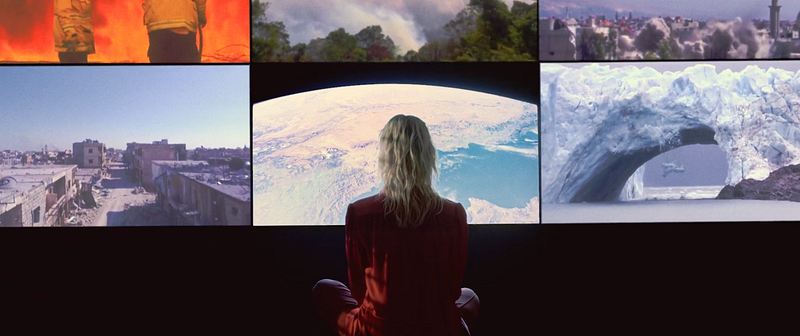
Have you ever asked yourself what a world without social media would look like and what impact this could have on your everyday life? Well, I’ve been asking myself that question for more than a year now — since COVID-19 has been at the top of all media agendas and since I came back home from my American journey.
Nothing Could Stop Me
At the beginning of March 2020, the coronavirus was already circulating all over the world. At this time, I cared very little about it, distanced myself from all news media, and continued living my life as usual. I jumped on a plane to New York to follow my dreams, and nothing could stop me either. A few days later, then-president Trump announced travel restrictions on European countries to combat the spread of the coronavirus and my friends started advising me to better come back home before the borders would close or before I got infected with the virus. However, I didn’t let anyone spoil my mood and continued exploring New York.
“The city that never sleeps” was slowly becoming dead, and so did I.
But things were seriously getting worse: My friends didn’t like to go out in public spaces anymore, and restaurants, as well as other public institutions, were closing their doors. Mrs. Adams, an elderly lady I lived together with, watched the news very loudly on television all day long, and I slowly got nervous. “The city that never sleeps” was slowly becoming dead, and so did I.
Social Media Left Me Feeling Depressed
There was only very little remaining, and this is why I started to withdraw more into myself, spent most of the time in my room, and scrolled through social media and other news platforms all day long. And because that wasn’t enough, I began watching TV with Mrs. Adams in her bedroom, and then it didn’t take much longer until I finally started crying and getting depressed. The explosion of my consumption in news and social media made me feel insecure and anxious. I started overthinking, and worrying about what would happen if I didn’t come back to Europe, if I got infected by the virus in the US, and how all of that would drive me into financial ruin. I went through a mental breakdown and Mrs. Adams recommended me to start reading the Bible to get a new perspective and hope. I am not religious at all but I was so desperate that I read parts of the Holy Writ. Then, when my smartphone broke (probably due to the increased consumption), I had had enough and finally emailed my family to book me a flight back home to Europe.
I’m not sure if I felt sick because I may have contracted the virus or if these weren’t more symptoms of a so-called ‘news coma’.
On my way home, I felt sick. I suffered from difficulty breathing, chest pain, and heavy feeling. My thoughts were driving me crazy, and I was fairly sure that I must have been infected by the coronavirus. To this day, I’m not sure if I felt sick because I may have contracted the virus or if these weren’t more symptoms of a so-called ‘news coma’. However, I think the latter.
Finally, when I was back home and voluntarily went into quarantine, I started asking myself “what if” questions: “What if I hadn’t watched the news on television with Mrs. Adams or read all the articles my friends sent to me via WhatsApp? What if I hadn’t consumed any media during my stay in New York? What if the government shut down social media in times of crisis?”
The Meaning Of Social Media In Times Of Crisis
I’ve been trying to avoid reading the news for several years now. I’m overwhelmed with all the news services offered, and also, I don’t longer know which sources I may trust as there are just too many. Another thing that I had noted was that you are more confronted with negative than constructive journalism.
The meaning of social media in times of crisis and news media, in general, is to keep us informed, share essential information, and to participate in world events. Social media communication platforms can provide announcements that may help prepare for upcoming events, provide warnings, responses, recovery efforts, and educational information.
An advantage of using social media is that content can be communicated in real-time and sent quickly and easily to a big audience. Besides, social platforms provide an opportunity to be connected with others, especially in times of crisis. Thus, it creates a feeling of community and lets us know that we are not alone.
However, the use of social media platforms affects mental health in a positive but more negative way. Another big problem is that misinformation can be spread very quickly and widely — that’s why it is so important to be careful of where you get your information. Another challenge of social media is that individual opinions can be shared as facts in general.
Social Media Bans In Crisis Are Supported
When the Sri Lankan government shut down some social media access after a fatal terrorist attack in April 2019 to stop the spread of misinformation, a study was done by Ipsos dealing with the question “if governments should be allowed to shut down social media platforms in times of crisis.’”
These were the most important findings:
- “Six in ten global citizens say that it is acceptable to temporarily cut off access to social media platforms during times of crisis to prevent the spread of misinformation. But, the exact same proportion also agree that temporarily cutting off social media platforms at times of crisis is unacceptable because social media is the primary source of news and information for many people.”²
- “Comparable to the proportion who support social media bans, six in ten global citizens also agree that it is unacceptable to temporarily cut off social media during times of crisis, given the reliance on these platforms for news and information. The majority agrees that social media is not the best or most accurate source of information, but people are capable of separating fact from fiction on these platforms.”²
- “In fact, the largest proportion indicates that there are ways around social media bans, and therefore they would not work effectively. An Ipsos Global Advisor survey conducted more than a month later finds that more than half (60%) of nearly 20,000 people across 27 countries think cutting off social media access during a crisis is acceptable.”²
Thank god, no one is forced to consume social or news media.
I can only agree with the results. Even if I think that social media should be shut down during a crisis to stop fake news, and to prevent mental illness, I believe that such bans may not be acceptable for moral reasons, and that there are several ways around social media bans. Thank god, no one is forced to consume social or news media.
What Would A World Without Social Media Look Like?
If I close my eyes to imagine a world without social media, I see plenty of freethinkers and fewer terrorist attacks. Also, I see less fake news in general as platforms would be simply missing. Presumably, there would also be less hate against supposed minorities. Further, people have to get back into direct contact to meet new people. There would probably be fewer mental illnesses and also, cyberbullying would not take place.
On the other hand, media are the further development of storytelling. If there were no media, there would be no stories and no news. Probably, we would be bored to death, I wouldn’t be as creative as now, and I would not have been able to write this article and share it with you.
¹ Social media: Should governments shut it down in times of crisis? (2019) https://www.ipsos.com/en/social-media-should-governments-shut-it-down-times-crisis (Access: 14.03.2021)
² Social media ban (2019) https://www.ipsos.com/sites/default/files/2019-08/global_advisor_-_social_media_ban_-_final.pdf (Access: 14.03.2021)