
What If GaryVee Was Right?
You can ‘close your eyes until you’re 29.’
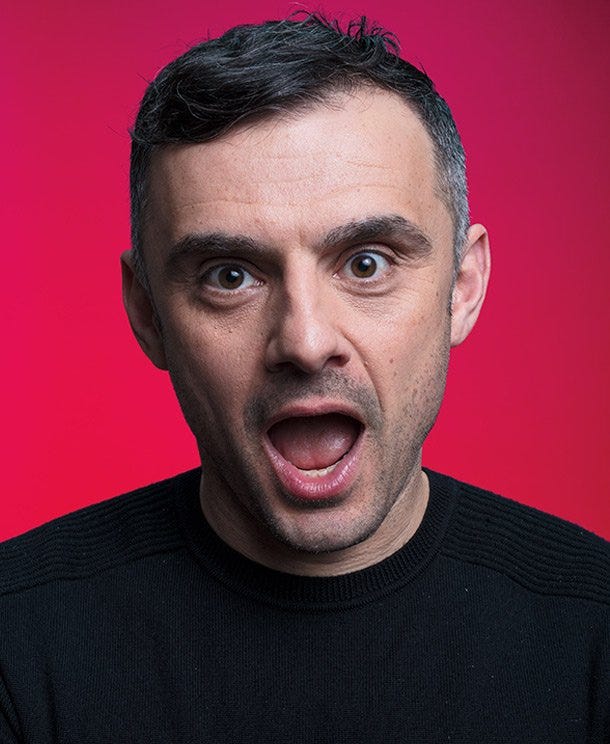
I disagree with Gary Vaynerchuk on a lot of things. (For starters, I hate the word ‘hustle,’ and I don’t believe that everybody should create content 24/7.)
But there is one idea from him that I keep coming back to over the years.
“Close your eyes until you’re 29.”
I remember when I first heard it.
His team compiled a short (2–3 min) video on YouTube as a mashup of quotes and footage from different keynote conferences and meetings Gary had with fans.
He was asked repeatedly by budding entrepreneurs (most of whom were in their twenties), “What should I do? I am lost. I am in a rut.”
And Gary would reply the same thing over and over, in his usual driven way, “You’re not lost. You’re just too early in the process.”
The first time I watched that video, I was in a rut.
It was three years ago; I lived in a Moscow apartment I couldn’t afford; my girlfriend and I just got together.
Two months before, I lost $100,000 trading bitcoin — money that didn’t even belong to me.
I was lost.
Full of guilt. Shame. Doubt. Overly self-conscious.
And I knew it was all my fault.
I rushed too much, wanted to make a quick buck, and got burned. I wasn’t playing the long-game. In fact, I wasn’t playing any game — I just wanted to make money quickly to hide my insecurity and prove to myself that I didn’t leave business school for nothing.
But that worst moment of my life also became the best. I changed.
Back then, I watched Gary’s video so often; it almost felt the “close your eyes until you’re 29” idea was tattooed on the inside of my brain. And then, I started to change my life on the outside, too.
I acknowledged that I was young (19) and stupid — and I asked for help. I assembled a group of mentors: heroes I’ve admired and interviewed them for my Russian YouTube channel. Then I wrote my first book, launched a business, and a couple of years later — moved to London and started writing in English.
But even though I’ve learned not to rush, I am still human, and I make mistakes. I still often feel FOMO and as if I am missing out. Especially when I text my old friends — some of whom live and work in Silicon Valley — and they tell me stories about how they’ve raised $750K for a startup. I can’t help but start to worry that I am missing out.
Sometimes doubt catches me by the balls and whispers, “You’re wasting time… what are you doing with all this content and writing? Who needs to read your shit? Who cares…? You’re nobody yet. Oh, and you’re broke too…”
I know it’s natural to experience something like that at 22, especially when you’re doing something creative.
If I were 4–5 years younger, I would have listened to that voice of doubt. I used to be young and naive and believe everything I thought.
Now I accept that this voice is full of shit, and it’s just my insecurity speaking.
I remind myself that “it’s OK to close your eyes until you’re 29” — because 29 is still very young. This means I can literally pick my nose for the next seven years, wake up, and still go and become successful.
I have a lot of time.
But of course, it’s one thing to know something — like, from a book or an inspirational video — and another to understand and practice.
It’s almost impossible to be patient at 22 because you lack perspective. You’ve only truly lived for 5–7 years, so you think that 30 and 40 is old. (It’s not.)
But this doesn’t mean you shouldn’t strive to be patient. Young people who are grateful for the time they’ve got are more likely to become successful.
For example, Warren Buffett is famous for his extremely patient approach to investing. He bought his first stock at 11 and has been doing what he’s doing now for most of his life. One of his biographies is called Snowball to reflect the compounding returns Buffett got from doing one thing and not rushing too much.
Buffett didn’t rush to become successful in his twenties. Instead, he approached his life in the same way he approaches his investments: with patience, diligence, and tranquility.
So being patient can be a superpower. Failing to acknowledge your abundance of time early in life is the same as denying your wisdom and experience when you’re older. Imagine a 60-year-old behaving like a small naive kid, making mistakes, and not using the lessons life has taught him. Weird, right?
When you’re rushing too much in your twenties, you’re doing a disservice to yourself. Instead of investing time to figure out what you want, exploring all of your options, you speed to the finish line. And it’s not your fault — the whole society is built to push you forward, make money, “find a job,” and so on.
But I want to ask you something I asked myself before I sat down to write this article.
What if GaryVee was right?
Be genuinely curious.
What if you really can close your eyes until you’re 29, and still have everything you want? Imagine it, just for a second.
How would your life change?
In what ways would you behave differently if you knew you didn’t have to listen to parents, society, and everyone else telling you to “get a job,” “make money,” etc.?
Ask yourself this question right now. Perhaps you’ll discover something new about yourself.
I would do three things:
- Improve at my craft. I want to be a professional podcaster and writer. And I know that to become successful, I just have to practice: build those 10,000 hours that Malcolm Gladwell talked about. It just takes deliberate and daily effort over many years to get where I want to be at.
- Build a platform. In my case, it’s building an audience for my writing and podcasts. You build a platform by not thinking about money and creating at scale.
- Have enough money and forget about it. I know that I need about $3,000 per month to survive. Anything higher than that is an extra — a luxury that I don’t need, so I don’t have to work extra hard for it and take more freelance jobs. If I am lucky enough, I can be underemployed and use this extra time to explore my options and do points 1–2.
Notice — I don’t say “rush to build a company” or “make the most money to retire in my 30s” or “growth hack until my blog goes viral.”
There is no nobility in early success because you’ll have time for that later. Kevin Kelly says, “Leave productivity for the middle ages.”
It’s like playing a video game. You’re 20% in, and you have the option to fast-forward all the missions — and just enter a cheat code, and you’re done. Would you do it?
I wouldn’t because it’s all about the journey: the process.
The point of skiing is not to get to the bottom of the slope as fast as possible. It’s to enjoy as many fun rides before the sun goes down.
Life is like this in a way.
Even if you go 50% slower, you’ll still get there on time because ‘time’ is not the point.
The Mini Post-Grad Survival Guide
A 5-day email course with amazing tips on budgeting, investing, and productivity for 20-somethings. Sign up for free.


