
What if Everyone was Autistic
Maybe they should be! Maybe they are!
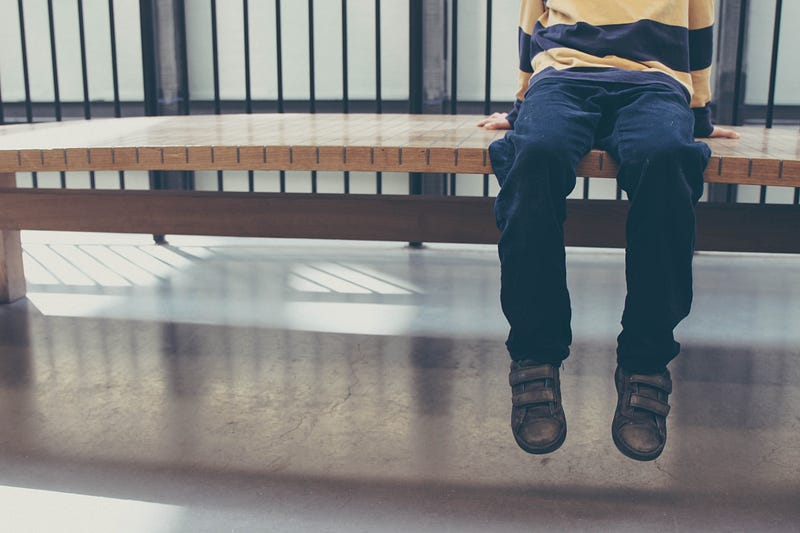
I think the new social distancing rules for controlling the coronavirus have made us aware that we don’t need as much social interaction as previously considered necessary. For many of us, the idea that we now have an excellent excuse to stay home has been a dream come true. Even if we can’t totally isolate ourselves, the new distancing rules are the next best thing.
- No, sorry — I can’t give you a kiss and a cuddle on the street corner!
- Oh, sorry — I didn’t recognize you with your mask on.
- No, sorry — I can’t join your little shindig tonight.
Best of all, we don’t even need to have flu symptoms to make others keep their distance. Not that you need to be an academy-award actor to fake a good, dry cough.
So what has social distancing and coronavirus got to do with autism? Well, it just so happens that most of the lifestyle changes being pushed upon us are known as symptoms of autism.
Now, I don’t set the rules for diagnosing autism, and I’ve never been categorized as being autistic. I was lucky they didn’t know about autism when I was a kid and growing up, like many other things they accuse kids of these days. In my day, kids never had ADD or ADHD or anything like that, either. But I used to think something must be wrong with me, because most people seemed to avoid me.
I’ve since discovered that it was me who was avoiding them, but the end-results were the same. Nevertheless, I took the trouble to learn about autism, so even though I’m not an expert, I’m knowledgeable on the subject.
I’ve set out below the main symptoms of autism and how they relate to the new, social rules now being forced on us:
Social Interaction
Everything about autism is supposed to be about problems with social interaction. But what we are now being taught is that “normal” social interaction is the problem. People are learning that correct and proper social interaction requires that you:
- Keep 6 feet away from everybody, at all times
- Never laugh out loud around other people
- Disguise yourself with a mask so you can’t be recognized
- Learn how to do most things alone
- Stay home, and never have visitors
- Never visit anyone in a hospital or under care.
The new, polite name for it is social distancing; it was previously called anti-social behavior!
Impaired Communications
People used to say that those with autism didn’t know how to communicate. Those people now find they have a problem with face-to-face communication because of the social distancing rules. What are the alternatives? Once-upon-a-time the immediate answer would have been to talk on the phone, and I must admit my number of missed calls has definitely increased lately. So some people are trying that. But hey, if it’s worth calling me up, then it must be worth sending me a text message. I’m always available to receive text messages.
Personally, I can’t see why some people avoid texting — the range of emoticons is so complete you can communicate just about any feeling you want. Best of all, no-one (like me) gets disturbed from doing whatever they were doing before. Which leads to the next symptom.
Restricted Interests
Well, I can see how being in lockdown may restrict some people. Not even I think that the range of activities and interests one can have at home is equal to those available elsewhere. But most of the things you can do away from home cost money — usually too much money.
I still can’t understand why anyone would pay to go to a movie theatre when they could have unlimited streaming at home, at a fraction of the cost. This doesn’t really explain why movie theatres are closed — how much social interaction can there be in a dark theatre where no-one ever wants to hear what you have to say. I’ve learned that most people don’t want to know what’s coming next on the screen. Or who’s standing behind the door with an ax. So I keep quiet.
But no-one’s going to the movies now, even though they never socialized there anyway. Everyone’s doing the same as me and watching their favorite TV programs over and over — what else could they be watching?
So I think I can agree that there’s less available at home. But I wouldn’t call it “restricted”.
Repetitive Behavior
This one really riles me up! It’s not only me that needs to go for a walk at 9am every morning, the dog insists on it too. And then he MUST go out again around 7pm, every day. This used to be called “repetitive behavior,” but now it’s considered normal and the right thing to do.
What about when everyone else streamed out of their homes every morning to join the queues at the bus stops and train stations to go to work every day. Well, almost every day. I never heard anyone call that repetitive.
And when, precisely, did “orderly” become “repetitive”. This is another thing that previously identified autistic people — their need to arrange things in a neat, orderly way. Everyone now understands that careful stacking is the only way you can store your 6-month supply of toilet paper — in an elegant and tidy stack in the spare room. If it’s not stacked up correctly, it will fill the whole room! And that’s ignoring the extra storage space we all need for the bread-baking flour and the packs of spaghetti.
I’m a little surprised that people have only recently discovered the beauty of well-stacked toilet paper and other life-necessities. Not long ago, people were called autistic for wanting to keep things orderly. Now everyone’s doing it.
By the way, I always thought one of those shelf-stacking jobs at the supermarket would be a dream come true. But now we can all do the same thing at home without raising suspicion or negative comments. Sweet!
And here’s another thing — I haven’t heard one medical authority say there are any limits on how often we should wash our hands. Every expert and scientist says more, more, more! You can’t do too much hand-washing. I’ve always known that. I’ve always known about germs, bacteria, viruses, and smells — especially smells — on everyone’s hands. Except mine! So, finally, the scientists and epidemiologists have agreed with me that you can’t have too much hand-washing. All of a sudden, it’s no longer considered to be repetitive behavior. Everyone’s doing it.
Back to Social Interaction
As I said in the beginning, social interaction is the crucial problem that’s used to define autism. And now, everyone is aware that their “normal” social interaction was causing the spread of the coronavirus and killing people. Scientists discovered that normal behavior is destructive and irresponsible.
Who could have guessed we’d come to this. I’m not a conspiracy theorist, but I must admit I’ve got my doubts about Bill Gates. He always seemed a little stand-offish to me.
I’ve spent most of my working life being a computer programmer. Actually not just my working life — for a good programmer there’s no difference between working and not working. Programming is all about expressing logic to an unemotional machine, and I’ve never understood why intelligent people should be excused for failing to understand or respond to logic!
Anyway, back to Bill Gates. I have no proof that he is behind this global movement to make our societies more autistic. But I can’t think of anyone better suited to the job. Keep it up, Bill!
Finally, and in conclusion, I think it’s evident that our societies now work perfectly since everyone has been forced to accept that too much social interaction is not a good thing. The rule book has been rewritten. So if there’s someone out there who thinks they’re not autistic, now is the time for them to wise up and learn to live with the rest of us.


