
What I Wish I Knew Ten Years Ago
Here are the lessons I’ve learned over the past decade on being an indie author.
I self-published my first novel ten years ago in August 2010. I was completely new to publishing and marketing, and so there were a number of times when I was hopelessly frustrated by the lack of financial results from my writing. Here are the things I wish I could go back and tell myself.
Publishing is not enough
I thought all I had to do was hit “Publish” and the sales would come rolling in. Oh, how naive I was! With the staggering amount of books available online even back then, I had basically dropped mine into a sea of competition. The result? Nobody noticed.
You need to pursue an aggressive marketing strategy
This may sound incredibly basic, but 2010 me didn’t realize it. People won’t buy your book if they don’t know about it. You need to market it. Simple, right? But how exactly do you go about doing it?
While I don’t intend this story to be a marketing guide, I can give a few tips.
1.) Connect with people on social media.
After all, that’s where your readers are. Follow people and engage with them.
2.) If you’re writing a series, make the first book free to attract potential readers.
This strategy has worked out great for me, resulting in thousands of downloads.
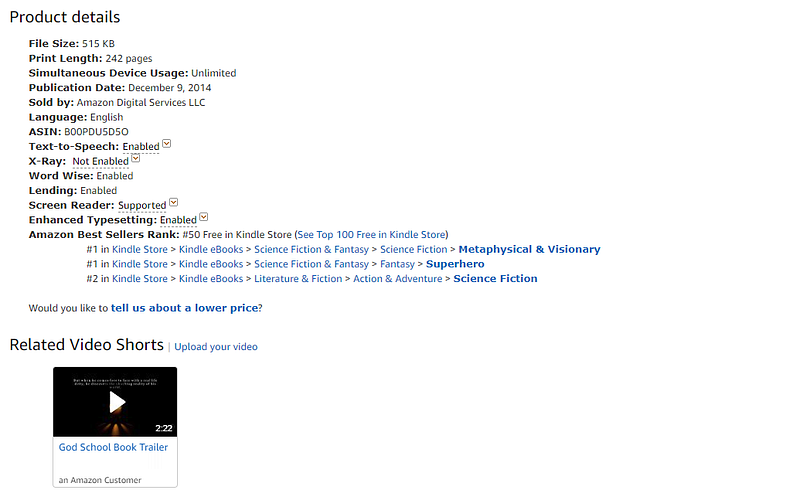
Once it’s free, submit the book to these promotion sites. Some are free, while others cost money I’ve found the paid ones give better results. Submit to as many as you can.
3.) Master Facebook ads.
Facebook ads are a potential goldmine for you. I recommend Alana Terry and her Author Ads Library course. It costs a pretty penny, but you might have a chance to attend a free webinar like I did. At any rate, definitely follow her for advice.
Self-editing is not enough
No matter how good at editing you think you are, you need an editor. That’s because you’re too close to your work and can’t fully edit it with a critical eye. Get yourself a proper editor even if you have to spend a good chunk of your paycheck on it. I myself was impatient and rushed my first novel out the door. Here’s a great quote from Charles Finch that sums up why you shouldn’t do that.
To me, the single biggest mark of the amateur writer is a sense of hurry.
Hurry to finish a manuscript, hurry to edit it, hurry to publish it. It’s definitely possible to write a book in a month, leave it unedited, and watch it go off into the world and be declared a masterpiece. It happens every fifty years or so.
For the rest of us, the single greatest ally we have is time. There’s no page of prose in existence that its author can’t improve after it’s been in a drawer for a week. The same is true on the macro level — every time I finish a story or a book, I try to put it away and forget it for as long as I can. When I return, its problems are often so obvious and easy to fix that I’m amazed I ever struggled with them.
Amateur writers are usually desperate to be published, as soon as possible. And I understand that feeling — you just want it to start, your career, your next book, whatever. But I wonder how many self-published novels might have had a chance at getting bought, and finding more readers, if their authors had a bit more patience with them?
So take your time and give your book the attention it needs. That definitely includes time for editing.
In summary
Success will not be handed to you unless you’re freakishly lucky. You must claw relentlessly at the glass ceiling. Pound away day after day, and eventually you’ll start to see results.