
What I really, really want (and how badly)
One of the cool functions of money is that it allows us to express our preferences in a remarkably refined way by means of our willingness to pay — but it is not always that simple
Preferences are a relatively recent phenomenon. Even our not-so-distant ancestors didn’t bother much about them. Preferences are only relevant when there is choice, and when there are trade-offs to be made. They didn’t have Netflix, a vast range of breakfast cereals, or numerous clothing brands. Mostly, they took what they could get, whether that was food (as long as it was nutritious), a cave for shelter (as long as it was fit for purpose), or a mate (as long as you could produce offspring together).
But once our even-less-distant ancestors had come up with some form of sophisticated society, choice emerged, and they had to start making trade-offs. And money allowed them (and us now) to express which of those choices they preferred, and what they were willing to sacrifice for it, without having to resort to ever more complicated bartering combinations (what is the exchange rate between hares and loaves of bread today?)
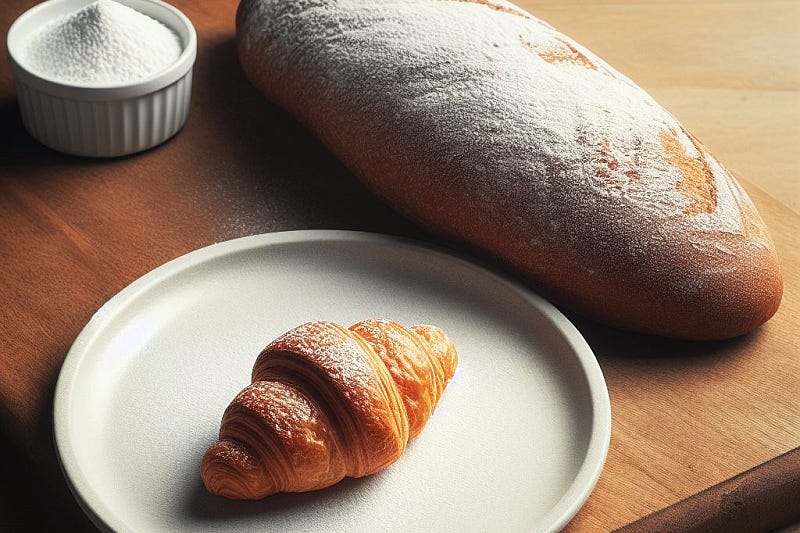
Willingness to pay (and its counterpart, willingness to accept) have become the way in which we measure relative preferences, within and between people. What we are prepared to pay is at the very least an indication, and often a genuine measure of the utility we expect from what we get. If we go to the bakery and are prepared to pay £1.50 for a croissant and £3.00 for a loaf of bread, it makes sense to conclude that the bread gives us twice as much utility as the croissant. Likewise, if, in an auction, the top amount we are willing to pay for an original 1969 vinyl copy of The Beatles’ Abbey Road album is £30, and someone else keeps bidding until the price reaches £90, we can assume that the other buyer will be getting three times as much utility out of it than we would.
But this idea that willingness to pay is a sound indicator of utility seems to have its limits.
What we pay does not always say what we want…
One case in point is information. The fact that we pay for news — online or at the newsstand — suggests that we perceive utility in information. And it’s not just current affairs that we’re willing to pay for. A survey by a British consultancy found that 29% of respondents would be willing to pay £20 (€23, $24) to access the information the government holds on any citizen.
So, information can clearly be valuable. If it has no value, we can simply ignore it (few people will insist on reading every single article in a newspaper or journal just because they’ve paid for it, and if someone pushes a free paper into our hands, we can just discard it in the nearest bin). But information can have negative perceived value. Sometimes, we are willing to pay to definitely not receive valuable information. In an experiment by economists Ananda Ganguly and Joshua Tasoff participants had a choice between earning $11 on condition they had their blood tested for either the cold sore variant of the Herpes Simplex virus (HSV-1), or the more serious HSV-2 variant of genital herpes, and earning just $1 and have no blood test. Most of them were happy to take the money and have their blood tested, but about 1 in 20 preferred forgoing ten dollars in order not to be tested for HSV-1, and three times more (15.6%) did so in order not to have the test for HSV-2. So, here we find that we are willing to pay to not get something (even though it actually has demonstrable utility).
This is not the only weird quirk we exhibit. A new paper by Cass Sunstein (the coauthor of Nudge) discusses a strange category of goods: those that people buy (and pay good money for), but wish did not exist. Sunstein discusses several instances of such goods (and activities), which helps clarify why this bizarre phenomenon arises. Apple tends to launch new versions of its smartphone with relentless regularity. While older versions remain perfectly adequate for many years, the fact itself that there is a new one confronts people with a choice — upgrade or not? Many do get the most recent version, but some might have preferred not to have to make that choice, and to stick with the older variant. Their purchase of the new model and the corresponding willingness to pay signals utility, but their preference for its non-existence seems to deny it. And it’s not just about buying products. Imagine there is a party this coming Saturday that promises to be good, with lots of your friends and interesting people attending. You can choose to go, or to skip it. But might you wish that you did not have to make that choice — that there would never have been such a party, or that it was cancelled? Sometimes, it seems, we feel some kind of obligation to engage in a transaction (it could be a purchase, but also a different exchange in which we sacrifice, for example, our time) simply because it exists.
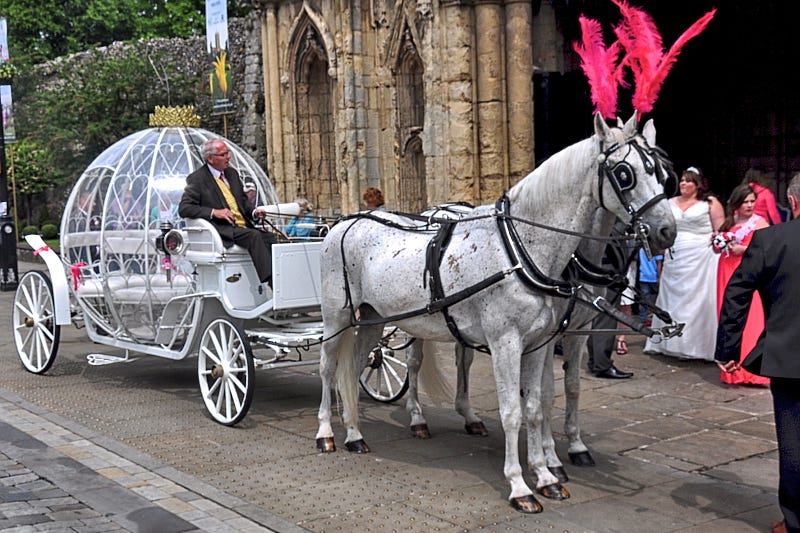
And no two without three. This past week I also came across a paper by Peter McGraw, a psychologist at the University of Boulder, Colorado, and colleagues, describing research into purchases that are symbolic of loving relationships: weddings and funerals. This revealed some intriguing findings in three aspects of the purchase process. People tended to go for the more expensive option, even if the cheaper available options were judged to be equally desirable. They were also reluctant to even search for a lower price for an equivalent offer, or to negotiate on price with a provider. As the saying goes, you can’t put a price on love, and people appear to take that quite literally, by being willing to pay more than the actual utility the purchase provides.
… or does it?
Does this mean we are more irrational than we thought we were, after all? I don’t think so. A better explanation is that how people evaluate the utility of a choice — the benefit they get from it — is sometimes more complex than we think. At first sight, knowing that we have a serious condition seems like something worth to have. But knowing it for certain, rather than perhaps just suspecting or fearing it, will compel us to make choices we now do not have to make — from seeking treatment to revealing our situation to our (prospective) sexual partners. Sometimes, ignorance is bliss, and we are prepared to pay for that. The goods we buy but wish didn’t exist have a similar explanation: their very existence obliges us to make a choice, and that choice has implications. Not buying might send signals to others or to ourselves that we would prefer not to give, it might make us fear that we are missing out on something important, or make us feel embarrassed at not yet having the latest model of some object. And finally, signalling is likely also a factor in our reluctance to engage in otherwise perfectly rational cost-efficiency seeking behaviour, when it concerns expressions of our love for others. We fear it might make us look as if there is a financial limit to our love.
Rightly or wrongly, our choices, and in particular what we are willing to sacrifice to make them, express what matters to us — what, as the Spice Girls used to sing, we really, really want.
Originally published at http://koenfucius.wordpress.com on November 3, 2023.
Thank you for reading this article — I hope you enjoyed it. Feel free to share it (the ‘share’ button below or at the top has direct options for Twitter, Facebook and LinkedIn) or simply copy and paste this link. See all my other articles featuring observations of odd human behaviour (I have been publishing one every Friday since 2016) here. Thanks!