
What I Learned Travelling Through Turkey
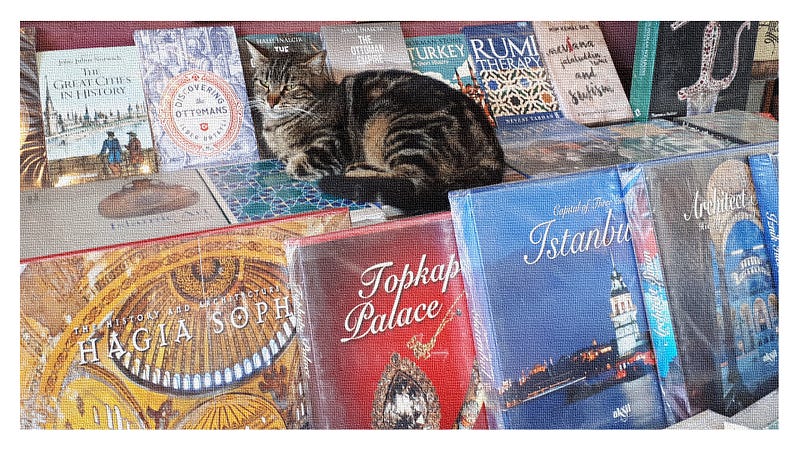
I have just spent three months in Turkey which turned into one of the best trips of my life.
From the rolling hills and green pastures to the quaint villages, from the ancient cities and centuries of history to the crystal blue waters of the Mediterranean, the diversity of beauty is truly incredible. From the food, which is globally renowned, to the artistry of coffee and tea making, the country is rich in culture and customs.
Whilst I had a pretty good idea of what to expect before I arrived in Istanbul in April 2022 due to the abundance of Turkish friends and students I have, there was so much more that I was about to learn.
Here are the main things that I learned during my time travelling through Turkey.
1. The country is incredibly beautiful!
Despite having seen numerous pictures online that my students constantly directed me to, the beauty still astounded me. Every train and bus ride took me through rolling green fields dotted with tiny villages and towns before snaking their way through cities looming large around us.
Remnants of history lie everywhere; in the architecture of the buildings that are still preserved and in the ruins dotted around the large country, all of which are magnificent. I wandered with awe through many of the mosques, looking up at the intricately painted ceilings and ornately carved décor.
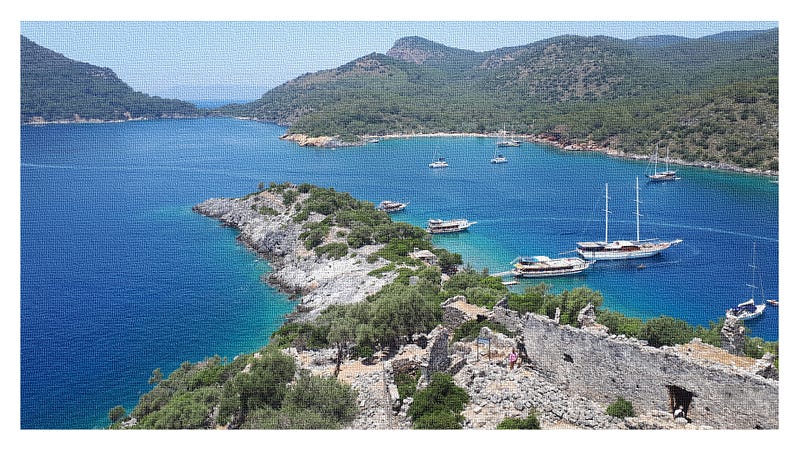
From the north in Istanbul to the south in Fethiye, from the east in Cappadocia to the west in Izmir, the country continued to astound me during my entire journey.
2. Pedestrian Crossings are merely symbolic in Turkey.
Those zebra crossings that you are so familiar with don’t work the same way in Turkey — they are merely an indication that crossing here is possible. Cars zip through these pedestrian walkways as if the painted lines don’t exist and it is your responsibility to make sure that there are no cars coming before you step onto the first white stripe, not the other way around.
Mostly I accepted this fate but I did have one moment where I forced a car to stop, pointing out the pedestrian crossing with a wide sweep of my hands.
3. There are some rules, but mainly no rules.
I had to put this one in as watching motorcyclists head down the road without helmets on, people cross whichever road they pleased at any point, drivers treat their seatbelts as optional extras, and never having a guard tell you to stay away from the edge or get down off some wall or ledge when you’re trying to take a picture was extremely amusing and quite a refreshing change. Turks believe that everyone should take responsibility for their own stupidity and if you fall from a high vantage point, well, that’s on you.
I saw women balancing precariously out of balcony windows attempting to wash them as there are no signs constantly telling you what to do. I loved it!
4. The smoke can get to you.
Almost everyone that I met in Turkey was a smoker, from a couple of puffs to a pack a day, and cigarette smoke is everywhere. I’m not going to lie, it definitely affected me. During my first month in Istanbul I noticed that I was struggling with my throat and after a couple of home Covid tests came back negative, I realized that it was due to the constant smoke that I was being exposed to living in the city.
When I moved on to Izmir it eased somewhat as Izmir isn’t as crowded and I was able to avoid a lot of the café and restaurant strips where the smoke usually permeates.
The air pollution in Istanbul is also pretty bad which exacerbated things but eased a little as I moved to Izmir.
5. The transport system is very good in the major cities.
I was extremely impressed by the transport systems in Istanbul and Izmir and loved the way they integrated into Google Maps. Using the train and metro systems was very easy and everything is very clearly marked. Google Maps tells you exactly which line you need to take, lists the stops along the way, and tells you at which station you need to get off.
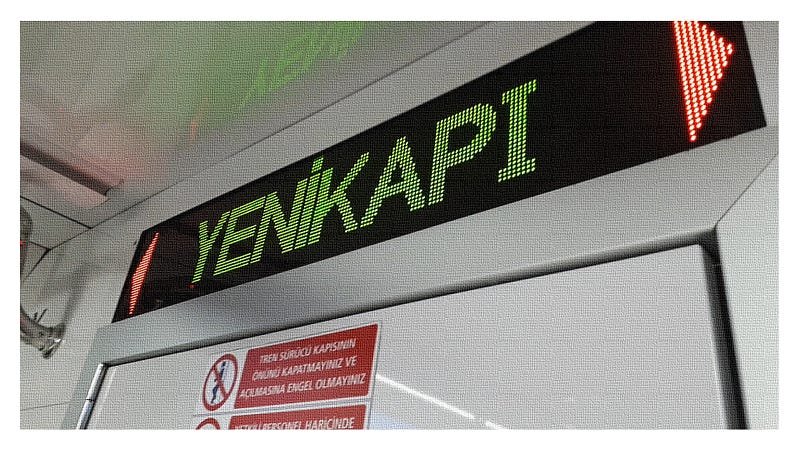
Some of the trains have a moving map as you go along, some only have signs that list the stops, some scroll the name of the next station, and many of them tell you which side the doors will open as it can differ from station to station. There is always a pre-recorded voice calling out the name of the next station in Turkish and in English, and they run on time. The metro system and line extensions are fairly new and the trains are clean with many of the bells and whistles that make for a great journey.
The buses are a different story though, and because of traffic and drivers doing their own thing, I stuck with the trains unless they couldn’t take me to where I was going, which was rare. I would also advise that you buy yourself a metro card in any major city as the cost is only a few dollars and they are very easy to load and tap as you head through the turnstiles. I would advise against using the cabs in Istanbul unless money is no option for you, as they are one of the biggest rip-offs I’ve ever seen. The Uber app is available in the city but doesn’t work like it does in other countries. Firstly, only the yellow cabs are on it due to the taxi organisations throwing their toys, and secondly, you will see a price range instead of a single figure being displayed. Once you confirm, the cab driver will immediately message you to tell you that the price will be more due to traffic, which is a complete lie. I had no issues with the cabs in Ankara or Fethiye, and only one overcharging issue in Izmir.
All in all, the public transport system in Turkey was superb and I suggest catching a ferry or two as you get great views of Istanbul and Izmir.
6. There are smells and noises that you need to get used to.
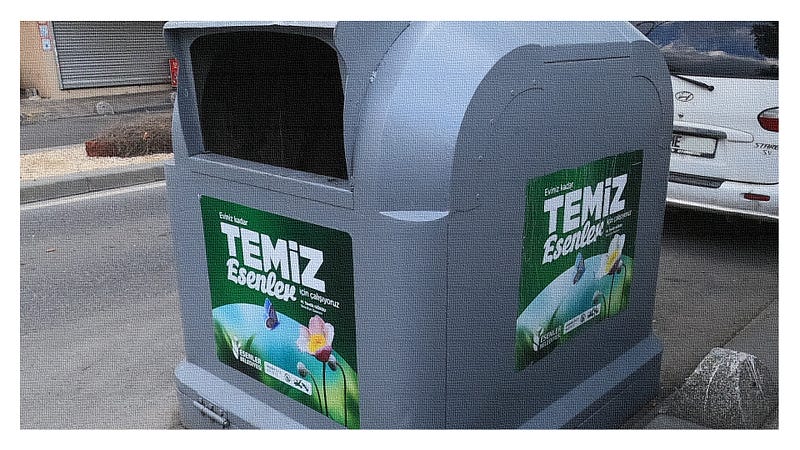
Turkey has a different system for collecting refuse than the countries I have lived in, with large silver trash bins on many of the city streets for everyone’s use. Most Turks take their trash out every one or two days and throw it into these large receptacles. One of my friends told me that they are emptied once or twice a day but I didn’t notice that, and sometimes there is a smell that permeates due to these tin cans baking in the hot sun.
In Izmir there was a rancid smell that permeated the apartment every morning and at first, I thought it was a waft from the garbage cans, but it may also have been from the drainage system. Let me be clear, you are not assaulted with acrid smells constantly, but they are there and some places are worse than others. Turkish cities are noisy and sounds make their way into your ears constantly. From vendors calling out as they peddle their wares up and down the streets to cars honking at each other or pedestrians, from loud street conversations to neighbours checking in with each other over balconies, the noise doesn’t stop. Five times a day azan (the call to prayer) rings out from the nearby mosques, and if you are located between two of them you will get the call in stereo.
Having come from living in the ‘burbs in a quiet little Canadian city it took me some time to get used to the constant sound, and although it became the norm for me, I still noticed them until the day I left.
7. Turkey is very cheap.
As with everywhere in the world at the moment, things are getting more expensive. Coming from Europe or America, you won’t notice the increase in prices in Turkey as it’s still cheap for us, but for the Turkish people it is becoming very difficult. I managed to find Airbnb rooms in a shared environment for less than CAD 450 (USD 350) a month, and my grocery bills were never more than CAD 200 (USD 155) a month. As the country’s economy is not good currently, you will also face the “walking ATM” issue and there are people that will try to take advantage of you. Learn the prices, negotiate, and if you can, pay a little more to those that are struggling, but be discerning and walk away from the tourist traps where people are doing well by ripping the visitor’s off.
Having said that, you will only encounter this in tourist areas and most Turkish people are not interested at all in ripping you off.
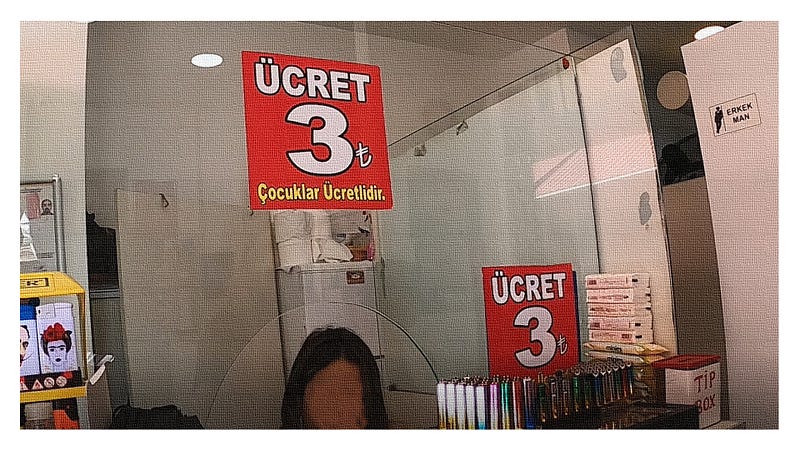
8. You need money to go to the bathroom in Turkey.
Most toilets are marked “WC” which is a British English term meaning “water closet.” You will also need between one and three Turkish Lira handy if you want to use the bathroom.
In almost all public restrooms you will see traditional Turkish toilets which are porcelain holes in the floor. In many of the big cities, there will be a couple of the traditional toilets and four or five modern ones, but if you are travelling to more traditional areas, you may only find one modern toilet.
Just remember, always have a few Lira handy as you hustle to use the facilities.
9. The homeless animals may break your heart.
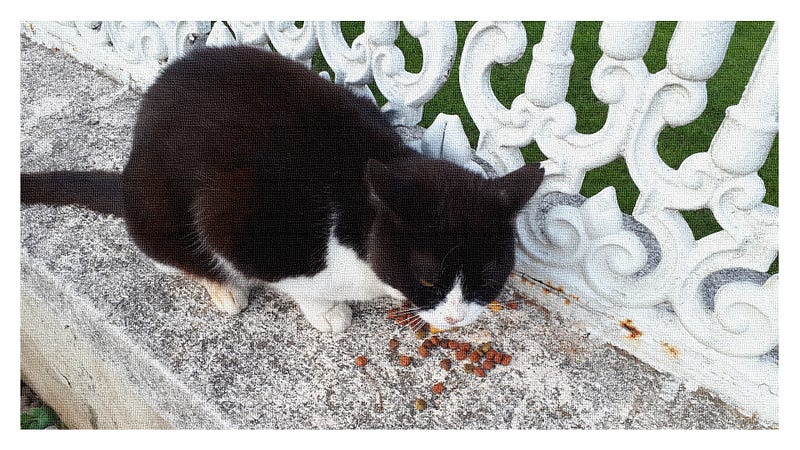
Don’t get me wrong, many of these critters are taken care of and people are constantly leaving food out for them and even building them little homes, but as a cat lover, it broke my heart to see so many of them living on the streets, especially, when I could see that they were sick or injured. I lived in a constant state of wanting to take them all home which was difficult for me. I always carried a bag of cat food in my backpack and would squat down to feed any pussycat that I came across, gently crooning to the nervous ones that it was okay.
The friendly ones tore me apart and I wanted to scoop them up and rescue them. This is something I will not miss about the streets of Turkey.
10. The stairs may kill you!
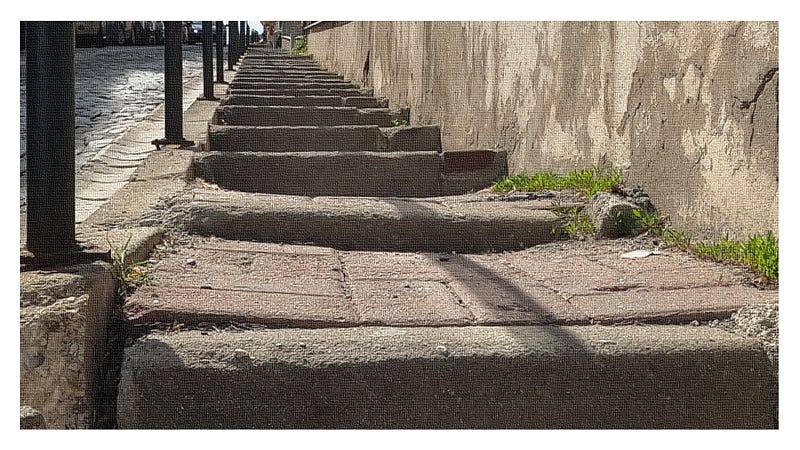
Many Turkish cities are built with steep streets and plenty of stairs which you need to traverse, and you may curse your choice to walk as you huff and puff your way up and down them. My knees are not good at the best of times and sounded like a goat chewing on a plastic bag when I hiked up and down them. In my video on Balat, you can hear me lament that “this is the way I’m going to die,” as I chugged my way up more stairs than I could count to get back to my accommodation.
Not at all like a stairway to heaven but more like a road to hell!
All I can say on this point is, be prepared, and if stairs are your least favourite thing, plan a metro route to minimize them.
11. The food.
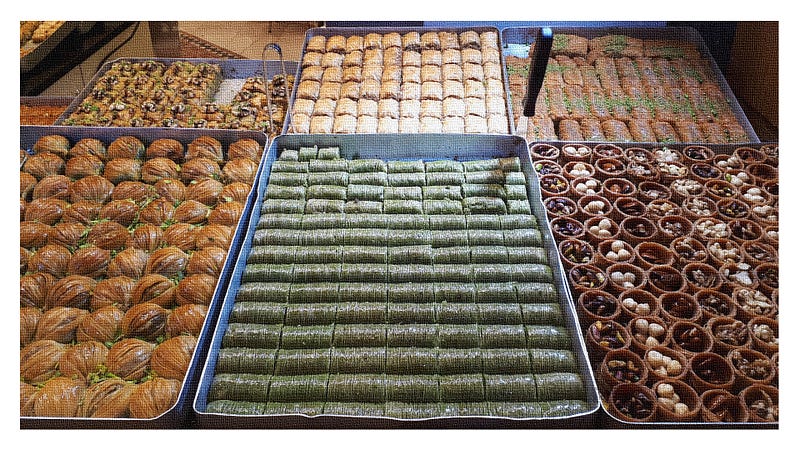
Okay, let’s talk about the food! Turkey is renowned throughout the world for its cuisine and rightly so. Despite Greece’s stellar marketing campaign over the decades claiming much of Turkey’s cuisine as its own, I’m here to tell you that modern baklava is a Turkish invention!
As I’m a vegetarian and couldn’t taste the delicacies that most Turks believe are the best; döner kebab, in fact any kebab of which they have many, and köfte, what I did taste was superb. I developed a love of gözleme, börek, and most of their desserts including baklava. I thoroughly enjoyed pide, simit, çiğ köfte, meze, and a host of other deliciousness.
My body, however, wasn’t too happy with the amount of carbs that come with the Turkish diet and there was a period in Izmir where she rebelled against what I was putting into her. After cooking veggies at home for a few weeks, she was back on track and had forgiven me. I also found the fruits and vegetables in Turkey far tastier than in North America. For those of you with special diets; vegetarian, vegan, lactose intolerance, or food allergies, you might find it difficult and more costly to get the products that you find so easily back home. I consume a lot of almond milk and managed to find it in most Migros Supermarkets, but it was more expensive than in Canada.
When I couldn’t find it in stores, I got my housemates to order it for me online.
12. The Turkish Language.
I always encourage people to learn a little of the language of the country they will be visiting, especially if they are going for an extended period of time. For me, it is a matter of respect and people genuinely feel honoured if you can utter a thank you or hello in their native tongue.
For those planning on spending some time in Turkey, here are a few words that would be good to learn for your visit.
· Lütfen — please · Teşekkürler — thank you (it’s easier to learn than it looks and will earn you a gentle smile when you utter it) · Merhaba — hello · Hoşçakal — bye (I still struggle with this one due to the -sh and -ch sounds so close together)
I would also encourage you to learn the numbers one (bir) if you are travelling alone, and two (iki) if you are travelling as a couple. It is so easy to say “bir su lütfen,” one water please, if you are in a part of the city where not a lot of English is spoken and you desperately need a drink. Many of the vendors in small cafés don’t speak English and pointing at a piece of baklava or ordering a coffee and saying “bir kahve lütfen” or “iki çay lütfen” is super easy and effective. Another good thing to know about the Turkish language is how to pronounce some of the letters that don’t appear in the English alphabet in case you want to be understood when asking about a place or ordering food.
· The s with a tail (ş) is pronounced like [sh], so Şişli (a tourist area in Istanbul) becomes Shishli. · The c with a tail (ç) is pronounced like [ch], so çok (lots) becomes chok. · The o and u with the dots (ö & ü) are a deep and more emphasized sound of their simple counterparts, but are difficult to get right and Turks will still understand you if you say words like börek without the correct pronunciation. · The normal c is pronounced as a [j] sound, so cadessi (street) becomes jadessi. · And you can forget the g with a hat (ğ) — that sound just falls out of our range but to us, it sounds like a silent letter. To Turks, who will smile when you try and get it right, it makes a very distinctive sound at the back of the throat and I have yet to be successful in my attempts to pronounce it.
13. Safety.
One of the biggest misconceptions that I’ve run across is that Turkey is very dangerous. I belong to a few online travel groups and I’ve seen some completely ignorant comments made when someone mentions wanting to travel to Turkey, usually by people who have never set foot in the country!
Allow me to be perfectly clear on this point, I never once felt unsafe in Turkey.
I travelled around the country on buses and trains and walked almost everywhere as a mature single woman alone. Yes, there were areas where I wouldn’t go, especially as a woman at night, but there are areas in Toronto that I wouldn’t go to either and Canada is the safest place I have ever lived. My housemates left windows and balcony doors open during the night and when no-one was home, and it seemed as if there was never a thought of a home invasion.
I felt safer in Turkey than I would in many parts of the USA right now.
14. The Turkish people are incredible!
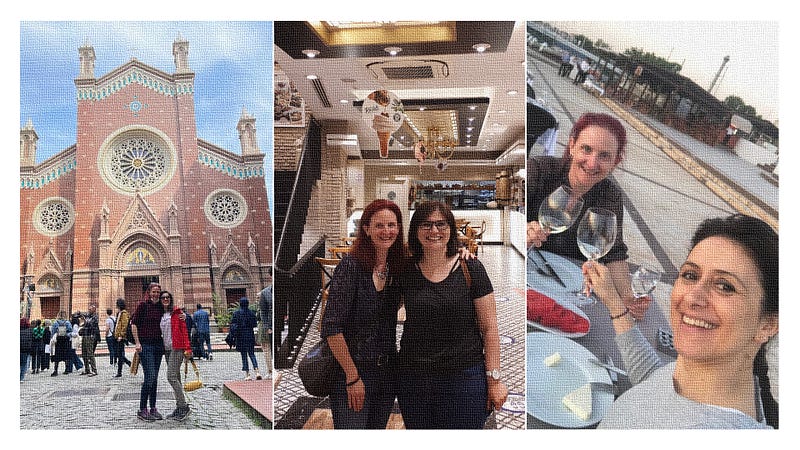
I’m going to end this article with the main reason that my time in Turkey was so utterly memorable and special — the people.
The friends that I made prior to my trip were the main reason that I went. During my three months I encountered more kindness and genuine concern for my wellbeing than I had in a very long time. There was always an offer of help from friends and strangers alike, and the only person in the whole world who wants to feed me more than the Turks do, is my father.
On a side note, you will never be able to eat enough to satisfy Turkish people! You could Pacman your way through a breakfast buffet and still be told that there is a piece of bread that you didn’t get to.
All jokes aside, it was the people that tugged at my heart and it was the people that I struggled to leave. To all those that made the journey so incredible for me, teşekkürler.
I hope that this article has provided some good information for those of you considering travelling to Turkey, has given those of you who hadn’t thought of it as a possible destination a desire to go, and brought back wonderful memories for those of you who have already been there.


