TRAVEL
What I Learned Teaching English in Morocco
Travel as transformation

I’ve always felt that having a larger purpose outside of tourism would make for richer travel experiences. On New Year’s Eve 2020, just as my desire to travel again was reaching an all-time high, I stumbled upon a dirt-cheap-flight deal to Morocco. But to justify several months of travel to myself, I decided that I would devote much of that time towards bettering and challenging myself in more of a structured way, and by teaching my goal was to take on obligations and commitments like never before while traveling.
It just so happened that the country highest on my travel list at the moment was both: 1) open with very few COVID cases and manageable travel restrictions, such as requiring a negative PCR test, and an invitation letter from a Moroccan business, and 2) had several language schools throughout the country that host travelers and teachers on a volunteer basis. I had completed a TEFL (teaching English as a foreign language) certificate during lockdown, in hopes that I would be able to use it to gain a teaching job abroad during 2021. I figured I’d give myself several months in Morocco, so I could both travel and teach, during a time when my home country was still more or less shut down anyway.
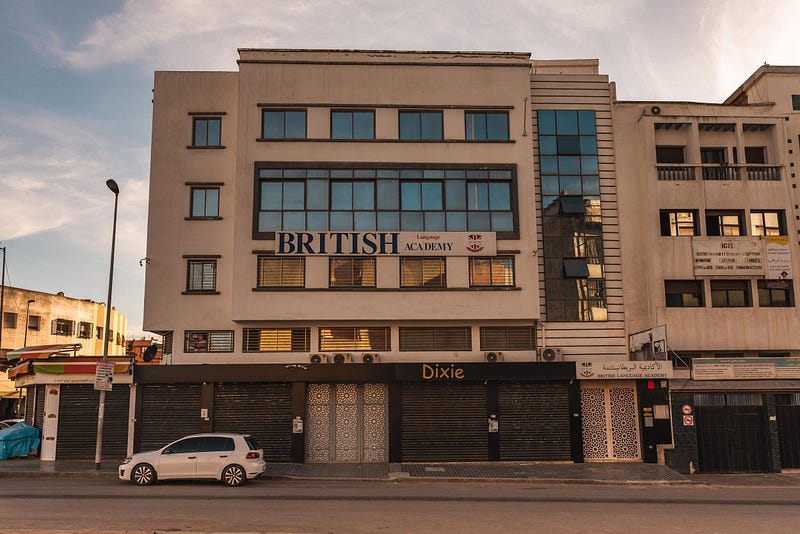
Of the many schools I had contacted (via WorkAway), only a couple had responded with availability for me. Though COVID-19 has been largely under control in the country, a lot of these schools had switched to online learning, or had jettisoned their volunteer programs temporarily, so I was pretty lucky to have even these two options. The one I chose to start with was based in Casablanca, but had a total of four schools in the region, and offered to help set up trips around the country for long-term volunteers. And so I planned to start with the work, and perhaps after getting to a point where I feel like I had earned a break, I could then branch out and see the parts of the country I had yet to see.
I didn’t actually teach for the entirety of the first month. At the onset of the trip, I was hit hard by culture shock and felt I needed time to adjust to the culture and environment that was so new to me. Also, none of the other volunteers were teaching at the school. The school I was at makes use of its volunteers more as speakers than as teachers. It’s geared more towards budget travelers who are fluent in English and want free accommodation than it is to prospective teachers who want to practice their teaching. And while the host makes living arrangements for us, either in apartments or in the schools themselves, the presence of the volunteers is more of a marketing feature for his schools. A differentiator for his school is that students there have the opportunity to practice their English in small groups with native speakers (but few of the volunteers were truly “native”/from English-speaking countries).
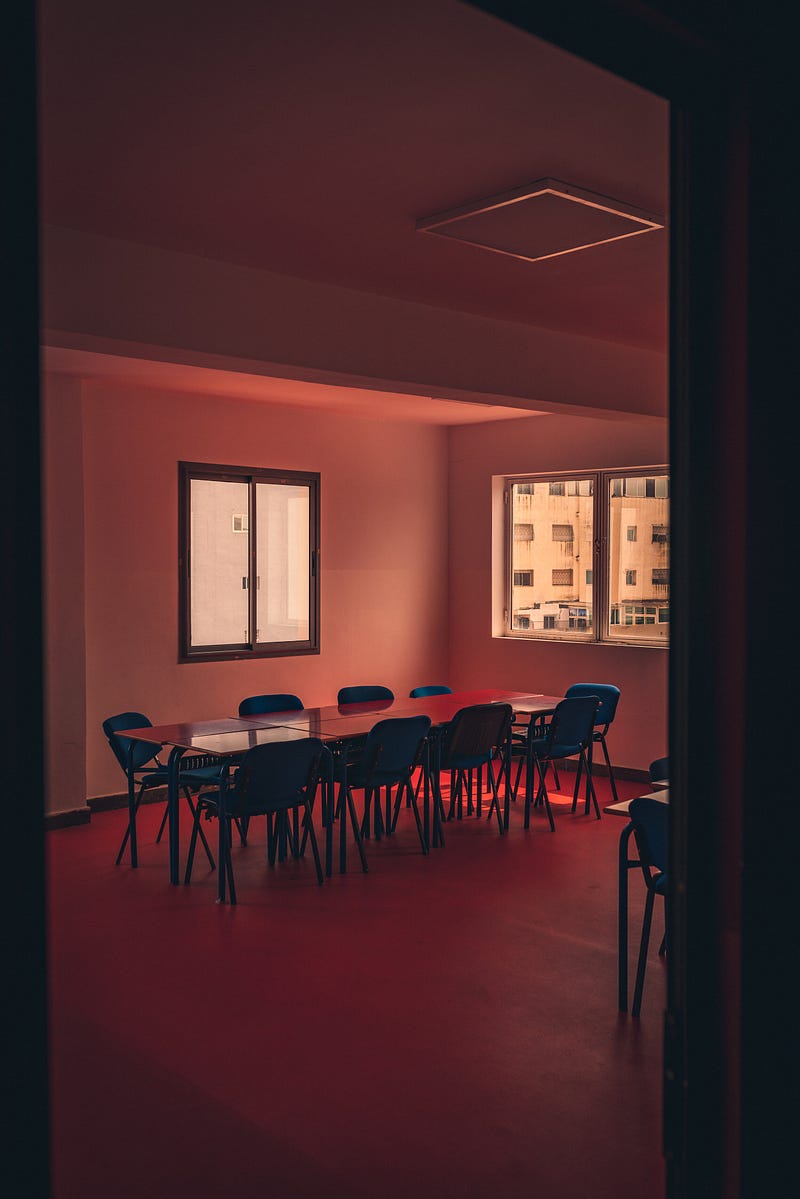
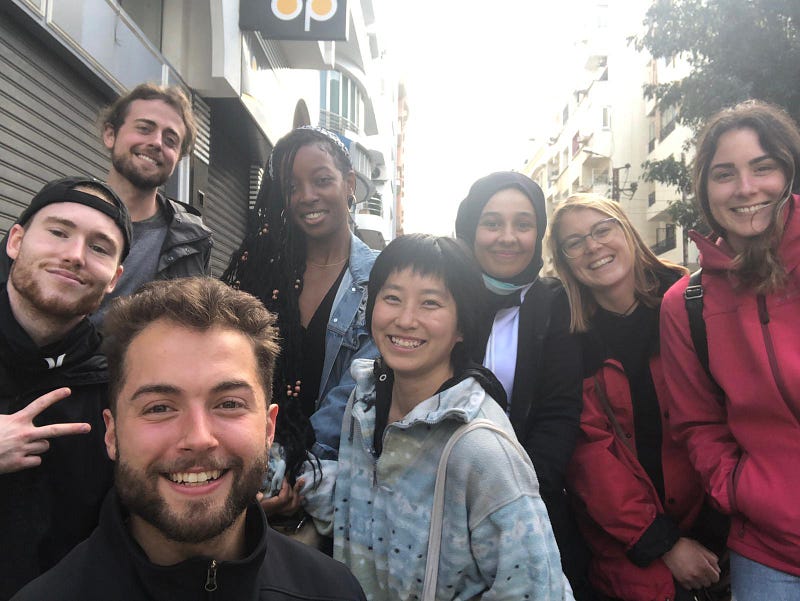
That first month I spent making connections inside the school and out, learning the local dialect, food, and customs, and observed other teachers’ classes. I also had a couple of weekend trips — one solo and one with other volunteers, and fought off the inevitable “travel cold” I always catch after changing atmospheres. And so the first month came and passed before I could really sit down with the owner and talk about teaching. He told me I was more than welcome to work with the teachers to see who would be willing to let me sub for them.
I worked with a couple of the part-time teachers to start, and two of them had classes for me, each an hour and a half in duration. These were evening classes, and so were mostly made up of young adults — students and adults who are making time outside of their careers/studies to improve their English proficiency. I decided I wanted to adopt an approach similar to a teacher there named Hanane, who graciously served as a mentor to me. Her classes are very conversational — she recognizes that her students have all arrived after long days at school or work, are tired, and will likely fall asleep at the first sign of an impending lecture. For my classes, I did my best to prepare open-ended questions related to the lesson topic and target grammar points, and get the students talking; and planned to transition into exercises or worksheets (that Hanane had kindly provided) when I felt like the class discussion had reached a saturation point.
I learned a lot from the initial classes. As I was working with non-native speakers, instructing them completely in English, I had to really slow down my speech and enunciate each syllable clearly. I found that if I was at all nervous or afraid that I wasn’t making sense to the students, I would unconsciously speed up my voice, which would then make the students even more confused and thereby quiet, and the silence would be deafening.
In the bigger classes, I had to make an effort to keep my eyes moving and scan the entire room so that I wouldn’t miss the students in the back with their hands up for minutes at a time (Hanane would signal to me from her seat in the back at times when I needed to do this). While neither of my first two classes was perfect, they were encouraging learning opportunities. The exercise also shifted my approach to travel from being largely a self-centered endeavor to one that was more outward-facing thanks to this opportunity to teach in a foreign setting. One boy during the first class named Mohammed, who despite his small stature, really stood out as an eager student, asked with a smile if I would be their teacher for their next class as well.

It would be another few weeks before I taught again — I had had to adjust my travel plans, shortening the trip from four and a half months to three months due to commitments back home, and so I was feeling pressure to spend a couple of weeks in the North before Ramadan started, which meant that the restaurants, cafes, and really the entire the country would close down. So I came back to Casablanca for the first weekend in Ramadan, mainly to gear up for a trip to the Sahara desert and the Atlas mountains while helping out with the speaking sessions. On a Saturday morning at 8:20, I received a text from the school owner, asking if I could cover last minute for one of the teacher’s morning classes. The classes would last for four hours, and I had 40 minutes to prepare for them. And so I was thrown into the fire, as it were, teaching my first two classes of children.
I was covering for Hanane, who had fallen ill. We communicated a lesson plan briefly via text message: she had prepared a couple of worksheets that I printed copies of, but otherwise I planned to employ some fun games and activities for young learners as a way to fill time and keep them engaged. Each class would consist of the same lesson, so it helped that my first one would be a trial run for the second class.
The first class tested my ability to deal with behavioral issues. I had a trio of boys, aged 8 to 9 who wanted just to sit together and chat. I had to keep telling them to be quiet as their disruptive conversation prevented me from hearing the students who were participating in the class. I hadn’t yet prepared myself to be the disciplinarian, so I walked out of the class and asked the receptionist, Fatima, if I could eject some students from the classroom. By this time, I had become pretty close with all of the school staff, so it was encouraging to see how Fatima and another teacher stormed into the room on my behalf and really laid down the law to these boys, yelling at them in their native tongue, and yanking them, desk and all, across the room to the separate corners, their eyes wide with panic.
With the trio finally separated, I had just one more nuisance left, more of a loner. He had a thermos of tea that he was drinking from and doing so in a boastful sort of way that I thought was an attempt to annoy his classmates who were fasting (Ramadan), by making them jealous that he was drinking a pleasant beverage when they could not. But more than that, he had a toy kazoo that he would blow just loud enough for me to hear and then quickly hide before I turned my attention to him. I took it from him of course, against his protests and apologies, and I set it on the desk I was using. Later on in the lesson, I saw that he had somehow sneaked over to take it back, but I pretended not to notice until the small scoundrel started blowing it again.
This time I came back to him to take it, and he apologized profusely, refusing to give it up. I had to tell him five or six times with my hand outstretched, raising my voice louder each time “You’re done. Give it to me,” before he handed over the kazoo reluctantly. I remembered that I was only a guest teacher — I wasn’t a contracted employee, and really had nothing I could lose here at the school. I then walked over to the open window and extended my hand outside it while holding his pathetic, plastic yellow kazoo. Looking him in the eyes, I let go, letting the wind take it. He just shrugged and said, “Mishi mush kil,” which means “no problem” in Darija, the Moroccan dialect of Arabic. He quieted down after that. But later on, I caught him initiating a scuffle with his neighbor, and so I told him he was done. I went out to let Fatima know, and she came in and screamed at him and yanked him out of his chair and the classroom by the arm, scolding him all the way. And that was pretty much the end to any behavioral problems I would have that day.
While both classes that morning had some of the brightest and sweetest students — some of whom I had gotten to know really well over the month and a half I had spent there — the second class was special in that all of the students were engaged and well-behaved. It also went much more smoothly, as I had used the learnings I had found from the first class: what vocab needed additional focus, what activities worked, what approaches to take, and used these to conduct the class more effectively.
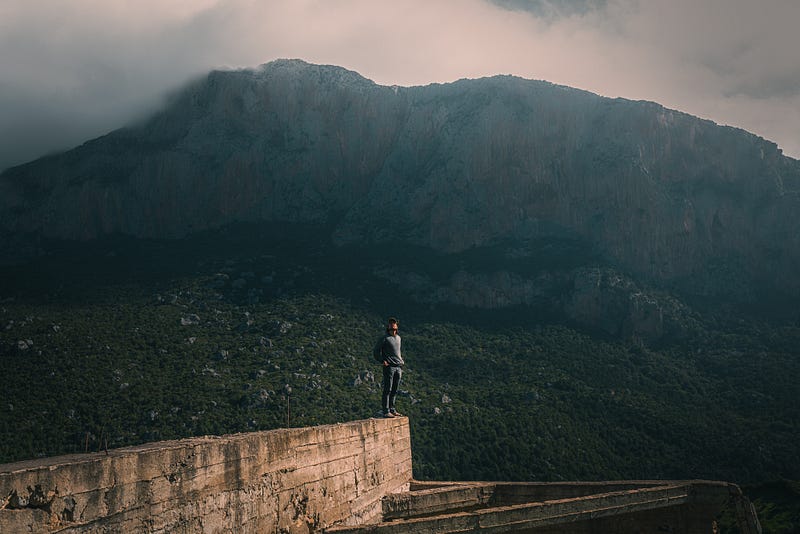
After only four hours of teaching, I was exhausted (partially due to my fasting for Ramadan I assume) and though I was done teaching for the day, I had a private lesson online to conduct, and two more hours of speaking sessions with the students of the afternoon sessions. It was amazing how that day had taken a meaningful new direction on such short notice. It went by quickly, and it gave me the confidence and reassurance that teaching English is something I can do well, even on short notice. The owner of the school told me that day in Arabic, “Lah irham lwalidin,” meaning “God bless your parents,” supposedly the highest form of thank you in Arabic. It felt so good having given my time and skills in such an intimate way while traveling. My only worry is that maybe I enjoyed tossing that kid’s kazoo out the window too much. I took a train to Marrakesh the next day, feeling I had accomplished the first phase and objective of my trip.