
Mastering the Art of French Mother Sauces: Beyond the Recipes and Into Understanding
What I learned while studying the five French Mother Sauces.
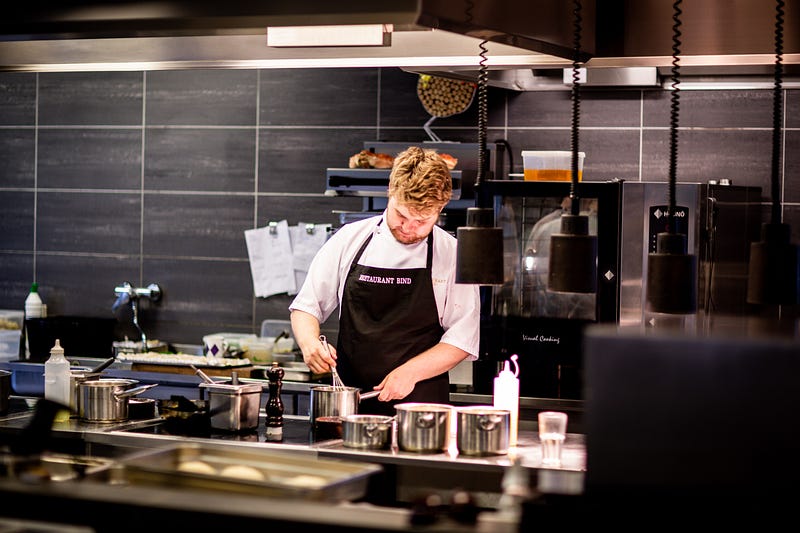
I recently completed a project where I learned to prepare the five French Mother Sauces, as described by August Escoffier. From the beginning of this project, I knew I was setting out to learn much more than recipes, but I am surprised by everything else I have learned. I’ve learned much related to French cuisine, of course. I have reconnected with my French Canadian Heritage and realized cooking could help manage mental wellness.
I learned that cooking has little to do with recipes; it’s about knowing how to use sauces, mix ingredients, and make your plan come to life.
The number five looks arbitrary.
I’ve written at length about how chefs have classified and re-classified the list of Mother Sauces over time. Carême listed four in 1833. Gouffé listed 11 in 1867 before Escoffier listed the five we know today in 1903. And while these five made for a fantastic project, I recognize how the number means little.
Escoffier meant the Mother Sauces to represent the most straightforward set of base ingredients for a sauce category. The Mother sauces should be the lowest common denominator. For example, we make Béchamel sauce from flour and butter, which we combine into a roux, and then dissolve in milk. If we add cheese to a Béchamel, we create the daughter sauce known as Mornay. If we add a purée of sautéed onions to a Béchamel, we get a Soubise. So the mother/daughter sauce model works, right?
But we make Velouté from flour and butter, combined into a roux (have you noticed something here?), and then dissolve the roux in stock. The evolutionary biologist in me can’t help but see that the so-called lowest common denominator is the roux!
In other words, to me, Béchamel and Velouté are two variations on a theme — sauces thickened using a roux. One could, of course, argue that a roux is not a sauce and that thickening sauces using a roux is a technical concept. But French cooking is all about technique! So why not categorize sauces in this way?
Suppose we accept that we could categorize sauces by technique. In that case, we could also admit there are only three mother sauces: liaisons, réductions, and émulsions.
Liaisons or gelatinizations are sauces we thicken using various agents such as flour, cornstarch, or even egg yolks and purées. Béchamel and Velouté are both liaisons.
Émulsions are sauces created by mixing ingredients that don’t usually play well together — think of how oil floats on water. Émulsions rely on specific agents to make the sauce homogeneous. The most common example is Hollandaise, where we combine butter (oil) with lemon juice (water) using egg yolk as the binding agent.
Homogenous mixtures like these are not natural — this is why many people see their Hollandaise sauce “split” or separate back into oil and water.
Finally, we have réductions — sauces we make by evaporating much of the water from a stock, leaving behind a dense, flavour-packed sauce. None of the mother sauces are reductions, although there are reduction steps in their preparation.
Using Sauces in French Cuisine
Many North Americans may think chicken with Velouté sauce is no different than chicken and gravy. And in many ways, they would be right. But that is not how we approach the concept in French cooking. In French cooking, sauces are not condiments but an integrated part of the meal; The sauce comes first. In French cuisine, you will consider what you will serve to best pair with the Velouté you are preparing.
It is like how many people approach wine pairing. If you have an enormous wine cellar with endless choices, you may choose a wine that pairs well with your prepared meal. But if you are like me, with at most a dozen bottles on a rack, you will think differently. You’ll find a bottle and ask yourself what meal may go well with this wine.
French sauces are not an afterthought — you plan your meal around the sauce you have on hand or the sauce you intend to make.
The French Chefs
A disproportionate number of world-class chefs are either French or trained in French culinary arts. There are far too many famous French chefs to list, each contributing to the greater culinary good in their way.
Some chefs, like Escoffier, have been immortalized in books. Clearly, his contribution is worthy of recognition. But the more I study, the more I am confident that future historians will say the name Jacques Pépin in the same breath as Marie-Antoine Carême, Auguste Escoffier, and Paul Bocuse.
What distinguishes Pépin from the others is not his recipes, his fusion of different cuisines, or his Michelin stars. Jacques Pépin is the Master Teacher; he has made cooking genuinely accessible.
Like most great writers, Pépin strives to “show” rather than “tell.” Many other greats, like Escoffier, mastered the recipes. They classified and rearranged recipes and published them in books, making them accessible to many. But in reality, Escoffier is accessible only to other chefs. The recipes in “Le Guide Culinaire” are mostly ingredient lists with vague instructions. The recipes are challenging to follow and are meant more as reference guides for experienced chefs.
Humble moment: While I truly tried to make the Five French Mother Sauces as per Escoffier, I often referred to Pépin for instruction.
Pépin excels at showing you how to make a dish. Some might argue that the medium of television enabled Pépin to do this. But in reality, his book “La Technique” best demonstrates the principle. La Technique is a cookbook without recipes. There are thousands of photos and short paragraphs explaining why chefs do what they do. More importantly, it shows HOW chefs do the things they do.
Finally, there are many stories of how Pépin fought hard to make French cuisine and cooking academies accessible to everyone. There are beautiful stories involving Anthony Bourdain, Ming Tsai, and of course, Julia Child that attests to Pépin’s commitment to teaching culinary skills to everyone.
Finally, one of Pépin’s sayings, whether in written or oral form, has become my motto.
“You should always try the recipe at least once to understand what it is supposed to be. After that, you can start making changes until it becomes YOUR recipe.” — Jacques Pépin.
How a cooking project taught me about my life
Perhaps most importantly, I learned the importance of challenging myself. I’m in a great place now, but I still thrive on plans, projects, and challenges. My goals are very flexible, but there is a difference between having an open plan and not having a plan at all. A flexible agenda still guides you; it gives you direction.
So what is next for me — well, I’m looking into a few things. While I have invested much in French cuisine and will continue to learn, I’m also looking to reinvigorate a different flavour palette. Perhaps spicy oils? Follow me to find out where my journey of Cooking for Wellness takes me.