
What I Learned Getting Married in an Airforce Hangar with 57 other couples
I should have asked more questions and been a better ally
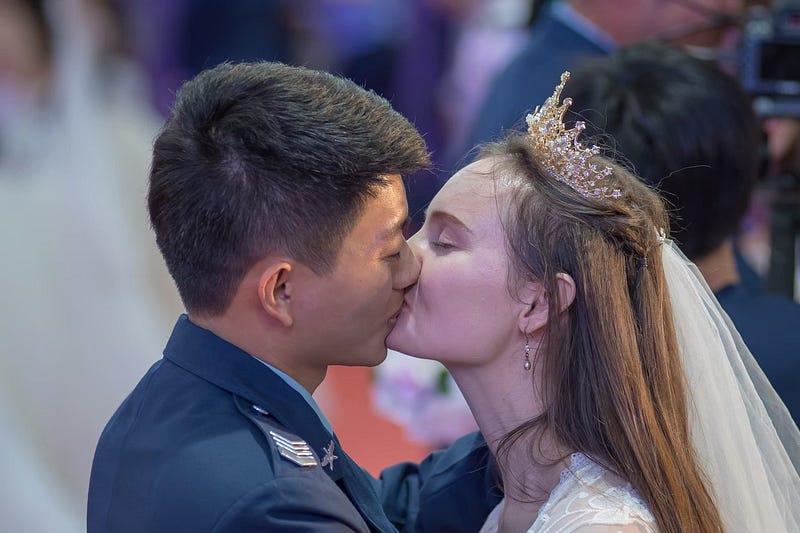
“I just cleaned out the place where we’re getting married,” texted my groom-to-be from work at an Air Force Base. I agreed that was very funny.
It also carries along the misconception I started when running his job description through the leading translation machine and thought he was a military janitor.

It’s turning little misunderstandings like that into little fantasies that got us this far. We’re happy with it.
I got married a few years ago, in a ceremony using my third language, in a festively decorated airplane hangar, on video for YouTube, in a mass ceremony of 58 military couples.
Group Weddings — or “Joint Weddings” — are common here
My understanding is that there are several military joint wedding every year and the bases rotate hosting them. We had to apply for a spot October 2019 that would be held at our base.
This was before the age of masks. Now packing hundreds of people into a room is no longer a good idea.
It was great system, these mass ceremonies. For one thing, it saved 99% of the cost holding a wedding. For another thing, it saved 99% of the planning. Did I mention how much money we saved? It was so much. No food. No venue. No save-the-dates. No rehearsal dinner. No engagement parties.
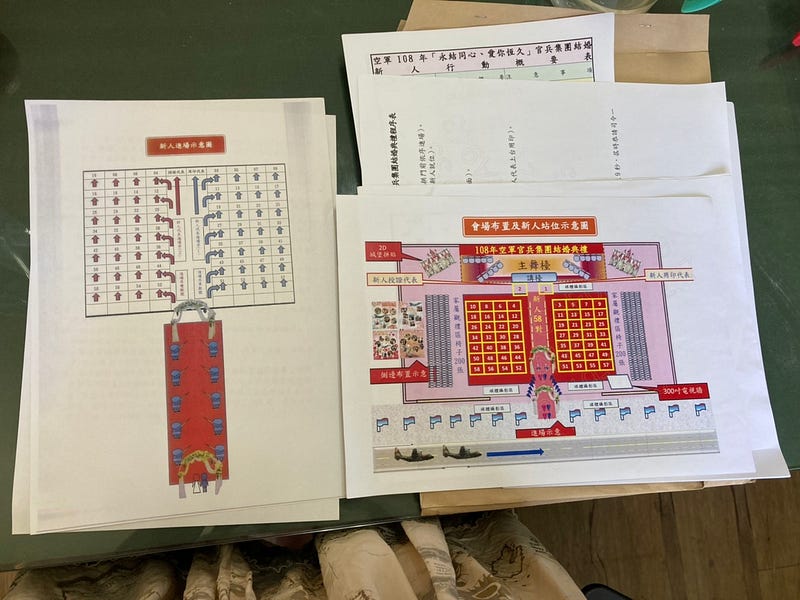
Another thing essential to the culture here: sending detailed, pictorial instructions.
The flower-children were in radio-controlled little airplanes. Dreams I didn’t know I had came true that day.
As an awkward, autistic immigrant, it was a relief to be included in something celebratory. This was the only way I would ever have more than a handful of people who even knew or cared that I was having a life event, let alone attending. Our family is small.
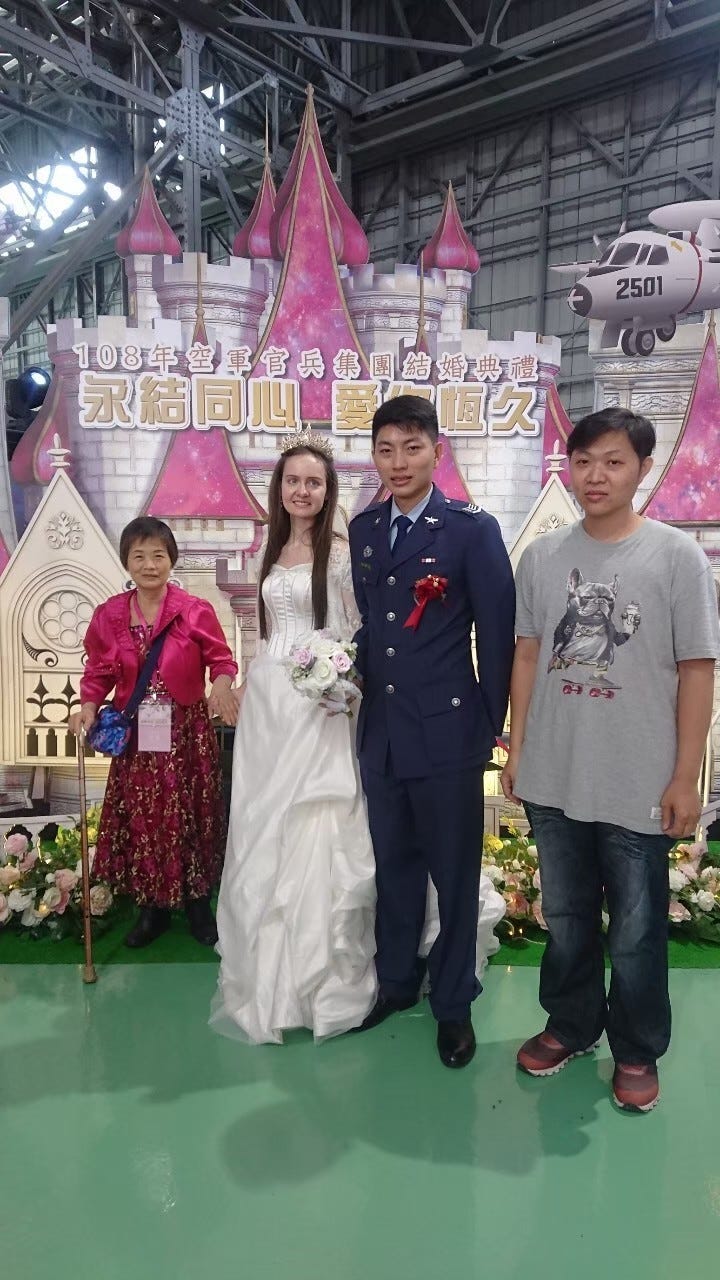
If only Balenciaga and Dolce & Gabbana knew that each member of my family were style icons three years ago. In those days my mother-in-law was already pioneering the block of bright pink. You might think I was disappointed that my brother-in-law wore a tee-shirt, until you looked closely and saw that he had the world’s best tee-shirt of a skateboarding dog and understand that I was proud. He was also a great photographer.
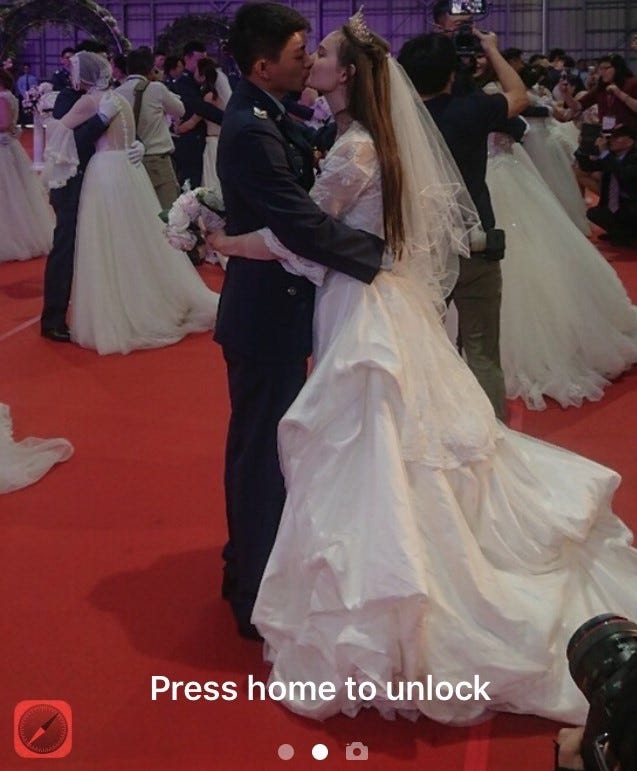
This is the only picture I have on my own device after the death of my beloved Macbook Pro. But then I remembered that my groom backed up all of our photos. He’s a keeper.
I got to witness dozens of other simultaneous weddings
The chaotic backdrop of what would otherwise be considered photobombs allowed us to chronicle dozens of other stories alongside ours. Our best shots were everyone else’s candids. Even the blinding cutouts of sunlight breaking in through the roof and door is part of the ensemble. It’s an accurate portrayal of how painful it is to be in direct sunlight.
When we arrived on the big day, a big bus took us from the parking lot to the getting-ready room. I got to see what everyone else was wearing. Some of the couples had been married for years and were only now doing the ceremony. At least one person was pregnant, and she had the world’s best dress. It was a single see-through layer with an opaque built-in bra, over comfortable-looking lace-covered shorts.
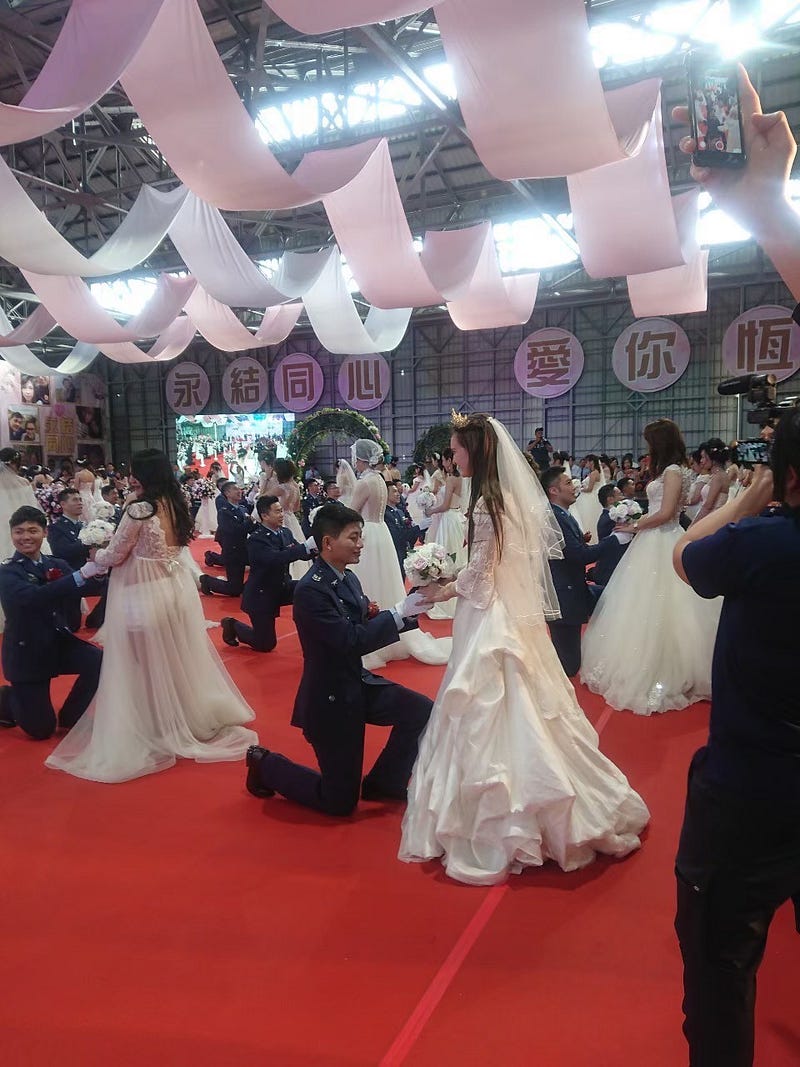
…which is why I kept looking at her and wishing I had thought to wear something as breathable — instead of appreciating my groom and his Superman curl.
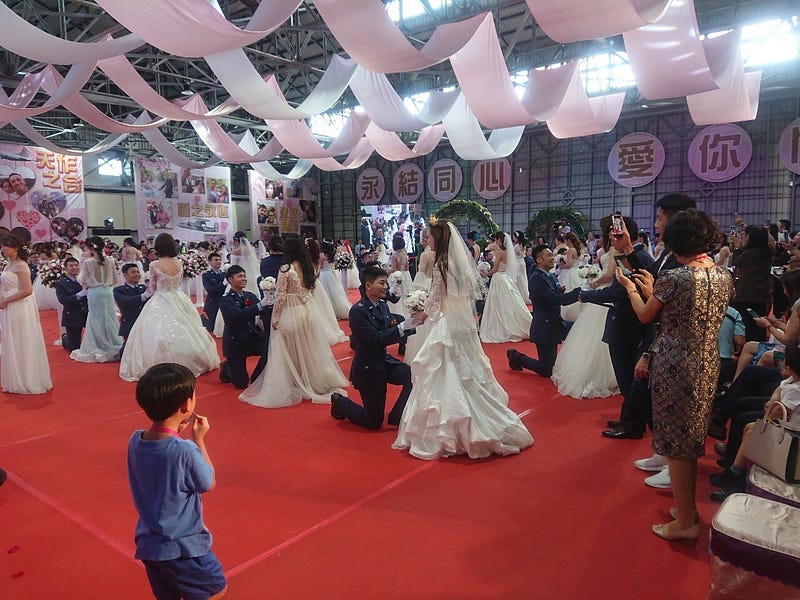
Unidentified child appreciates my dress, or maybe my groom’s hair, or maybe my enormous tiara.
There was also an indigenous couple in our wedding cohort, the only couple we knew. My groom was talking to them as they got ready.
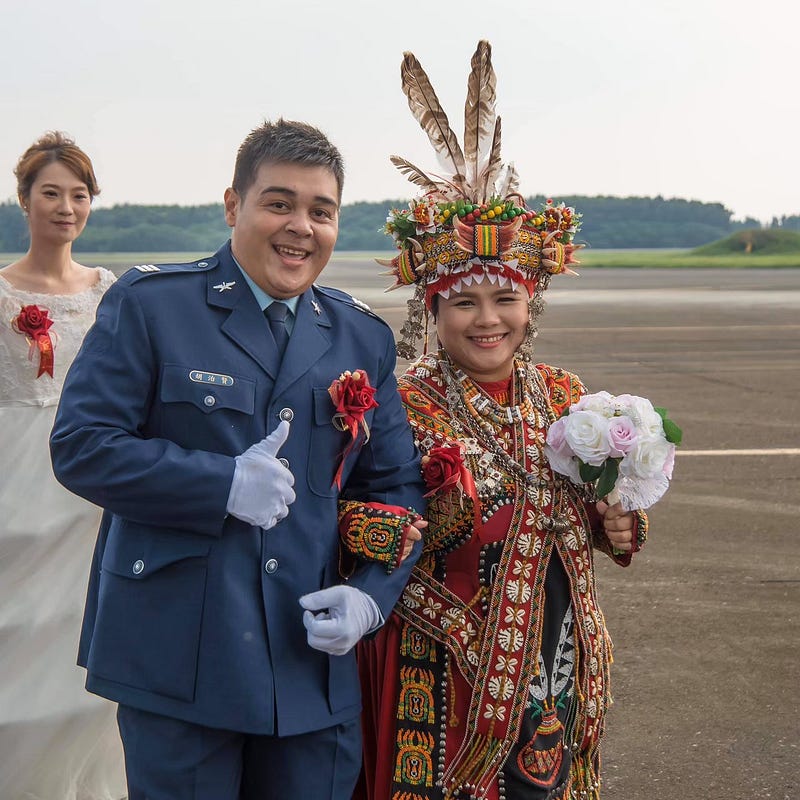
They needed the full two hours to assemble that outfit, including the amazing head-dress. It reminds me of my dabbles with Peking Opera and Belly Dancing, situations in which something pretty needs to stay securely on your head no matter how much you move. There’s a wrap-this-thing-tightly phase and then a stick-in-the-pretty-pins phase. I got to watch her groom painstakingly place each feather, all the cowrie-shell sashes, the strings of beads and the dangly silver things.
I was told their community is the Makatao people, sometimes called the Siraya. I didn’t go over and talk to them because I was immobilized by my giant cupcake skirt. I spent the get-ready time parked near the door, ostensibly reading, but really looking around and ‘gramming.
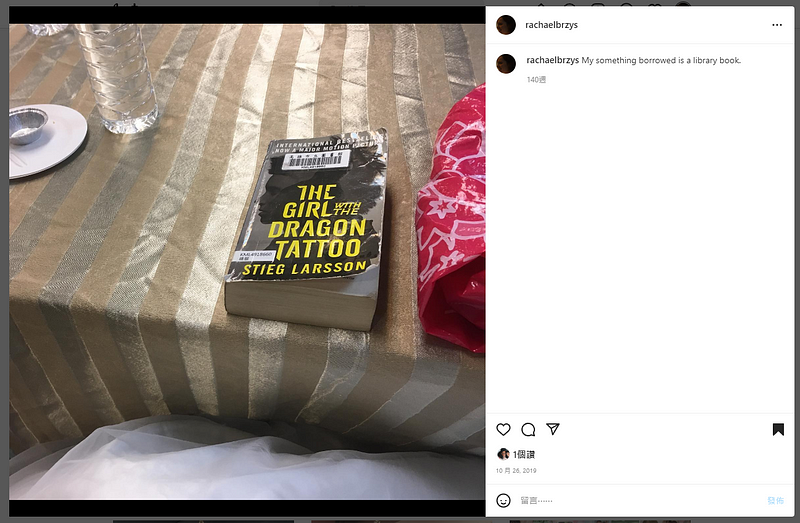
My groom drew some comfort among the stress of getting married at work by getting to talk to someone he knew. I was fine watching him and contemplating the absurdity of life in general. Several of his other colleagues were technically present on the base, but not at the ceremony because they were several buildings over, working. We wouldn’t get to see them until after the ceremony when we went to the office to change. One of them gave use a ride across the base and didn’t get mad that I stabbed the roof of his van with my crown.
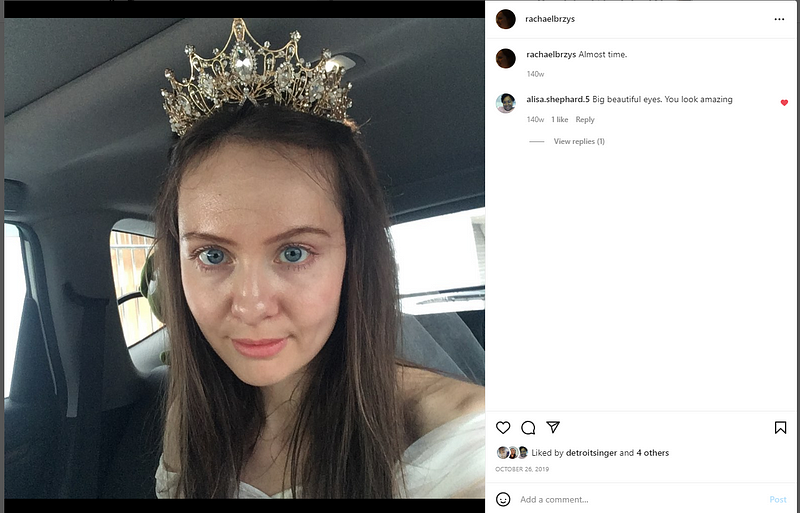
All their other co-workers were off, and didn’t want to work on their day off, even if there was a wedding. It was understandable, considering some of them commute across the mountainous country and there wasn’t going to be food.
The Ceremonial Palanquin was a big ol’ airplane
It it wasn’t obvious, I spent my youth in the United States and understood that the wedding part of a wedding is walking down an aisle, saying vows and doing something symbolic like lighting a candle or stomping on a glass. The reception is the eating, drinking and dancing part. If the ceremony and reception happen to be at different venues, then the commute between them is either an inconvenience or an adventure of photo-ops.
I’ve absorbed this despite only ever attending one American wedding ceremony in my entire life, and that one avoided the venue-to-venue commute by having the altar and the dancefloor in the same yacht club. I’ve been to a yacht club. I’m fancy.
My colleagues and I have been invited to dozens of weddings on this side of the globe, and for most of them, the commute from one house to the other is the wedding. The traditional trip of a bride from Dad’s house to Hubby’s house is a big parade. This wasn’t obvious to me during my first year overseas when I was at my student’s sister’s wedding.
I had many dumb thoughts, like, Why is your mom crying so much? Is your sister ok? What’s your Dad sitting on? What? Why’s everyone leaving now? Oh, they’re taking all the stuff. Where are we going? Why did they have to borrow so many escalades? Oh, is this the reception? Was that it? Will your mom be sad if I don’t eat all these meats? What meat is this? Oh God! Thanks for all this food, though.
When I re-framed it — imagining instead of a bunch of borrowed SUVs, a procession with those dangling-from-a-pole cars called palanquins — it made a lot more sense.
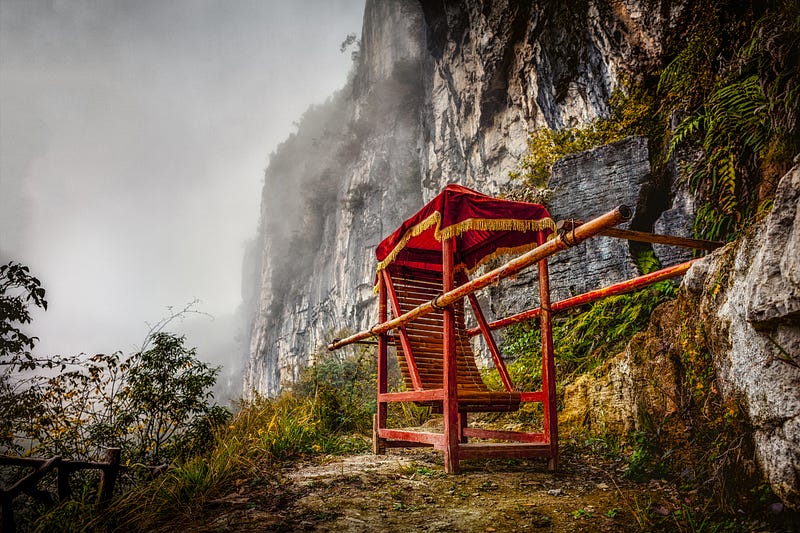
Also, like a good dog or an infant, I appreciate free vehicle rides in general and unique vehicles especially. I understood that getting a go-around in an antique plane was a cool thing to appreciate even without context.
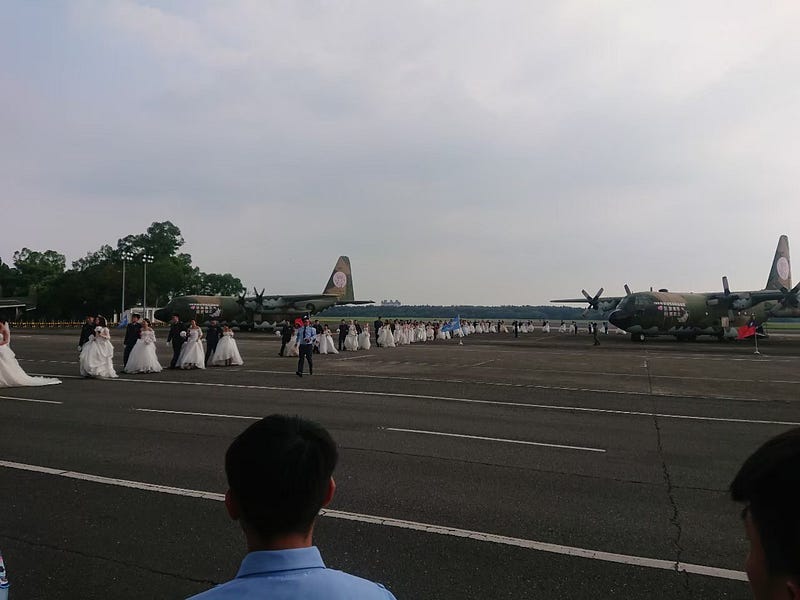
With context, it was much easier to assuage the anxiety caused by how loud the plane was and how there weren’t real seatbelts. My distraction was limited to habitually fumbling for my passport, and thinking what if this is a prank and we fly somewhere? I don’t have my passport! This was years before Tenet came out, but even in a Tenet situation, I would think, Oh no, someone drove into the airport art vault. I don’t have my passport. Also, poor art.
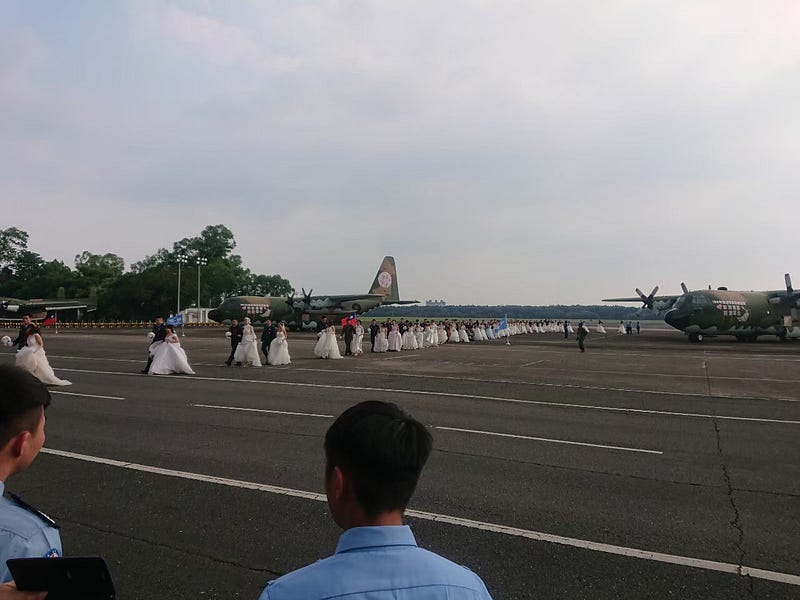
The thumbnail does look a little like a single file of ghosts drifting in from the ancient bombers, so we have some Bed knobs and Broomsticks vibes. That’s something. Or maybe at first glance it looks like an invasion of zombie bridezillas or something, which is also a valid vibe.
From the airplane ride, we walked a red carpet into the ceremony.
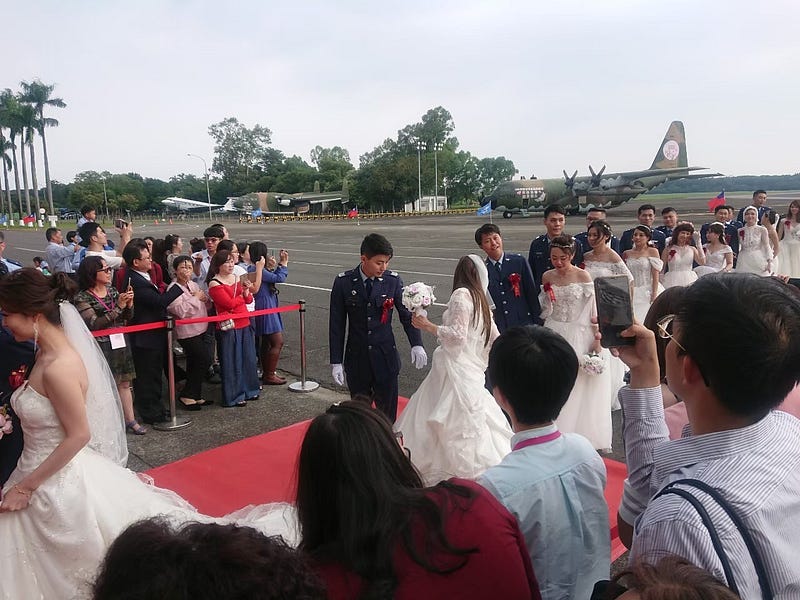
What brilliant composition. One could easily guess that my brother-in-law was trying to get us right when we reached the photo section. That was the exact moment I realized everyone else was using the red-carpet moment to make use of their trains, and I decided to let out my train, too. We got a moment that perfectly captured our awkwardness and yet makes us look good.
Last great thing about group military weddings: sword arch
second only to RC airplane flower children, I was stoked about walking through the sword arch. I may be a bad pacifist, but I think even pacifists can appreciate two lines of military performers in very shiny hats crossing their swords to make a little hallway. It’s like playing grown-up London Bridges, but no one gets locked up.
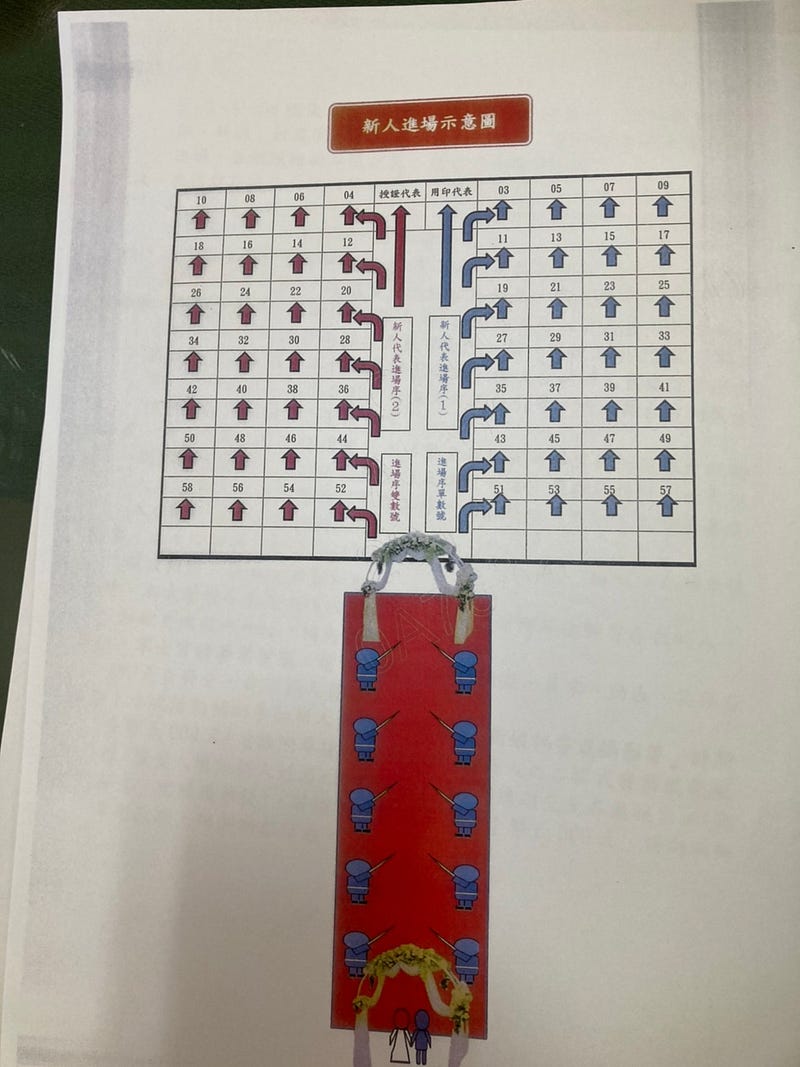
The graphic designer tasked with the entrance instruction graphic also though the swords were cool, so they take up half of the graphic.
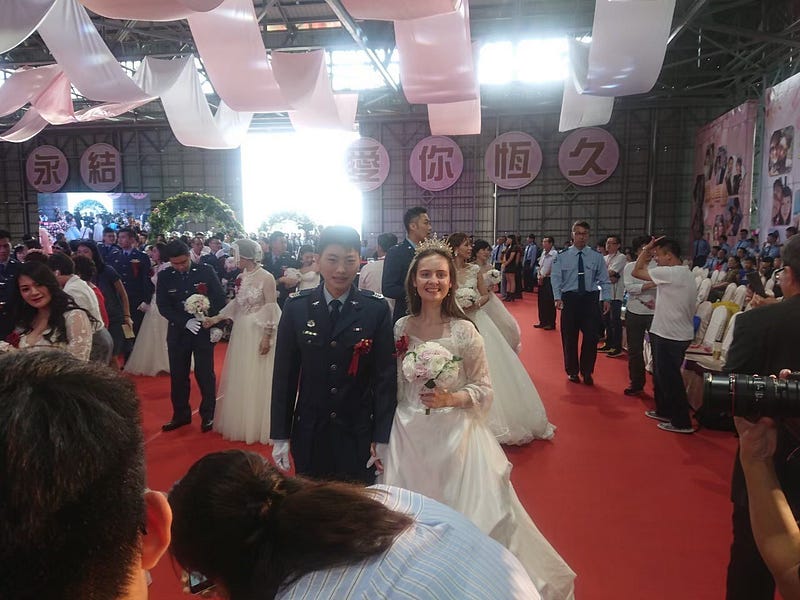
You can kind of see the blinding backlight from the hangar doorway bouncing off the shiny helmets of the swordspeople, but sadly not their actual swords. You can also see the giant floral arches between which the two lines of sword wielders are standing. My attention always goes first to reassuring myself that my honey and I look Ok, and then gets absorbed by the tense-looking bouquet handoff happening at the focal point.
There continue to be dozens of families living their own momentous occasion. Normally stumbling onto way-to-intimate glimpses of other couples only happens at IKEA.
My Greatest Regret: Failure as an Ally
I could have done something valuable for the cause just by asking more questions at the rehearsal.
“Where are the two grooms?” I asked as we were milling about the hangar after the ceremony. I wanted to at least meet them.
This was the first joint military wedding since country legalized same-sex marriage. This was to be the first military wedding with a same-sex couple. I wanted to congratulate them on making history.
“They didn’t come to the ceremony. There was backlash.”
And that did cheapen the whole experience. I wish I had asked more about the two grooms — like their names, for one thing — before the ceremony. I wish I had worn a rainbow pin with their names to show support.
It turns out, I couldn’t even look up their names on our name list, because there was no name list. The instructions were sent out with numbers 1–58 instead of names, like a group email with every address BCC’d. Considering the backlash they got just for being in the original cohort, it’s for the best that their information wouldn’t be easy to find.
There were reporters that we spoke to before the ceremony. If I had realized the two men had dropped from the ceremony I would have realized that the media people were only talking to me as a back-up. I wasn’t the first immigrant spouse to be in a military joint wedding. I wasn’t even the first American bride to be in one. I was a rarity, but not groundbreaking.
I mentioned somewhere in one of the interviews that it was an honor to be part of history, being in the same ceremony as the first same-sex couple in a military group wedding. But it was only one of a few garbled things I said in my husband’s language to the camera. I assumed the historical men were getting their own separate interviews that would be more in-depth. If I’d known they weren’t there, I could have made that my only point, and I could have said it in English, clearly, since designated translators had come all the way to the interview, too. I could have just said, “love is love. I’m happy they get to have the same wedding as everyone else. That’s the most important thing about this wedding.”
What I really learned: to ask about the other outsiders
I knew this before, but I forgot. It’s easy to forget about other marginalized groups when I navigate most days through the framework of my bitterness about my own marginalization. I knew, but sometimes still forget, that intersectionality is about looking for and supporting folks with a different struggle.
The hope is to remember, whenever there is opportunity, to be intersectional. There will be other opportunities to support others, and I’ll remember.


