
What I Learned from Opening My Marriage with My Partner of 11 Years
Before I became a single woman dating married men, I was a married woman dating single men

My husband and I had been together for eleven years and married for six when we decided to open our marriage up.
In the spring of 2022 I went on my first date with another man. That September, less than six months later, I asked my husband for a divorce.
Our story was both predictable and unpredictable.
Monogamous folks like to point out the failure rates of open marriages, but the success rates for monogamy aren’t that great either, especially when you take into account how many people stay unhappily married, i.e., for the children.
There’s another factor that hides in these statistics — a number of open marriages are a last-ditch attempt to avoid divorce. That last-ditch attempt often fails, making the failed marriage an open marriage failure on paper as opposed to a monogamous one.
For some, opening a marriage is the final nail in the coffin. For others, the process of opening their marriage reveals different things such as the profundity of their bond with their spouse, the extent of their unmet desires, and the ways in which they want to live life differently — ways that may have nothing at all to do with romance.
Here are the lessons I learned, first and foremost from opening my own marriage, but also from observing other openly married folks I’ve been involved with.
1. Opening your marriage will change you, your life, and your relationship in ways you can’t predict
Opening your marriage is a bit like getting married or having kids in that it will change you and your life in ways that you cannot intellectually predict.
It doesn’t matter how much you read or how many folks you talk to, there are things you won’t be able to understand until you are actively living them.
When my husband and I opened our marriage, we assured each other that no matter what happened, we would stay together. We deeply believed we would. I still cry a little when I think back to how certain we were.
And I was the one who broke that promise.
Why? Because what I learned through our open marriage transformed how I saw our marriage.
I met my husband in my early 20s, and we connected immediately and deeply. We loved the same video games, books, movies, food. We wanted to travel to the same countries, listen to the same music, watch the same comedians. We could talk for hours with rapt delight, never getting tired of each other’s company. We saw eye-to-eye on more things than either of us had ever experienced with anyone else.
And when we started dating, we felt a little smug. We thought because of our deep underlying friendship, we had more going for our relationship than the other couples around us.
We had one central issue, though — and it was one he hid from me for five years. I learned the month after we got married, five years into our relationship, that he did not find me sexually attractive.
I don’t mean that in a minor way. I mean that in a “We might never have had sex had I not been pushy about it” way.
Exhibit A: Some years down the road after we opened our marriage, I checked in with my husband after I gave my first blowjob to an extramarital lover. I expressed my concern that he might feel hurt or jealous, assuring him that those feelings were natural and I’d feel them in his shoes. He replied: “Why would I feel jealous? I don’t want that from you.”
Was he gay? No, actually. But it almost felt like he was from my experience of our sex life.
The situation was that he had a very, very specific type, and I was not it.
You may be wondering, “How did it take me five years to discover this?”
It’s simple: I’d never been intimate with another man before, and also it didn’t cross my mind that my husband would be so genuinely disinterested.
I’d grown up with “pretty privilege,” and was used to both wanted and unwanted attention from a majority of straight men. On occasions when I mentioned to my husband that it felt like something might be missing between us, he lied to reassure me. In the end, I only found out because I happened to stumble across the evidence on his computer one day.
You may also be wondering, “Why then did this man want to marry me?”
Because his upbringing had made him ashamed of his sexual preferences to the point where he’d wished he didn’t have them. He was lying to himself as much as he was to me, and he disregarded his preferences entirely when choosing a life partner.
Additionally, because we had so much else going for our relationship, he just wanted to be with me. And when it came to his sexual satisfaction, he could be content with fantasy.
I, however, could not be contented with fantasy. I didn’t want to die without knowing what it felt like to be intimate with a man who genuinely desired me.
I thought maybe it wouldn’t feel much different. Maybe I wasn’t really missing out. But something deep inside me ached to know.
We didn’t open our marriage right away. For six years after our wedding, I tried, in countless creative ways, to stir my husband’s desire. And he tried with all his will to muster it. At times I saw it — but I was always acutely aware that it was never for me.
I felt alone and hungry for connection in a deep place.
So, six years after our wedding, eleven years into our partnership, we finally opened our marriage.
Within a month I found out what mutual desire felt like. And then my paramour and I fell for each other, and I found out what it felt like when mutual desire was combined with love. It was mind-blowing.
After discovering that what I had always longed for with my husband did exist — just not with him — I couldn’t go back.
While things didn’t work out with my paramour, I learned from that experience that I wanted to be with a partner who both loved me and wanted to kiss me, and that this was possible.
Moreover, during this time I also saw my husband fall desirously in love with another woman. It was the first time in his life he’d experienced this, and I saw how alive it made him.
The passion I’d longed for was real, not just some made-up movie thing. And while yes, it would fade with time, it could be part of the foundation of a romantic partnership.
With this knowledge, I could no longer be content with the sweet, special friendship my husband and I had shared. I chose to end our marriage.
While my experience may be an extreme one, it’s representative of a common pattern shared by other folks who have opened their marriages. They inevitably learn things about themselves, about what they want, and about what is possible that reorients how they approach life.
Sometimes, as in my case, this leads to the end of the marriage. Sometimes this leads to a deepening of the spouses’ connection.
If you open your marriage, your experience will be unique to you, to your spouse, and to the partners you both encounter — much in the same way that a marriage is unique to the two people in it, or the experience of having kids depends on the natures of the parents and the kids.
So much of it is not possible to predict in advance, no matter how much research you do, no matter how many other folks you talk to who have traveled that road before you.

But whatever happens, you can be sure of one thing: the experience will transform you, your relationship with your spouse, and your life — for better and worse.
2. You can’t go back
This may seem to go without saying, but I want to say it because it’s so deeply important.
Once you or your spouse has been intimate with another person, that can’t be undone. Even if you both decide to never do it again, it has been woven like a new colored thread into the tapestry of your shared lives.
Whatever you do, when you open your marriage you are forever changing the landscape of your connection. But — this isn’t necessarily a bad thing!
There are marriages that aren’t even open where one partner cheats, and afterwards, both partners work together to make the relationship more meaningful and secure than it was before.
Think of how much more gracefully and kindly that work could be done when it’s done without betrayal in the mix.
But before you take steps to open your marriage, first look at what you share together and hold it in love and gratitude. Acknowledge what you have built. Acknowledge the profound preciousness you have nurtured in your connection, and acknowledge that there is real risk here. What you share may be forever changed.
In my case, there are days in which I still ache for the sweetness and fun of the constant companionship I once shared with my husband. We remain friends, but our relationship is of course very different now that we are ex-husband and ex-wife.
Do I regret my choice to divorce him? Not right now. If I am unlucky in love — which is entirely possible, as some of us are — I may eventually come to regret giving up what was the most precious friendship of my life for naught.
When you open your marriage you don’t know what you will get. But it’s important that you understand the full extent of what it is possible for you to lose.
3. The relationships that grow on the sidelines of your open marriage will change if your marriage changes
This is crucial to acknowledge, because in the course of opening your marriage, it’s very possible you will meet and connect to people who feel like they are a better fit for you right now than your spouse is.
It may even seem like maybe, just maybe, you should leave your spouse for the other person. Here’s the thing though — love that grows under certain conditions will inevitably change when those conditions change.
A French man I once dated had a phrase for this: “Never leave your wife for the butterfly.” (The French are, it would seem, fairly familiar with this issue given their particular approach to marriage and non-monogamy).
The point is that the quality of the relationship you can share with your side partner is, in many cases, only possible because they are your side partner. If they were your main partner, that connection might look totally different.
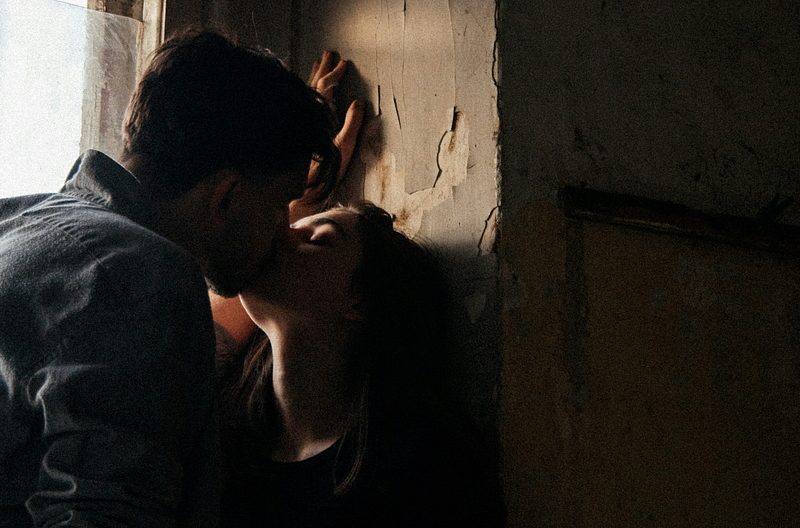
I know this first hand. The connection I shared with my paramour changed unrecognizably after I was no longer married to my husband. It ultimately became an unhealthy and unsustainable relationship, and I am grateful that it ended.
From the other side of things, as a single woman I have now dated multiple married men whom I would have ceased to be involved with had they ever left their wives. They were the kinds of men I could love and share with as lovers, but never could have maintained a day-to-day working partnership with.
There are exceptions of course. I do know of two couples whose current marriages started as side-partnerships. That outcome is, however, less common, and can never be counted on.
We often go into marriage out of a desire to make something good and beautiful permanent. We want to live forever in the lush, powerful love we experienced in those early years with our spouse. And to some extent, we can. And we may even be able to deepen and grow new beautiful qualities of love over the years if we work wisely and lovingly together.
But change is inevitable. A garden goes through seasons. Choosing to open a marriage is a way of meeting the inevitability of change with more change. It’s a creative and colorful option, and there are many folks who have not only made it “work,” but have found that it has brought new richness to their relationship with their spouse.
Whatever you and your partner decide, I wish you the best.


