
What I Learned From My Month Long Social Media Break
I desperately needed time off of all forms of social media. Somehow, the pandemic has made our lives both bigger and smaller at the same time. Most people I know are primarily socializing with their close existing circles of friends and family. It has become more difficult to build new relationships. I have even connected with people who live down the road via Zoom because they are not in my core network. Sources of gossip and industry chatter are not found at the bar post-conference, over drinks and away from home. Our worlds are smaller. We also spend more of our time online. We are seeing more of society-at-large through our computer screens and smartphones. We can follow what is happening real time in Portland or Kenosha or Chicago or New York City or anywhere else in the world from our couch and Twitter feed. Our worlds are bigger.
By July, I was feeling a bit susceptible to conspiracy theories. My real life social interactions had been significantly limited for the previous few months. I live in Chicago. It was not the unrest that was making me feel slightly paranoid — it was the fireworks. Perhaps you remember the media coverage two months ago about the massive uptick in fireworks activity around the country. A friend even sent me a conspiracy theory about fireworks that seemed plausible. It always struck me as odd that the fireworks in my Latinx neighborhood were never accompanied by the loud Spanish music associated with late night socializing. Then someone in my Instagram feed happened to share the Wayfair conspiracy. The prior evening, fireworks that sounded like an assault rifle woke me up out of sleep at 1:30 am yet again. I spent the next three days reading every QAnon conspiracy theory I could find.
It was an interesting use of time. QAnon is sociologically important. Our agreement or disagreement with a movement does not negate its cultural impact. This became glaringly obvious as I began to watch an increasing percentage of my network create and share social media posts that had QAnon philosophy embedded in its ideas. My upbringing was in a conservative environment, but even this surprised me. I did not think my faith networks would wrap conspiracy theory into theology so quickly. I just needed a break.
I closed every form of social media for the entire month of August. My following is not large enough to attract trolls, at least not yet. But even other people’s trolls steal my emotional energy. For some reason, we react defensively to other people’s social and political positions, even when they are strangers. It has something to do with identity. I do not like divisiveness; I prefer diplomacy. I suppose most people do in real life. I especially like nuance and social media is not designed for such. Platforms are built on bold statements.
Do not believe everything you see or read. Although I just wrote about QAnon, that movement is not the subject of this statement. Character and authority matters. This seems so obvious, and yet it is not. We have so much information at our fingertips yet do so little due diligence. Many times we do not know enough about the source of information. We share or retweet information from strangers too easily. Some people on the internet are credible and have authority to speak on the things they do. Others do not. We do not always take the time to determine the difference before we react to, comment on or share what we read. We sometimes have no clue whether our source has real life credibility. Even the people we used to know and trust change with time. We consume so much content we forget to filter what we read.
Social Media is a study in sociology. Social distancing has made this more true than ever. I think I first understood this in 2016 when Philando Castille was killed by the police in Minnesota. I have a diverse network, and so I saw widely different types of posts that day. My White networks largely ignored the event, while my Black networks were clearly grieving. My simple statement on Facebook that day was “My White friends and Black friends are living in two different worlds today.” It drew some reactions from the White side of my community. I saw this again in the aftermath of George Floyd’s death. My White networks posted the appropriate hashtags for a week or so and then mostly moved on. What you see on social media is a mirror of the world around you. Although other opinions may intrude via viral posts and algorithms, you have connected with the people you have because of who you are. Your feed is your mirror to the world — check that it is not just an echo chamber.
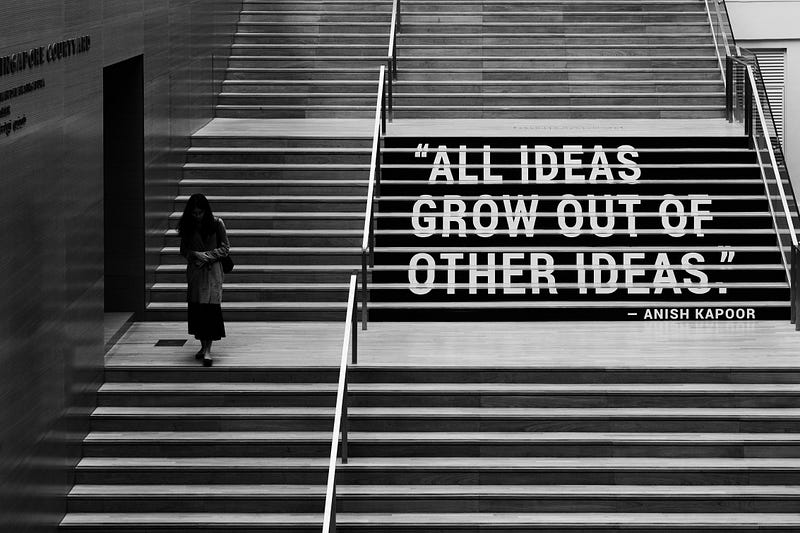
What you post has an impact. When it comes to significant events, a great number of people borrow the words of others. It is easy to post our own pictures of relationships, happy moments, and positive things. When it comes to hard or controversial events happening in our world we are less likely to create ideas and more likely to parrot. We post an article that supports our position rather than explaining our own. We retweet something we think someone else said better than we could. If something draws a reaction for you or supports your worldview, explain why. It will force you to fully process rather than just react. Use your voice, but use it well. Even on social media. Your voice does matter. It is too easy to either withdraw from the noise or just add to nonsense. Instead, create. Use your words to create the world you want to be in. Everything starts with words and ideas. But at the same time, be responsible. Add perspective, not just a sound bite. Just as your words have impact, they also have consequences. So do your social media posts.