
What I Learned About Our Ability To Behave Immorally in Discussions on Veganism
Why do we engage in what we find immoral?
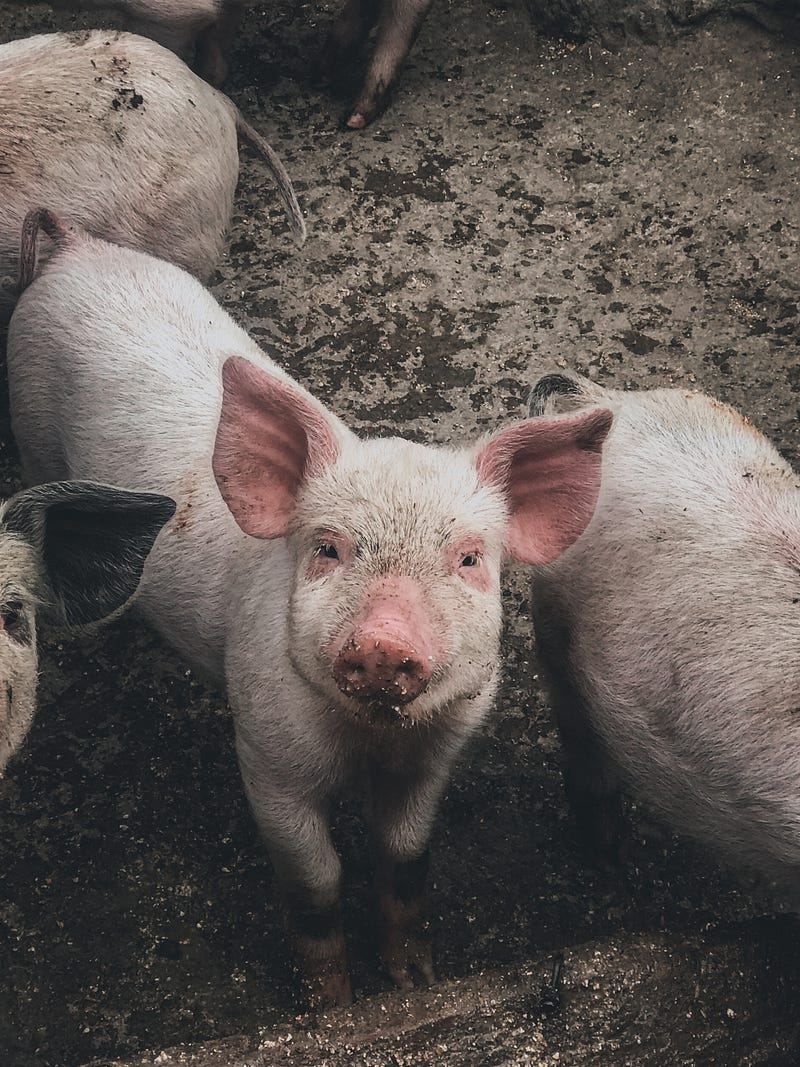
I am a vegan for more than 5 years now. You cannot imagine all these stupid discussions I had to endure. While I never faced a problem making my point, I never did one thing: Thinking more intensively about the bigger picture of veganism.
Veganism isn’t just a diet. It’s a philosophy.
It doesn’t just ground its diet in “I feel bad about killing animals.” There is a deeper, solid foundation behind it. And it provided me with something valuable I learned about us — us, as humans. And mainly our ability to cause evil. Let me tell you about, but first, introduce you to the basis we need.
The classic argument against killing animals
Simply saying, “I feel bad about killing animals” is a relatable thing. At least to me. Yet, it’s not that much of an argument. In his book “Animal Liberation,” Peter Singer points out nicely why it might be immoral to let animals suffer.
- We should consider the interests of all living beings as much as possible. For example, we do not hit other people because it hurts them.
- Animals, such as horses and dogs, seem to feel pain because they have a nervous system similar to humans and can show reactions as humans do.
- A horse or a dog is similarly intelligent as an infant or a very young child. Therefore, we should accept animals as equal to human beings.
- Therefore, it follows that we should consider animals in the same way as humans. We should not kill/mistreat them because their reactions show that it is not in their interest.
This is how Peter Singer explains why we should not exploit animals. But is this argument also untouchable?
You could make a case against Veganism…
I would never claim that there cannot be a good argument against Veganism. And in the context of Singer’s argument, I was confronted with a good counterargument.
Singer says that we should consider the interests of all living things. But what if the interests are opposed? In fact, they do — but usually only to a small extend.
A great manifestation is the “but meat tastes so good”-argument. Sure it’s not a good one. It’s a conflict of interest, yet not one we should seriously consider. One’s interest in eating something tasty shouldn’t undermine the interest to be not killed.
But what if consuming animal products was vital for humans?
…but 99% of meat-eaters don’t do it
I have to admit that making a case for animal products being an absolute necessity isn’t easy. Yet, it would be such a powerful argument. If we couldn’t live without animal products, it would be in our highest interest to kill animals. Nevertheless, no meat-eater I know seriously considers this argument.
While I hear many arguments, most of them are just wrong. Some of them were so ridiculous, it made me think.
Don’t people think about whether they can justify what they are eating?
It actually scares me. In fact, I am happier about non-vegans having what they claim is a good argument for their diet. Of course, I don’t agree with them regarding their argument. Yet, it’s much better than what actually scares me:
People, engaging in what they find normal without thinking about moral justification.
But why is this the case? Why don’t people actually think about it? When discussing non-vegans, one thing often strikes me: When I force them to think about what eating animal products means, they agree that it’s immoral. Yet, most of them don’t change their behavior.
[…] the terrifying thing about evil is its banality.
— Alex J. O’Connor
We are so comfortable with killing and abusing animals for consumption. That’s the point. It’s not that we don’t realize how we are causing evil. It’s just so normal that nobody questions it for too long.
Realizing this made me realize a lot more regarding moral questions.
What does this tell us about our ability to behave morally?
History lessons in school often left me traumatized a little bit. I remember my first encounter with the holocaust, slavery, mass killings in wars, and other tragedies.
What shocked me wasn’t the cruelty itself. Rather it was my lack of understanding for committing those crimes. It didn’t just affect me. I remember a couple of students asking my history teacher things like, “But something like the Holocaust can never repeat today, right?”.
The answer to our ability to cause evil sometimes hides in the way we speak about it. From today's perspective, people were treated like animals depending on their religion, skin color, or origin.
The famous “like animals” comparison. That’s a notion I often hear from others talking about evil. To me, this is where everything starts to make sense. Banality drives our ability to do evil—a banality like eating animals today or viewing certain groups of people as worthless in our dark past.


