
What I Learned About Leadership As A Student Film Director

Vision and Clarity:
“Vision without action is merely a dream. Action without vision just passes the time. Vision with action can change the world.” — Joel A. Barker
Without a clear vision, it’s easy to get lost in the noise, to lose sight of why you started this journey in the first place.
Drawing inspiration from personal experiences and artistic influences, I crafted a detailed vision statement that served as the guiding light for our project.
This document outlined not only the thematic elements and visual aesthetics but also the emotional journey I hoped to take our audience on.
It was a roadmap that provided clarity and direction for every aspect of production.
With vision comes clarity, and with clarity comes purpose. It’s what drove me, the cast and crew forward, in the face of uncertainty and doubt through out production.
2. Communication and Collaboration:
It was during the production of my senior thesis film when the importance of effective communication and collaboration truly hit home.
We were a tight-knit team of passionate individuals, each bringing our unique talents and perspectives to the table.
However, as anyone who’s worked on a film set knows, tensions can run high, and miscommunication can derail even the best-laid plans.
One day, we encountered a major setback when a key prop went missing just hours before a crucial shoot.
Panic rippled through the crew, threatening to throw our entire schedule into disarray.
In that moment of crisis, I realized that clear communication and collaboration were our greatest assets.
Instead of succumbing to panic, I gathered my team for an emergency meeting. We brainstormed solutions, leveraging each team member’s expertise and creativity.
Ideas flew back and forth, each one building upon the last, until we finally devised a workaround that not only salvaged the scene but elevated it to new heights.
What struck me most during that ordeal was how every voice was not only heard but valued.
From the production assistants to the cinematographer, everyone had a seat at the table, and their contributions were instrumental in finding a solution.
It was a testament to the power of collaboration in turning adversity into opportunity.
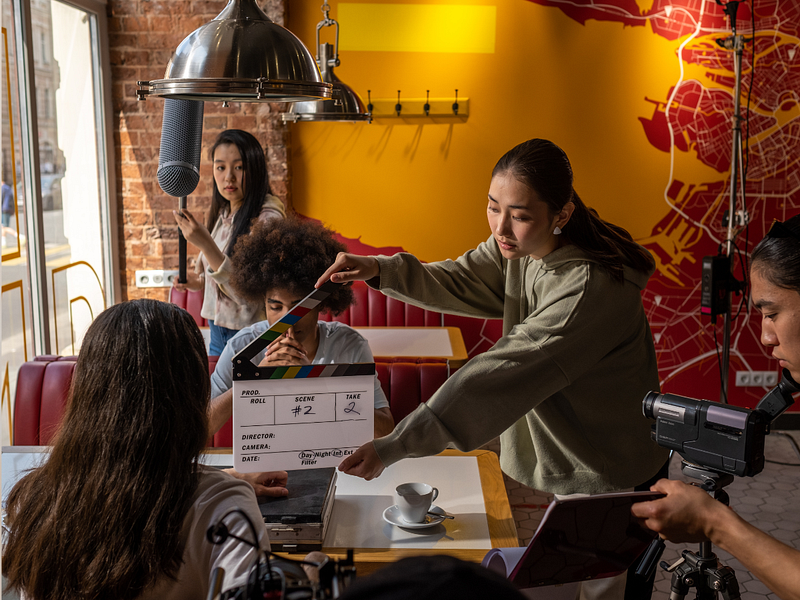
Throughout the rest of the production, we continued to prioritize open communication and collaboration.
From daily check-ins to impromptu brainstorming sessions, we fostered an environment where ideas flowed freely and egos were left at the door.
As a result, our film blossomed into something far greater than I could have ever imagined.
Looking back, I realize that the lessons I learned about communication and collaboration on that film set extend far beyond the realm of filmmaking.
3. Adaptability and Problem-Solving:
One particular moment stands out vividly. We were in the midst of shooting a crucial scene for our student film when an unexpected downpour interrupted our outdoor location shoot.
With actors, crew, and equipment on standby, panic threatened to set in. But as the director, I knew that succumbing to frustration wasn’t an option.
Instead, I rallied the team, brainstorming alternative solutions on the spot. We quickly rearranged our shooting schedule, opting to tackle indoor scenes that were originally slated for later in the production.
It wasn’t the ideal scenario, but it was a testament to our adaptability and ability to pivot in the face of adversity.
But our challenges didn’t end there. Just as we were settling into the new plan, a crucial piece of equipment malfunctioned, bringing production to a grinding halt.

With time ticking away and the pressure mounting, I knew that we needed to act swiftly to rectify the situation.
Drawing upon my problem-solving skills, I assessed the issue and devised a makeshift solution using available resources.
While it wasn’t perfect, it allowed us to continue filming without further delays, ensuring that we stayed on schedule despite the setbacks.
Through these experiences, I learned that adaptability and problem-solving are not just desirable traits but essential tools in the filmmaker’s arsenal.
In the fast-paced world of production, the ability to think on your feet and navigate unexpected obstacles can mean the difference between success and failure.
4. Empathy and Leadership Styles:
What I didn’t anticipate was how much I would learn about empathy and its pivotal role in leadership.
Our team was a melting pot of talent, each member bringing their own unique skills, perspectives, and backgrounds to the table.
Some were seasoned professionals with years of experience, while others were eager novices looking to make their mark in the industry. Leading such a varied group required a delicate balance of assertiveness and understanding.
One particular experience stands out in my mind. We were in the midst of production, and tensions were running high.
Deadlines loomed, and creative differences threatened to derail our progress. It was during this challenging time that I realized the power of empathy in navigating conflicts and fostering unity.
I made a conscious effort to listen to each team member’s concerns and frustrations, putting myself in their shoes to understand their perspective.
Whether it was a seasoned cinematographer feeling constrained by budget limitations or a rookie sound technician struggling to keep up with the pace, I sought to empathize with their struggles and provide support where needed.

This approach not only helped to diffuse tensions but also allowed me to tailor my leadership style to suit the needs of each individual.
For those who thrived on autonomy, I provided guidance and resources while giving them the freedom to explore their creativity.
For others who craved structure and direction, I offered clear instructions and frequent check-ins to ensure they felt supported every step of the way.
By cultivating a culture of empathy and understanding, I witnessed our team transform into a cohesive unit, united by a shared passion for our project.
Differences were celebrated rather than divisive, and mutual respect formed the bedrock of our collaboration.
5. Inspiring Creativity and Innovation:
Faced with limited resources and a tight budget, we were forced to think creatively about how to bring our vision to life.
Rather than viewing these constraints as limitations, we saw them as opportunities to innovate.
We experimented with unconventional camera angles, improvised with makeshift props, and explored new techniques that pushed the boundaries of our creativity.
Every member of the team was encouraged to contribute their ideas and insights, regardless of their role or experience level.
As we dove into production, the spirit of creativity and innovation permeated every aspect of our work.
From the dynamic cinematography to the innovative sound design, each decision was guided by a commitment to pushing the envelope and breaking new ground.
What I Learned About Leadership As A Student Film Director — In a Nutshell
My journey as a student film director taught me invaluable lessons about leadership that transcend the confines of the film set.
From vision and communication to adaptability and empathy, the principles of effective leadership that I honed during my time behind the camera continue to guide me in various aspects of my life.
As aspiring leaders, we can all draw inspiration from the collaborative and creative environment of filmmaking to cultivate our own leadership skills and empower those around us to reach new heights of success.
As I transition from student director to aspiring filmmaker, I carry these lessons with me.