
What I Have Learned from Reading over 8,000 Books
Plenty of good things, and three bad tendencies that I am working to counteract
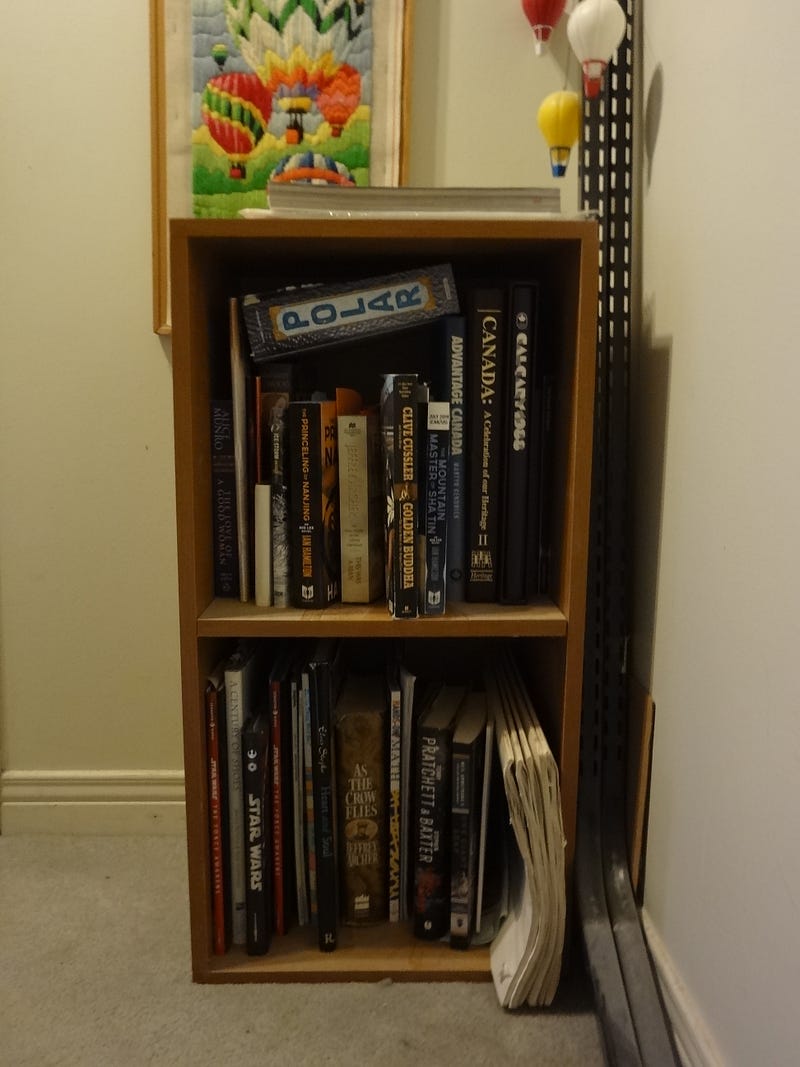
When you glance at my Medium profile, you will see the note: “Bookaholic (I have read 8000 and counting).” What does this mean, exactly? How on earth can I have found the time to read over eight thousand books? Why did I do it, and why do I keep doing it?
First: I learned to read before I started kindergarten. No one objected to my reading because they always knew where I was and what I was doing. For example:
“Where’s Carol?” “She’s reading a book (on the porch, in her room, in the back yard).” “Okay, tell her it’s time for supper.”
Life was simple, and I got to read as much as I wanted, before meals, and after the dishes were done. I was a regular patron of my local library by third grade, and was allowed to wander about the collections unsupervised a year later.
SCHOOL YEARS
Next: By age ten, I was outpacing my classmates and sometimes got bored in school, or, conversely, I got very interested in a class topic and wanted to learn more. I had read nearly everything in the house that I could understand. We had a set of very old encyclopedias called “The Books of Knowledge,” A 20-volume set — I had read all those by fifth grade. I remember the “O” volume very well, my first exposure to opera. I read about Die Meistersinger, Aida, and the Ring Cycle among others. All of this background helped me in my early 30s when I got a secretarial job at the Canadian Opera Company.
A more modern set of science encyclopedias at home was called “The Golden Books of Science”. My mom purchased them a volume at a time as they were published. They were thinner books, with plenty of color photos, something like a less expensive edition of the famous hardcover LIFE books on various topics. I also finished reading those by fifth grade. The volume I remember most was “C”, where I read about the discovery in the of a prehistoric aquatic creature called the coelacanth in the 1930s. They had been thought to be extinct millions of years ago.
A massive (for someone not quite five feet tall) encyclopedic dictionary held up the far end of the middle shelf. It had color plates and colorful maps and other cool stuff, some printed on crinkly onion-skin paper. It took me till the end of grade six to get through this one, mostly because my arms got tired of holding it up. Every once in a while, I would pull out a “new word” and throw it at someone in a sentence. They got a little tired of this, so I stopped doing it.
My mother subscribed to a few magazines and I read these, too. The summer before I turned thirteen, I bought a big paper scrapbook, with pages about twelve inches by twenty-four, and drew lines and columns on every page. I started to write down all the books I was reading, listing the title and the author. I had reached 250 by December of that year, so I kept going till June, reaching five hundred, and the scrapbook was full. My estimate of the 8000+ books was based on calculating, from that summer on, that I read 200 or more books a year for forty years. These days I read about 90–100 titles annually, and that is only books, not magazines or articles on great sites like Medium.
My favorite “classroom” book we read in Grade Eight was Cue for Treason, by Geoffrey Trease. I bought a copy to read again as an adult, and also found another book by the same author, Thunder of Valmy. The best part of that story was that it took place in Canada, in the province of Quebec. I had not read many fiction books before high school that had a familiar part of my own country as a setting. I still use Thunder of Valmy as a reading resource for students I tutor.
By the time I was in high school, I had access to a well-stocked school library as well as still living part-time at the public library. So I went for it, at the rate of three to four books a week, in addition to what we had to read in class. Both libraries had started to add science fiction to their collections, so I burned through Arthur C. Clarke, Ray Bradbury, Frederik Pohl, Andre Norton, and Robert Heinlein, among many others, as fast as they arrived.
One of the earliest SF books I read was Assignment in Space with Rip Foster, by Blake Savage. Two large entities, the Consolidation of Planetary Governments (the “Connies”) and the Federation of Free Governments (the “Feds”) explore the solar system looking for asteroids that had large concentrations of valuable minerals. The Connies and Feds battle it out in this story for control of an asteroid made entirely of thorium, an element nearly as energy-productive as uranium or plutonium, but with a much lower radioactivity level. The spaceships in this story used thorium as their primary fuel. Written in 1958, as the Cold War was reaching a crescendo, it was a thrilling tale. I rooted wholeheartedly for Rip and the Feds. (Full disclosure: I checked on Amazon.com to see if a copy was available, and got the correct full names of the Connies and the Feds from the blurb. Now I want another copy, since I split the spine of mine by reading it so much.) I probably read this book ten times, but I only wrote it in the book log once. Honest. Since then science fiction has been my number one fiction reading choice. I enjoy beta-reading and editing SF novels for my client authors these days.
OFF TO UNIVERSITY and Life in the Big City
When I went away to university in Toronto, oh my goodness! Library branches a short walk in any direction, and such wonderful bookstores. Treasures everywhere, just for the wave of a library card, or plunking down a few dollars in Coles, Chapters, Indigo or any of the resale book stores in every neighborhood downtown. One street, Spadina Avenue, had ten or more bookstores in a four-block stretch on the west side, between Bloor and College streets, including Alphabet Books, great for history and biography, and Abacus Books, that covered many other subjects. Queen Street West was also a booksellers’ mecca in the 1970s and 1980s, with Bakka, the science fiction bookstore, being my favorite. I met two clerks at Bakka who became bestselling authors later — Tanya Huff and Michelle Sagara (also used her married name, West for a while).
When I took a job in South Korea in 1996 as an ESL teacher, I took fifteen books with me in a suitcase, along with my other necessities. When I had read all those, I placed a long-distance order by telephone with Bakka for two recent SF titles, one by Arthur C. Clarke and the other by Orson Scott Card. They arrived fast in Seoul by air mail, then came to my little town of Suji by postal truck.
So, now you can understand why I call myself a bookaholic.
WHAT HAVE I LEARNED from Reading All These Books?
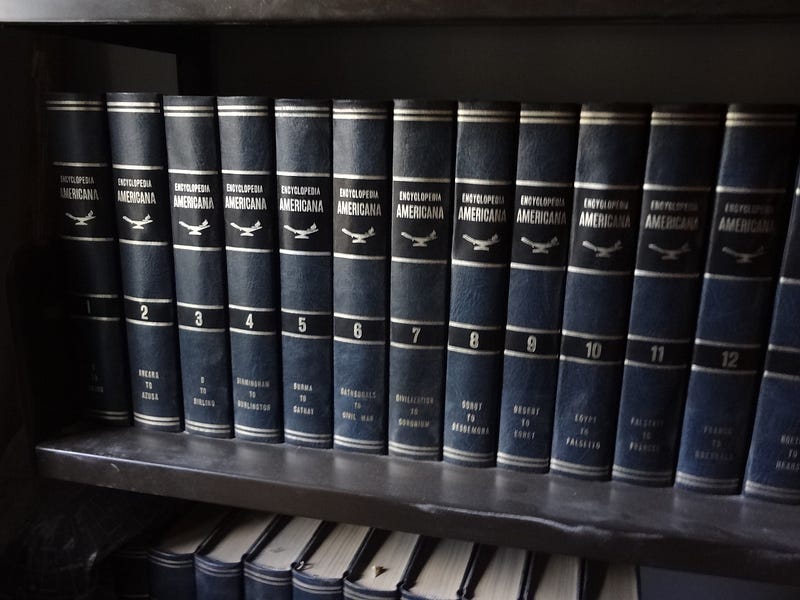
I learn best from reading. I can educate myself well on an unfamiliar topic by reading both non-fiction and fiction about it in about a month. My understanding of the history of Ireland, for example, has been improved by the novelists Edward Rutherfurd and Morgan Llywelyn, and various articles on Irish history in Encyclopedia Americana, the full set that lives in my “library”.
I have developed phenomenal editing and proofreading skills, not just for text but for page layout. You can’t slip an incorrect indent, poorly placed quotation mark, missing sentence punctuation or font style past me. They jump out at me like cheerleaders on a field at half-time.
My vocabulary expanded dramatically thanks to all the authors I have mentioned — along with a historical fiction writer named Georgette Heyer. When I first began reading her Regency period novels, I had to have a dictionary right beside me to look up such words as “soporific” (“sleep-inducing”). Over the next two decades I purchased every one of her Regency and earlier historical fiction novels, forty in all. A friend of mine, on a trip to England, took the trouble to bring back two stories for me that I could not find in Canada or the United States. That’s taking friendship to a very high level.
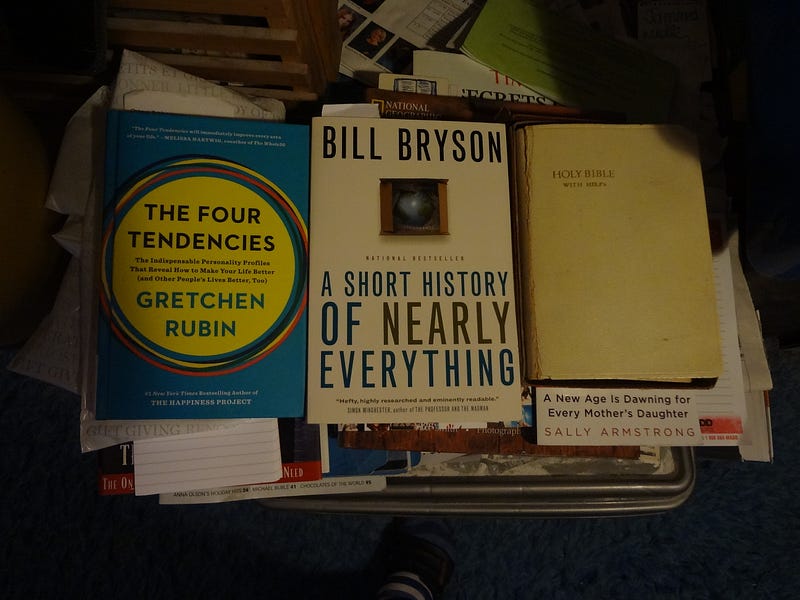
My personality and its quirks have become an “open book” to me through reading such authors as Gretchen Rubin (The Four Tendencies, Better than Before), Benjamin Hardy (Willpower Doesn’t Work) and James Clear (Atomic Habits). I can recommend all these if you are having any problems in your life that seem to resist every solution.
I can fully immerse myself in a well-written story. The cares of the day fade away, and I relax fully as I travel through space, back in time, or to alternate universes where the Civil War and World War I never ended (thank you, Harry Turtledove). No need for central nervous system depressants or stimulants while I have a good book at hand.
BAD HABITS I Developed as A Bookaholic
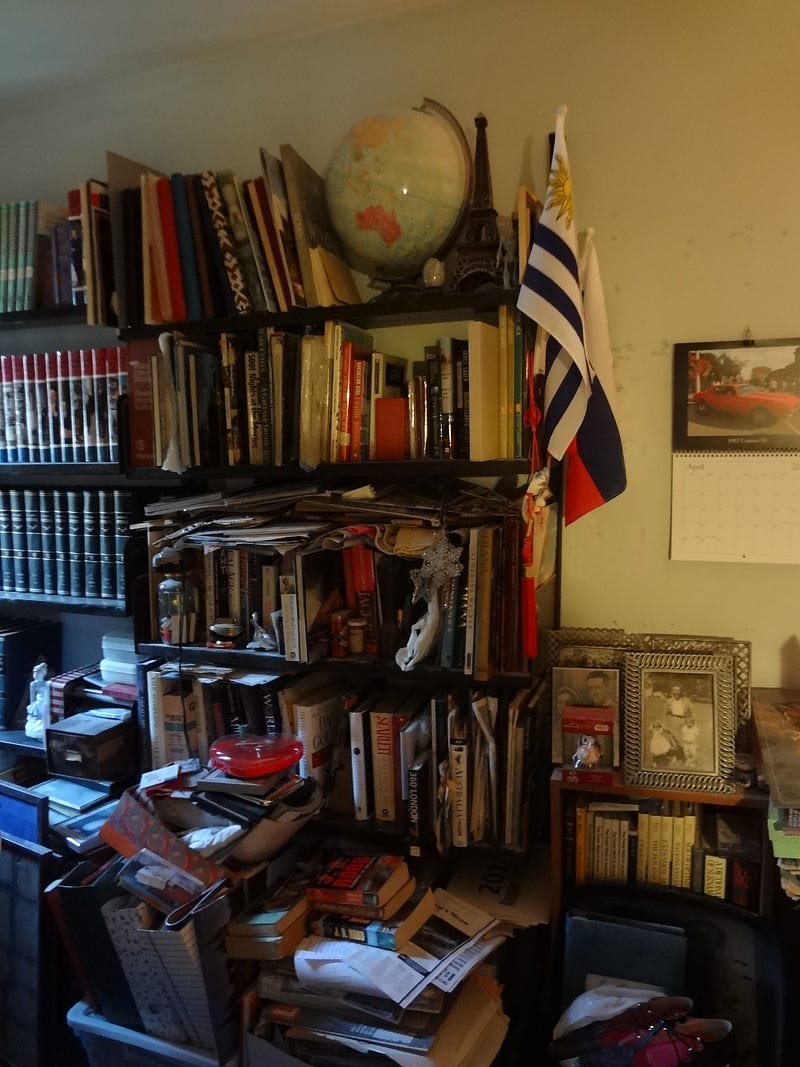
The Foster Parent for Books: I want to provide a good home for every book I read. But I don’t live in a sports stadium or the Library of Congress. So I force myself to purge the collection once a decade, and am doing so now. I allow myself to buy no more than 20 books a year, and I have to read them within the calendar year. If I think I will read them again, they can stay. If not, or if I have not read them in the 12 months since I bought them, off they go in the next purge. I have, at any time, about eight hundred books in the house, including the encyclopedias and dictionaries. I’m going to try to cut this back to 500 this time. Then I can buy (and keep)some new ones!
Creative Procrastination: The number of hours I have spent reading when I have other duties and tasks to be done is uncountable. I have finally called myself out on this creative procrastination. My reading hours are now limited to after lunch, after dinner and at bedtime only. No recreational reading before noon or between 3:00 and 8:00 p.m. on weekdays. On weekends, I allow my bookaholism a looser rein. It is admittedly hard to keep to this schedule, especially when I am reading an exciting action adventure (thank you, Clive Cussler) or a really useful book. I laughed ruefully all the way through the chapters about Questioners, one of the Four Tendencies in Gretchen Rubin’s book, because I recognized myself in every line.
Ms. Know-It-All: The vast majority of my classmates, friends and acquaintances appreciated my encyclopedic knowledge then and now, and consult me often for little-known facts. But, I nearly drove my grade eight social studies teacher insane by calling him out on the errors in the textbook we had to use. At least once a month he would send me down to the principal’s office for being unruly in class. The principal would ask me what the problem was this time, confirm that I was right, and then request that I just go back and not participate verbally for the rest of the class. That created a win-win situation, and I got through that year with a high grade. Our teachers were not allowed to fail a student whom they perceived as insubordinate. Lucky me! Of course, it was the next year when they got the new textbook, updated and with the errors corrected.
Every activity, even one as valuable as reading, can have a downside if indulged to excess. Now that I understand better why and when I read, I can integrate my passion better into my life and make time for the tasks and duties I need to do. When these are completed, I can reward myself with — a little more reading!