
What I Did to Make Running a Mental Health Tool
I’ve been feeling more than a little overwhelmed lately. I know I’m not alone. We almost have a full year of pandemic living under our belts, and it hasn’t gotten any easier with the all-consuming darkness and cold of a New England winter making me a ghostly shut in.
My anxiety has been coming in waves, with some crashing over me far more violently than ever before. I’ll be going about my day as I normally do until I’ll feel a tightening in my chest, warning me that I’m about to be swept away. Not much can bring me back, and before I know it, I’m holding my head in my hands while crying at my kitchen-table-turned-desk.
I’m no stranger to anxiety, though I’ve never seen a professional for an official diagnosis. I’m what you’d call “Type A” and have been known to get myself worked up over the smallest issues.
But over the past few years, and particularly during the pandemic, running has been my buoy.
Running gives me space. It gives me time to self-reflect and be alone with my thoughts, and it reminds me that I can handle each thought one by one, no matter how much of a flurry they cause in my mind.
It encourages me to get outside and breathe. It pushes me to conquer rain, sleet, snow.
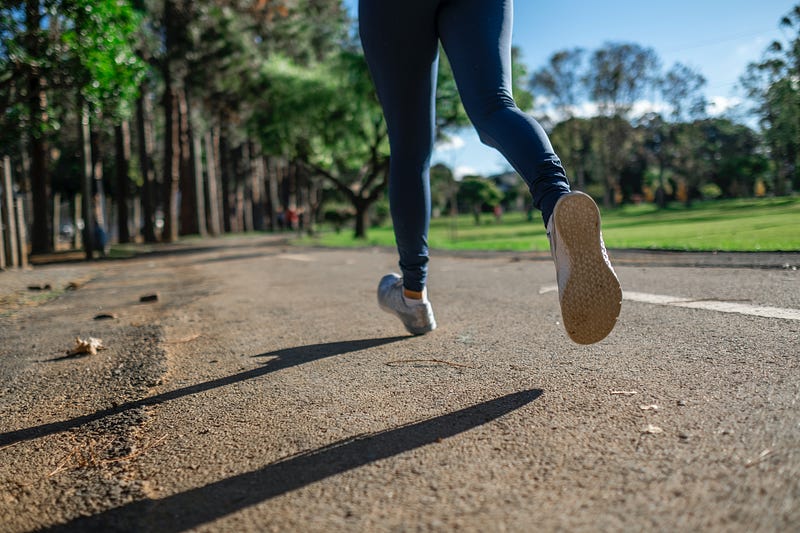
It welcomes me into my day, as a hush still lies heavy over Boston and the tap of my sneakers on the pavement is the sole sound that cracks the quiet.
If you’d told me I’d be saying this seven or eight years ago, I would have declared you to be insane. At that time, running was a source of stress. I felt incompetent, uncomfortable with my body, and frustrated with the whole process.
Here’s how I was able to change that:
When you first start out, look at running as a mental practice rather than a physical one.
A lot of people will treat running like physical exercise because it is. My sore quads and calves can testify to that. But there are also various studies that tout running to be beneficial for symptoms of depression and anxiety. For instance, as Mayo Clinic writes, running releases feel-good endorphins, natural cannabis-like brain chemicals (endogenous cannabinoids), and other natural brain chemicals that give you a sense of calm and wellbeing. With that in mind, framing running as a mental health practice takes the pressure off of the physical aspects of it.
I didn’t enjoy running until I realized that it helped me manage my stress. I was no longer frustrated if I didn’t perform well on a certain run, because I knew that I clocked in some time to take care of my mind, and that was all that mattered to me.
Take it at your own pace.
Jealousy is the thief of joy. I’m all for friendly competition, but if you’re getting down on yourself because you’re not as fast as your friend or the person next to you on the street, running loses its luster.
I used to have so much anxiety that I didn’t go to the gym my whole freshman year of college. I kept comparing myself to my peers and felt embarrassed that I couldn’t keep up, and it kept me from running at all. I associated running with feeling incapable and hated it.
Once I started running at my own pace — a cool 12-minute mile — I discovered that I actually liked the movement and that I felt so much better once I was done.
I heard the motto “Run your own race” a few months ago and it’s stuck with me for precisely this reason. You’re running for you, and the pace you “should have” is just a construct in your head. Adjust it for your own needs and tackle the mental race one step at a time.
Get outside.
I wouldn’t be running today if all I did was log miles on a treadmill. As I mentioned before, I’m from New England, so throughout the year, I have my fair share of disgusting weather. But I’m not a fan of running on a treadmill for more than half an hour (tops), so my running routine has been a great way to force myself outside. Spending time in nature has been shown to reduce stress, anxiety, and depression, so even when it’s 15 degrees out and I feel like my legs are going to fall off, I still feel better in the freezing air than I would if I were stuck in my apartment.
During the summer, running outdoors also helps me get more vitamin D, which is a nutrient that’s known as the “sunshine vitamin” since it’s produced in your skin in response to sunlight. Vitamin D has been shown to improve depressive symptoms, so it’s not a bad idea to take the workout into the open air if you’re hoping for a mood boost.
For me, running is more than exercise — it’s a method of healing. It’s been there for me for years and brings me back down to Earth when it feels like I’m in a tailspin. I hope that you can find healing in the sport as I have and that it provides you some solace in the storm.