
5 Dos and Don’ts For Moving to Asia

Well, this is a profoundly untimely article, what with barely anyone able to move around the world right now! Still, I post it now in the hopes that the world will return to normal before too long.
Moving to Korea was the best choice I ever made. But that’s not to say I did everything right from the beginning, or that I’m doing everything right now!
Many of us are enchanted by the prospect of going to travel or live among a culture that is, in so many ways, opposite to what we’re used to. We fancy that having our expectations and upbringing flipped on their heads will be initially uncomfortable, but ultimately instructional — a ‘what doesn’t kill you’ type of thing.
And it’s all true.
However, as much as we might relish the prospect of being fundamentally ‘changed’ by an experience, we tend to downplay the less comfortable aspects of changing. We forget that, although we may be changing in areas in which we welcome it, we will undeniably also be changing in ways we have not anticipated as well.
I have spent most of the last decade living in South Korea, and the last couple of years married to my Korean wife. These are some dos and don’ts for making the big move to Asia that I’ve picked up along the way.
Do: Dive Straight In
The first ‘do’ is simply to throw yourself into the local culture, instead of gravitating to foreign friends and communities. Spending time with largely local people during my first few years in Korea allowed me to really see what day-to-day life was like for the locals. Hanging out with local friends also gave me the chance to pick up colloquialisms and slang in the local language that you won’t learn in any language class!
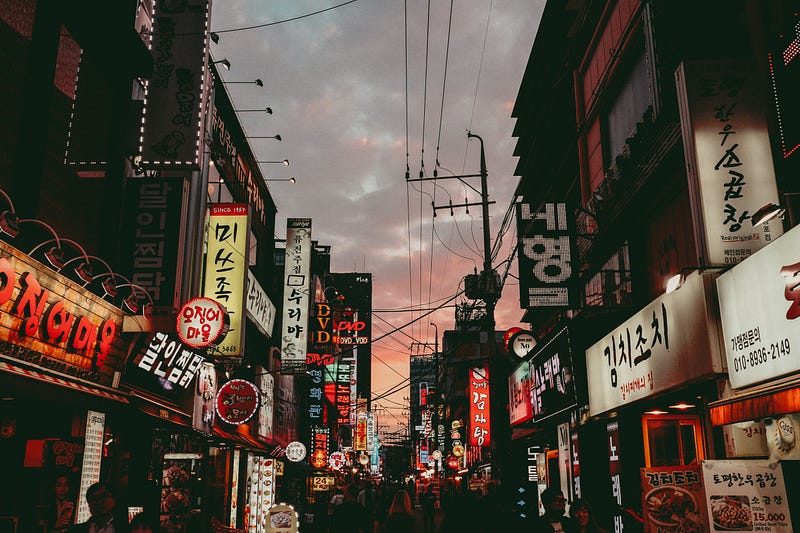
Having spent abundant time in the expat communities in Korea, I can safely say that the attitudes and ways of life are very different there. Seoul has an effective ‘America Town’ in the form of the Itaewon area, and the expatriates that populate it are often more interested in enjoying whatever slices of home they can find than absorbing the culture of the country they’re actually in. When it comes to moving to Asia, immersion is definitely the way to go — in for a penny, in for a pound, as the saying goes!
Don’t: Challenge the Established Way of Doing Things
The nations of East Asia have been identified as generally collectivist in their social make-up. In my experience, this has had broad-reaching effects throughout Korean society — many of them very positive, but some also being difficult for outsiders to accept. Lower crime rates and greater respect for elders and family in general are just some of the positive impacts this kind of social structure has. The deference to authority that this type of societal make-up engenders has also led to a far better reaction to mask-wearing mandates than has been seen in the individualistic west during the recent pandemic as well.
However, that aforementioned deference to authority has other impacts too. Younger Korean people are often very unlikely to challenge their managers at work for instance, which can lead to working inefficiencies. Although, in the case of Korea, a strictly hierarchical society and deference to authority figures have been pointed to as causes of the country’s rapid economic ascension, history is replete with examples of the effects this type of attitude can have when the person in charge is incompetent, or generally not motivated by the common good.
While living in Korea, I have frequently been frustrated by the expectation that I will blindly listen to and adhere to the commands of managers and elder family members. As mentioned above though, the benefits of a collectivist, hierarchical society are well-established. And, at the end of the day, you chose to live in this country and take on the duty to adapt to it, not the other way around!
Do: Embrace the Food and Lifestyle
This one almost came part and parcel with where I was based upon arriving in Korea — a remote town on the west coast. Where I lived there weren’t many western amenities, and, although Seoul wasn’t far away, I chose to stay put and get to know the place I was in before venturing into the big city. The result was that I quickly learned which Korean foods I liked, and how to order in restaurants and hold down conversations about food in the country.
In Korea, food is not simply a source of sustenance and enjoyment, it is imbibed with national identity and the feeling of home. Many times when Korean people travel abroad, they pack their suitcases full of Korean instant noodles, rice, dried seaweed and bottles of soju, because, for them, these foods are home. Believe it or not, Korean love songs are FULL of odes to food as well. When they sing about missing a place, they sing about missing the food from that place. What’s more, Korean foods such as pork belly barbecue and so-called ‘military stew’ are directly connected to Korea’s history as a nation too.
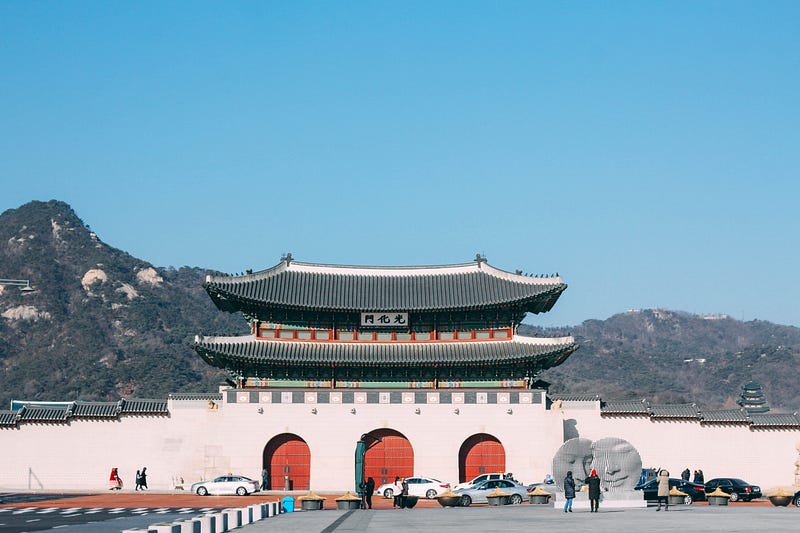
In addition to adjusting to the food, I worked on learning from the East Asian lifestyle more generally too. I began enjoying my downtime in similar ways to the locals — going on riverside bike rides, playing badminton in the parks, and going all-in on gaming and karaoke rooms. As well as exposing me to new ways to enjoy my free time, engaging in these activities gave me more common ground with the local people and allowed me to forge better connections down the line. The local people know best what their cities have to offer, and you could do worse than following their lead when it comes to seeking out recreation.
Don’t: Half-ass the Language
Ah, the hurdle as old as time — the language. While I have mentioned that immersing myself in local communities helped me pick up some degree of conversational speech, in establishing a life for yourself in Asia you do get to the point where rudimentary conversation no longer cuts it. I now work for a large Korean company, and find myself blocked from advancing unless I can drastically improve my mastery of business-level Korean.
I also now have Korean parents in law. And while chatting casually wouldn’t usually be a big obstacle, using the appropriate honorifics with older people who use a less contemporary form of the language remains a real challenge. Had I committed time to learning the language in a more well-rounded way early on, I would likely now find myself far more able to connect with my parents in law and advance professionally, improving multiple aspects of my life here. Learning the language additionally opens up a host of new — and generally quite well-paid — career paths for you in Korea.

Do: Adapt Quickly to the Working Culture
Although, as mentioned, learning the language would have helped me in this area, I have otherwise been able to adapt well to what is a very different working culture from back home. I remember one day during my first year in Korea when I tried to call in sick for work with an upset stomach. The ensuing scramble to find someone to cover for me and frank talk with my boss made it clear that the point at which you are deemed ‘too sick to work’ in Korea is very different from in the west. Take it as you will, but I find that most of those days I was taking off sick, I didn’t actually really need to be taking anyway.
But it hasn’t just been adapting to the actual working conditions that have helped me get along, but also adjusting to the local work ethic. I looked around one day in Korea and realized that most everyone I knew was working full time, but still finding time to go to classes, or take online courses, or otherwise find ways to improve themselves. Being around people who never settle and are constantly developing new skills will really motivate you to do the same, and I soon found myself feeling odd if I wasn’t setting aside portions of my spare time for some kind of self improvement. Finding time for rest and recuperation will never stop being important, but you might be surprised by how much you find you can do once you’re surrounded by highly driven people.
I repeat — moving to Korea was the best thing I ever did. Moreso than just ‘expanding your mind’, living abroad opens you up to entirely different reference points, and helps you realize new ways of doing things. Some of the ways you’ll change will be predictable — and about a thousand won’t — but it’s sure to be an adventure along the way!
*Bonus Don’t:
Don’t talk s##t about K-Pop.
It’s just not worth it…


