
What (Human Rights) Do Women Want?
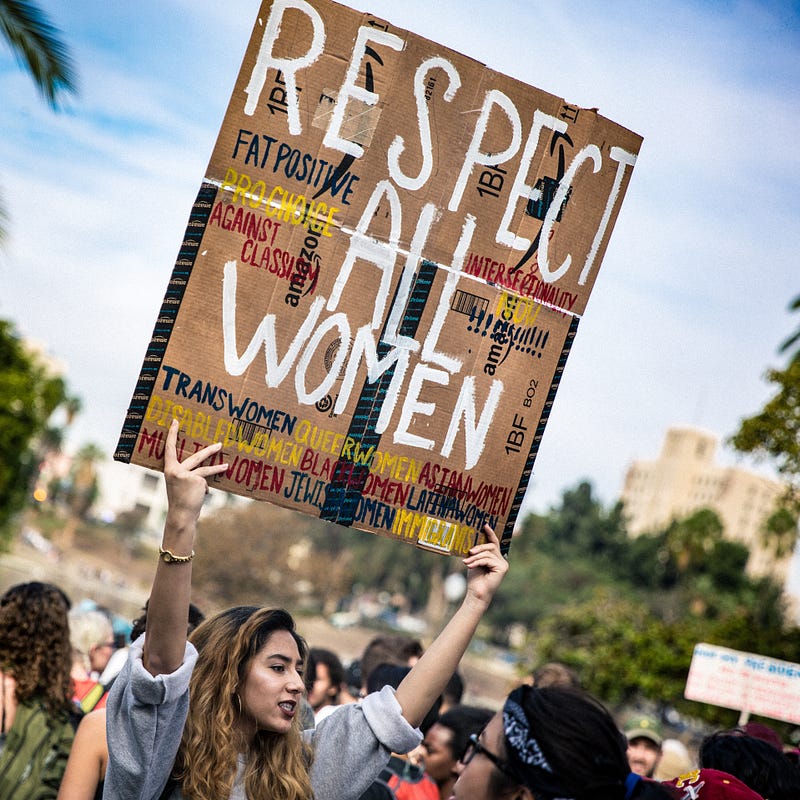
If we had to choose…
Girls Just Wanna Have Fun-Damental Rights is a popular t-shirt these days.
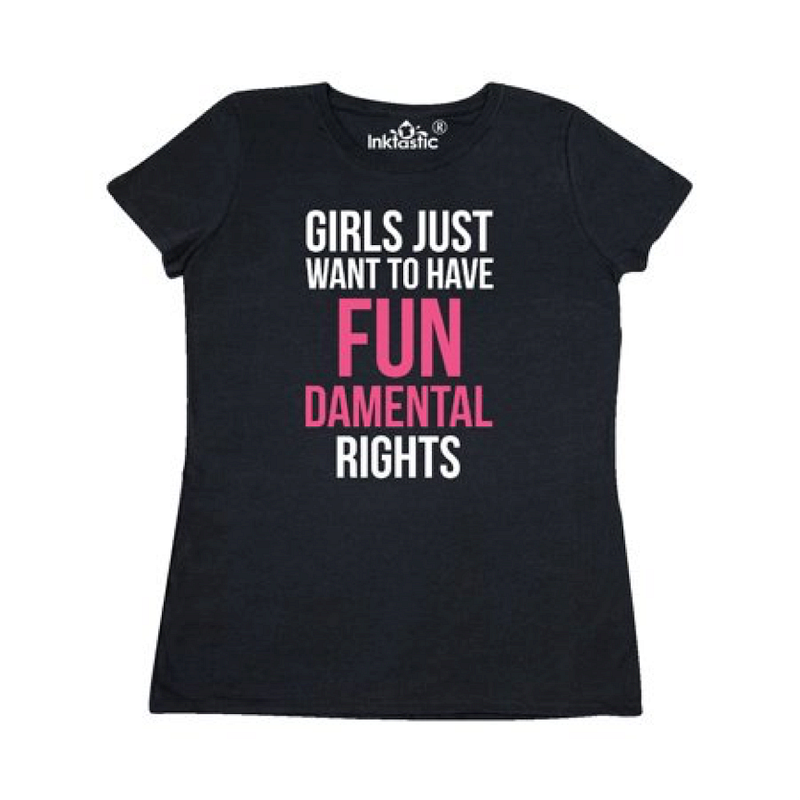
While no doubt great for Amazon, what does this phrase actually mean? I suppose it means girls and women around the world are entitled to enjoy the human rights we have negotiated and won over the course of history. The right to express ourselves, the right to vote, the right to be free from torture or arbitrary detention. These rights have been hard-won and are extremely important. But, especially in the #MeToo era, is there anything missing from this list? Are women’s experiences fully captured and protected within this framework?
What Do The Experts Think?
In the 1990s, Hilary Charlesworth and Christine Chinkin — both law professors — criticized the major international human rights treaties for directing themselves toward the “protection of men within their public life and relationship with government”. Human rights treaties, they said, simply ignored the “ways in which being a woman is in itself life-threatening”.
They also criticized how many human rights treaties only use the masculine pronoun (he/his/him). For example, while much of the European Convention on Human Rights refers neutrally to ‘everyone’, it also refers to ‘his life’, ‘his conviction of a crime’, ‘his liberty’, and ‘his lawful detention’.* Even if intended to be generic and inclusive of both sexes, the use of the masculine pronoun in human rights treaties can be harmful. As scholar Helen Bequaert Holmes has written, “a man is sure that he is included; a woman is uncertain.”
Professor Charlotte Bunch pointed out the lack of any human rights treaty outlawing violence against women globally. This, she argued, indicates “female subordination runs so deep that it is still seen as inevitable or natural, rather than a politically structured reality maintained by patriarchal interests.”
These professors were writing in the 1990s, which was an incredibly empowering time for women. Triggered by events like the Anita Hill congressional hearings (eerily mirrored by the Christine Blasey Ford 2018 hearings), in 1992 women in the United States ran for office in droves, resulting in 1992 being declared the ‘Year of the Woman’. In 1993 the United Nations General Assembly released its Declaration on the Elimination of Violence Against Women. This included an important requirement that countries report statistical data on violence against women to U.N. human rights committees. To top it off, in 1995 Hilary Clinton delivered her world-famous ‘Women’s Rights Are Human Rights’ speech at the U.N. Beijing Conference on Women. And in 1996 the Spice Girls rose to fame with their number one hit single ‘Wannabe’.
But since then things have gone quiet. While the 1990s was incredibly important in recognizing epidemic levels of violence against women, 2018 calls for different concerns. The time has come for human rights to actually recognize the specific needs of women.
Do We Protect Women’s Needs At the Moment?
Some women’s concerns are addressed in the International Covenant on Economic, Social, and Cultural Rights (the ICESC). 166 countries have signed up to the treaty, thereby committing to gradually improving people’s living conditions and social rights. For example, they promise to ensure the equal right of men and women to education, social security, and good living standards, and to provide mothers with paid maternity leave.
But many countries, including the United States, have not accepted the treaty as binding law. And even if they have, they can avoid embedding it in national law (like the United Kingdom has done), meaning people can’t enforce their rights in court. Perhaps worse, the treaty only asks countries to ‘take steps’ to work towards ‘full realization’ of the rights, which most countries can always say they are doing (not always credibly).
The Convention of the Elimination Against the Discrimination of Women (CEDAW) is another example. Created in 1979, and described as an International Bill of Rights for Women, it creates a framework for “eliminating discrimination against women”, defined as “any distinction, exclusion or restriction made on the basis of sex” with the effect of impairing women’s equality with men. While still progress, the treaty is vague, and while it recognizes basic rights like freedom to marry, it does not outlaw any specific cultural behaviors that call into question women’s equality with men.
Biological Differences
These treaties entered into force in 1976 and 1981 respectively. Forty years ago. A lot has happened since then. Equality is being re-thought, particularly in the context of women’s bodies, and what they need in order to enjoy their rights fully.
Period poverty is a really good example. Period poverty is when women or girls don’t have the money to buy sanitary products to get them through their monthly period. Girls miss school because of it, and no doubt suffer unnecessary embarrassment and blows to their self-esteem.
If the purpose of human rights is ensuring equality and dignity for all, then we need to take account of women’s biological differences within our human rights framework. These differences have the potential to hamper women’s opportunities to participate in all the areas of life protected by human rights — including education, politics, and work.
Cultural Differences
More than just biological differences, we also need to start thinking about differences based on the cultural construct of ‘gender’ or ‘being a woman in today’s society’. Should women have to go through life being cat-called, wolf-whistled at, groped or otherwise objectified (treated as a thing rather than a person) against their will? A recent report by Plan International UK found 66% of girls aged between 14–21 in the UK have experienced unwanted sexual attention or sexual or physical contact in a public place, and girls as young as eight are experiencing street harassment. Is there a human right to be free from street harassment? People cite freedom of expression as a way to quickly shut down this idea, but is that completely warranted?
We need to figure out, in 2018, what human rights women want and, more than that, need. If we think that freedom from catcalling is a human right, and governments must protect it, this could be revolutionary. Governments could be obligated to provide educational programs to re-think the relationship between boys and girls, men and women, in order to put a stop to the cat-calling girls are experience as young as age 8. Just a few days ago, schoolgirls in the UK have called for street harassment to be a criminal offence. But as things stand, we are failing women and girls. Re-thinking human rights to encompass women’s needs, and ensure their full enjoyment of human rights, is imperative.
*This is true in the English language. Other languages may depend on the gender of the noun they are describing.
Respect All Women photo by T. Chick McClure on Unsplash