
What Have The George Floyd Protests Really Accomplished?
Actually, quite a bit
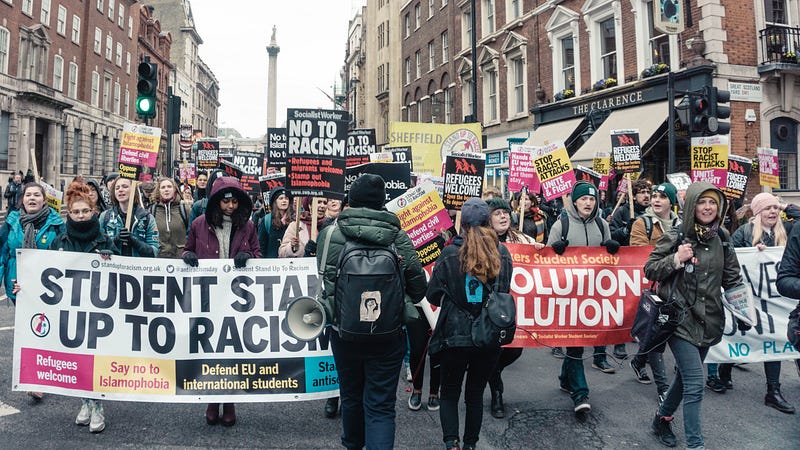
Despite perceptions by some to the contrary, an independent assessment has determined that over 93% of the protests that erupted in the wake of George Floyd’s death have been peaceful. They’ve also been pretty effective at sparking social change as well. “The Armed Conflict Location & Event Data Project (ACLED) analyzed more than 7,750 Black Lives Matter demonstrations in all 50 states and Washington D.C. that took place in the wake of George Floyd’s death between May 26 and August 22.”
“Their report states that more than 2,400 locations reported peaceful protests, while fewer than 220 reported ‘violent demonstrations.’ The authors define violent demonstrations as including ‘acts targeting other individuals, property, businesses, other rioting groups or armed actors.’ Their definition includes anything from ‘fighting back against police’ to vandalism, property destruction looting, road-blocking using barricades, burning tires or other materials. In cities where protests did turn violent — these demonstrations are ‘largely confined to specific blocks,’ the report says.”
Besides being overwhelmingly peaceful, these protests have also been highly effective in encouraging the reevaluation of long-standing practices, policies, marketing strategies, etc., both inside and outside of the United States. The US military made several changes, and police departments in most states revamped or amended some of their policies in the wake of the protests. NASCAR, which has long been a bastion of Southern pride, stopped using the Confederate flag, and the Washington Redskins, who had sworn for decades that they would never change their name, became the Washington Football Team, under pressure from sponsors. These are just a few of the more high visibility changes, but there have been many others.
Here are just some of the other specific, concrete changes that have come about as a result of the Black Lives Matter protests:
- The ice cream company, Good Humor, is in the process of creating a new signature jingle for their trucks, since the one they have long used, “Turkey In The Straw,” is associated with minstrel shows and blackface.
- Quaker Oats owner PepsiCo announced that the image of Aunt Jemima will be removed from all packaging and that the brand’s name will be changed. Aunt Jemima represents the racial stereotype of the kindly, non-threatening mammy more than happy to help out in the kitchen.
- The U.S. Marines officially banned the Confederate battle flag from both public and workspaces on its military bases, including its display on vehicle bumper stickers, clothing, and coffee mugs.
- Hasbro and the North American Scrabble Players Association agreed to remove 225 words from official Scrabble competition. Hasbro said it will “make clear that slurs are not permissible in any form of the game.”
- The TV shows Cops and Live PD, were canceled. Both had been criticized for reinforcing the stereotype of dangerous and inherently criminal black men.
- The companies that sell Mrs. Butterworth syrup and Cream of Wheat are reevaluating their packaging to be more sensitive to racial stereotyping.
- Jenny Slate, a white actress, announced that she would no longer play the half-black character Missy on the show Big Mouth. Kristen Bell will no longer play a half-black character on Central Park, saying, “This is a time to acknowledge our acts of complicity … Casting a mixed-race character w[ith] a white actress undermines the specificity of the mixed-race & Black American experience.”
- Netflix and Hulu pulled five episodes of It’s Always Sunny In Philadelphia that feature either blackface or brownface. Various other shows and comedy specials that feature blackface have also been pulled.
- Various high schools and colleges with mascots or team names that incorporate the term rebel or make use of Indian iconography have changed or are in the process of making changes to less offensive ones.
- Patrick Allen, the Jamaican governor-general, declared that he would no longer wear the insignia of the order of St. Michael and St. George due to ongoing protests against images that “normalize the continued degradation of people of color.” The insignia depicts a white Archangel Michael standing over a dark-skinned Satan.
- U.S. Defense Secretary Mark Esper effectively banned the display of Confederate flags on military installations with a memo listing flags authorized for display that leaves out Confederate flags.
A bipartisan bill in Congress proposes to rename military bases that bear the name of Confederate generals. In the case of Fort Bragg, General Braxton Bragg only won one battle and was no-one’s idea of an actual hero. It has been suggested that this base be renamed after WWII Congressional Medel of Honor winner Ray Eubanks instead.
Although some statues and memorials were torn down by angry crowds, commitments to remove others were announced. “Most of the monuments in question were in the United States, but others were in the United Kingdom, Belgium, New Zealand, India, and South Africa. Some had been the subject of lengthy, years-long efforts to remove them, sometimes involving legislation and/or court proceedings. In some cases the removal was legal and official; in others, most notably in Alabama and North Carolina laws prohibiting the removal of monuments were deliberately broken.”
Laws and policies related to policing have undergone changes on both the Federal and the state level. Most states and even some foreign countries (Canada and New Zealand) have enacted new laws in response to these protests.
“On June 16, 2020, President Donald Trump signed the Executive Order on Safe Policing for Safe Communities, which calls for independent credentialing bodies certified by the Attorney General and provides financial incentives for departments that work to attain those credentials. The credentials would be based on criteria set by the Attorney General, and should include a ban on chokeholds “except in those situations where the use of deadly force is allowed by law” as well as ‘policies and training regarding use-of-force and de-escalation techniques; performance management tools, such as early warning systems that help to identify officers who may require intervention; and best practices regarding community engagement.’”
“The order also calls for creating a national database with information about ‘instances of excessive use of force’. Regarding police interactions with people with mental health issues or struggling with homelessness or addiction, the order calls for increased training, increasing the capacity for mental health professionals and social workers to work with law enforcement, and researching community-support models.”
In addition, the Ending the Qualified Immunity Act, the George Floyd Law Enforcement Trust And Integrity Act, and the Justice in Policing Act of 2020 have all been introduced into Congress. Each one addresses aspects of oversight, training, and accountability related to acceptable police tactics and policies.
Here are a just few of the other state and city ordinances that resulted from the protests:
- On June 9, 2020, Arkansas Governor Asa Hutchinson signed an executive order to create a police task force to “deal with police training, certification, and standards.” The purpose of the task force is to study and review policies of de-certification, community policing, and recommended means of “enhancing the trust of law enforcement.”
- On June 5, 2020, California Governor Gavin Newsom called for new police crowd control procedures for the state and the banning of the police use of carotid chokeholds, which starve the brain of oxygen. California Attorney General Xavier Becerra has recommended nine key reforms for local police departments in California, including banning the use of chokeholds, requiring officers to de-escalate situations and give verbal warning before using force, and requiring officers to intervene to stop another officer from using excessive force.
- On June 13, 2020, the Colorado General Assembly passed SB20–217, banning the use of chokeholds, banning the use of tear gas without announcing it or allowing people to disperse, removing the qualified immunity defense, and requiring all officers to use body cameras by July 1, 2023. The bill, which was signed by Governor Jared Polis, on June 19th, will also prevent officers fired for misconduct from being rehired at other departments and force officers to face criminal charges for not intervening when another officer is violating use of force policies.
- On June 10, 2020, Washington, D.C. Mayor Muriel Bowser announced that she would sign the D.C. Council’s emergency legislation to ban the use of neck restraints, tear gas, pepper spray, rubber bullets, and stun grenades by police. The council has also passed legislation requiring the mayor to release body camera footage from any police-involved death or major use of force within three days of the incident, with family members of the person involved in the incident to be the first to see the video.
- On June 11, 2020, the Louisville, Kentucky Metro Council unanimously passed Breonna’s Law to ban the use of no-knock warrants and requiring police to turn their body cameras on before carrying out a search. The law is named after Breonna Taylor, who was killed during a no-knock search by police in Louisville in March 2020. The public outcry after her death has been a significant part of the Black Lives Matter protests which gained intensity after the death of George Floyd.
News outlets that have focused solely on the violence and destruction of private and public property at a comparatively small number of these protests have an agenda — somewhere between selling sensationalism and stoking further racial divides. It’s not that these instances aren’t of concern or newsworthy, because they are, but they also aren’t the whole story.
Putting the focus solely on the violence tends to fuel the narrative that these protests are largely pointless acting out by people who want to either virtue signal or foment civil unrest. What the larger body of facts actually convey is an overwhelmingly peaceful movement that is making a real difference in changing our society for the better, and contributing to similar improvements around the globe. Each of these changes and new policies came about in the months directly after the death of George Floyd and can be correlated to the atmosphere of increased sensitivity and accountability that the protests have demanded.
© Copyright Elle Beau 2020 Elle Beau writes on Medium about sex, life, relationships, society, anthropology, spirituality, and love. If this story is appearing anywhere other than Medium.com, it appears without my consent and has been stolen.


