
What Has the Pandemic Do With Male Ego?
According to New York Times columnist Nicholas Kristof, modest women leaders tackled the pandemic better than blustering male leaders.
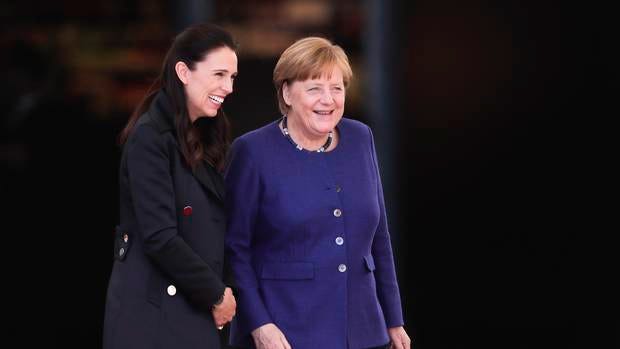
In his opinion piece, “What the Pandemic Reveals About the Male Ego”, Nicholas Kristof says women leaders performed better than male leaders in fighting the epidemic. He examines data from twenty-one countries, thirteen led by men and eight countries headed by women. According to him, in countries led by women leaders, there were 36 COVID-19 related deaths per million population whereas male-led countries reported 214 deaths per million.
He has cited the examples of women-led countries like New Zealand, Germany, Finland, Denmark, Iceland, Norway, and Taiwan which tackled the coronavirus much better than the male-led countries. But it is not merely about male leadership, but a particular style of leadership. Kristof says, “It’s not that the leaders who best managed the virus were all women. But those who bungled the response were all men, and mostly a particular type: authoritarian, vainglorious, and blustering. Think of Boris Johnson in Britain, Jair Bolsonaro in Brazil, Ayatollah Ali Khamenei in Iran, and Donald Trump in the United States.”
On the face, the data points to a gender divide about efficiency in epidemic management. There is no doubt that female leaders performed very well while the sample of male leaders performed poorly. These women leaders are humble and keep a low profile while the worst performers are haughty male leaders.
But I think journalists have a habit of propounding eye-catching theories. It seems Kristof’s comparison is not between women and men leaders; it is between the distinct leadership styles of the chosen leaders. The problem is we have only a few countries having women leaders. It may be a coincidence that all these women leaders share a leadership style characterized by collaboration, partnership, and consensus.
Another unstated point is these women- led countries are advanced social democracies. A culture of strong social welfare makes people trust their leaders and governments. People listen to experts and comply with safety protocols. Although Kristof hints at this possibility, he does not examine it further.
We have over hundred countries led by male leaders. How did they perform in containing the pandemic and what's the nature of their leadership styles? On average, one can expect a mix of egoistic and moderate leaders and strong and weak and anti-pandemic performances.
Statistically, only a large sample of female and male leaders would throw up interesting facts about gender-specific leadership styles and the relative strengths and weaknesses in fighting pandemics. A comparison of performances between egoistic female leaders and flamboyant male leaders, or between modest women leaders and unpretentious male leaders, that too with reasonably large sample size, only would validate gender-related comparisons.
Women leaders have had a higher sensitivity to people’s needs and concerns than men. But women leaders have also had an authoritarian streak in them, like for example Britain’s Margaret Thatcher and India’s Indira Gandhi. We will have to wait until women rule at least half the world’s nations before we can generalize about gender-oriented leadership patterns and capabilities.
Thanks for reading.