

What Happens When Leadership Feels Unfair
“They just don’t understand.”
We’ve worked hard — really hard — to transform our resort and our team. The results are starting to show in tangible ways. Our guest surveys are trending better. Our team members are staying longer and seem happier. Our buildings keep the rain out and the cool air in.
As you can imagine, that process is expensive. Our owners have invested heavily. And they’re frustrated when things aren’t fixed yet, or when we miss a commitment.
“I’m disappointed.”
“This doesn’t match with the expectations you committed to at our last meeting.”
Ouch. Those words hurt.
If they only knew . . .
- How long we’ve worked on that problem
- How complicated it is to solve when we can’t pause operations
- How challenging it is to do consistently every single day
- How something always seems to change right when we think we have it
They don’t understand. They don’t respect us. This is unfair.
It’s easy for me to stay in that mindset.
Close my door and sulk in my office. Walk down the hall and vent to a team member. Fuss at the person that made the mistake, or the vendor that didn’t follow the timeline. And I’ve done each of those plenty.
But that’s not leadership — and I know it.
Leaders accept the challenge, especially when it’s unfair.
That’s the responsibility that’s built in. Doing anything less wastes the opportunity we’ve been given.
If sulking isn’t the best option, what can we do?
First, we’ve got to find the silver lining — and write it down.
It’s okay to acknowledge that the situation isn’t pleasant or that the words hurt. But we can’t stop there. We have to think through it until we find something positive that can emerge.
Often it’s simply the learning opportunity. Or the extra experience in navigating challenging situations. Or the practice at delivering bad news in a healthy way. Or it could be the growth opportunity of a lifetime.
“A smooth sea never made a skillful sailor.”
Once you find your positive goal, write it down. Even though we’re mentally sorting through it right now, those hurt feelings are likely to return. And we’ve already decided not to get stuck there. When the frustration creeps back, reread your reframed goal and focus on moving forward.
As a close second, we need a plan.
At this stage, we’re not writing anything in stone. But we do want to provide ourselves with helpful structure.
Sometimes the steps are clear, and we just need to capture them in an outline. Sometimes, the path forward isn’t as obvious. In that case, using a SWOT framework can be helpful for considering all options.
I’ve found that it’s often beneficial to consider external factors first. Here’s a sample matrix from my Leadership Playbook.
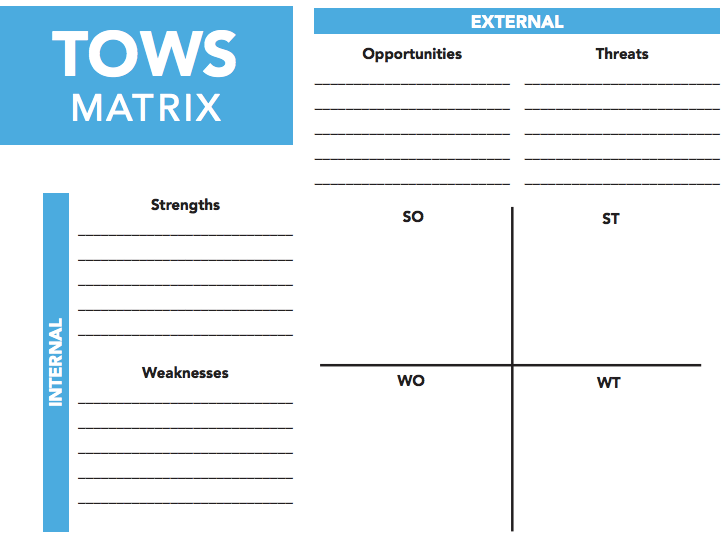
Again, the priority at this step is to organize our thinking, prevent overwhelm, and provide an anchor for our future thinking.
Next, it’s time to encourage and support our team in reframing the situation.
If you’re feeling wounded, chances are your team is as well. By being transparent with the obstacles and your plan for navigating them, you can guide your team through identifying their own learning and growth opportunities.
“Never let a good crisis go to waste.” — Winston Churchill
The truth is that a crisis or failure is often a growth opportunity in camouflage. It can be an effective way to rally a team around a common goal.
Finally, commit to taking action daily.
Difficult situations generally don’t benefit from being left to simmer, especially not in the beginning. Think about a small action you can take daily to make progress.
If you feel stuck, author Mel Robbins suggests making a list of 50 small tasks. Then just pick one each day.
Perhaps it’s communicating with a key stakeholder or team member. Perhaps it’s completing a module in a training program. Or working on your presentation that will reset expectations.
Being thrust into unfair or uncomfortable situations might be the essence of leadership. Over the years, I’ve often wallowed in being wounded. At some point, I learned that wasn’t very productive.
Now, I try hard to embrace those painful situations — feeling the hurt, and allowing it to lead me to the opportunity and growth potential. The pain may still be there, but at least it’s being channeled into something positive.
What frustration or hurt are you carrying? Can you choose to find a silver lining and move forward?
image credit: flickr/Runar Pedersen Holkestad