
What happens to your clothes in their next life and why it matters
Leaving your old jeans at a clothing recycling bin might feel like your good deed for the day, but are you actually making a difference?
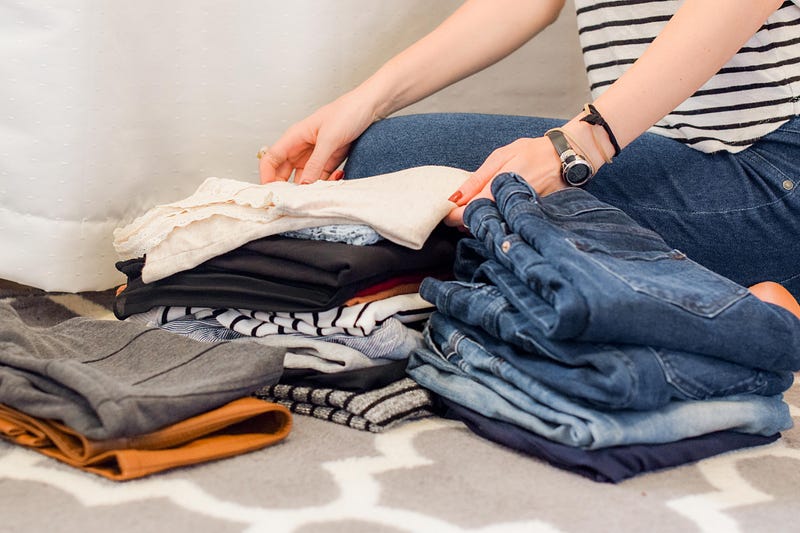
A sunshine yellow jacket, a pair of high waisted boyfriend jeans, and a classic white T-shirt has been my go-to feel good outfit during a time (aka global pandemic) which has not been very ‘feel good’. Since I was a kid I figured out that dressing up on test days helped me to feel a little more in control of my fate: if I were to fail, at least I looked good doing it, and as an adult I find that putting on a great outfit helps me to better pretend I have it all together.
I’m not proud to say it, but all the items of my feel good outfit were bought from a ‘fast fashion’ brand. Thanks to free next-day delivery (which deserves another article in itself) the privilege of buying more clothes than you need is one that I, along with many people, indulge in. With fashionable and affordable clothes just an autofilled debit card number away, it’s easy to only focus on that ‘feel good’ feeling from a new outfit rather than its environmental impact.
What makes my fashion ‘fast’?
Fast fashion is buzzword that has become quite popular recently. It describes cheap, trendy clothes which are often inspired by what is put on the runway or seen on celebrities, and are quickly made available on the high street for consumers. Customers can have the latest styles as quickly as possible for very low prices, which has contributed to a culture of overproduction and consumption where outfits are worn once (ideally on Instagram) before being replaced by the next trend. There is obviously a benefit to having stylish clothes for those who might otherwise not be able to afford whatever is trending.
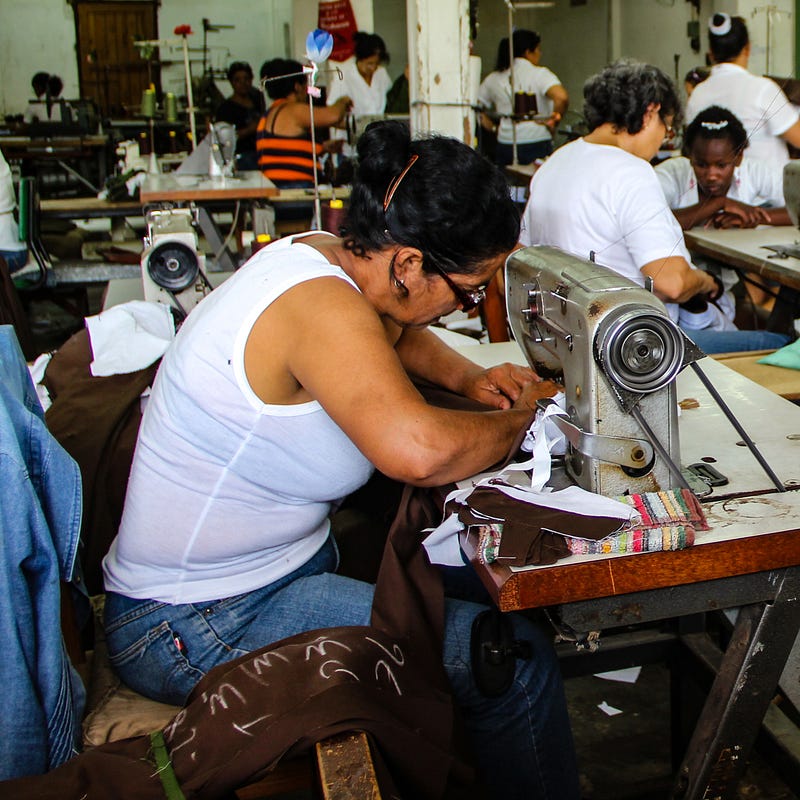
However, making clothes in this way also has many downsides; including fashion production making up 10% of the world’s carbon emissions and turning a blind eye to poor working conditions in offshore manufacturing where labour is usually cheaper (which can end up being fatal).
Through the magic of ‘fast fashion’, some of us are able to develop a short-lived but exciting relationship with our clothes. We buy something that is cheap (preferably on sale), ignore that it’s not the best quality because it doesn’t need to last long, wear it and wash it to our hearts content and then get rid of it when we don’t like it anymore/it’s full of holes/we need more space in our wardrobe. Many people throw away items that they no longer want: in the UK alone around 350,000 tonnes of used clothing is thrown away and taken to a landfill each year. Alternatively, people also send their clothes to a new home, either through selling items or donating them to charity.
What happens to donated clothes?
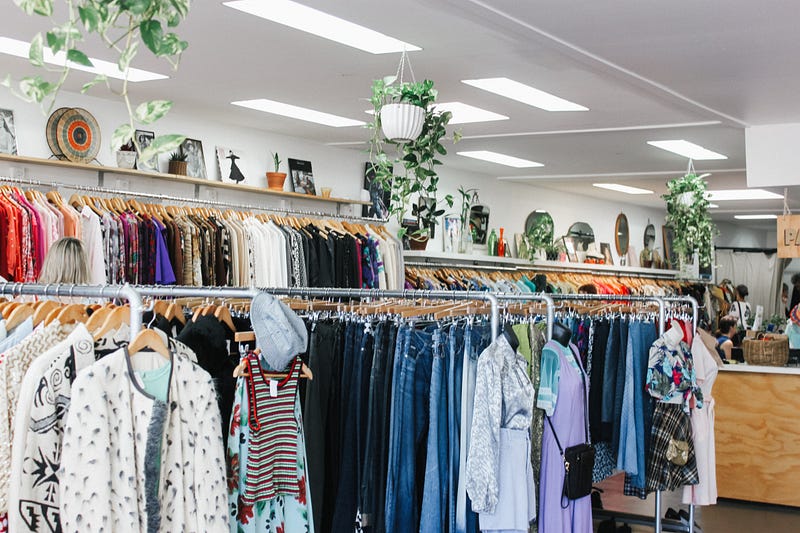
Charity shops have been around for years and if you’re like me, they are a go-to place to drop off clothes that no longer have a home in the wardrobe. Similarly, clothes collection bins are also a popular way to recycle and reuse unwanted clothes. I have always seen both of these options as great opportunities to give clothes a new lease on life and help others at the same time. With the word ‘charity’ in the title, it’s easy to just assume that all donated clothes will automatically be put to good use in a home that needs them. However, Dr Andrew Brooks argues in his book Clothing Poverty that much of what is donated is sold for profit overseas.
The way most people encounter the second-hand clothing trade is their High Street second-hand store. I think there is a common presumption amongst the general public that if they give something to charity it’s most likely to be sold in one of these shops. And while many garments are sold in these shops, the demand is relatively low compared to the supply, and far more get exported overseas. — Dr Andrew Brooks
The second-hand garment trade is worth billions, estimated in 2016 to be worth between $1.5 billion and $3.4 billion with leading exporters of second-hand clothing being the UK, USA, Germany, China and South Korea. Brooks estimates that only about 10% — 30% of all donated clothes in the UK find a new home in the UK, with the rest being sold internationally — predominately to Eastern Europe and countries in Africa. Once imported, these clothes are often then sold through intermediaries which retail the items to local communities.
Despite being a form of textile recycling, the second-hand clothing trade has garnered some criticism for the wider social and economic impact it has on the developing countries importing the clothes. Brooks, Brady and Lu, and Baden and Barber are just a few critics discussing the impact and highlighting that the trade may potentially be suppressing the development of future domestic industries.
Why should we care?
Everyone should have a feel good outfit. For a lot of people, myself included, what you wear is sometimes one of the few variables in a day that you have control over and I don’t believe that should be lost just because you can’t afford to buy a new outfit. If the donation system that we currently have doesn’t distribute feel good clothes to the people who need them, then that’s something we should care about.
There are plenty of articles explaining the pros and cons of donating your orphaned clothes. A lot of the articles that I’ve personally read have given very compelling arguments on the detriments of fast fashion to our planet, but as useful as that is charity shops were not created to reduce our carbon footprint. They were started to help people.
During the 19th century, the Salvation Army ran second-hand shops to provide the poor with cheap clothing. Oxfam opened the first ‘modern’ charity shop in 1947 to raise funds to relieve famine in Nazi-occupied Greece. I would argue that today, people are still looking to help others and the added benefit of helping our planet is really just the cherry on top.
So, if we’re serious about reducing textile waste and possibly helping our fellow man, it is time we start thinking about the next owner of our clothes. Participating in fast fashion not only means that our clothes don’t last as long for us, but their lifespan for the next person (if it even gets that far) is incredibly short. Donating clothes that are cheaply made via a method in which the items don’t necessarily get to their intended recipient is not a system that I can stand by, and I would hope that you feel the same.

How to make sure the next life is a better one
So when it’s time for me to part with my high waisted jeans and bright yellow jacket (lets face it my £5 white T-shirt won’t hold up enough to be donated) — where can I send them to ensure they have a good next life?
If you have professional clothes that need re-homing donating to charities that provide interview clothes is good option. Unemployment is a challenge for many people and these charities aim to help build the confidence of those who have faced additional barriers to securing a job. Making a good first impression is critical for job interviews and along with interview skills training, receiving free interview clothing can be the first step in improving someone’s life.
Shelters and charities for rough sleepers and people experiencing homelessness are another great way to get your clothes to those who need them. There are various centres which take new and gently used clothing items including socks and underwear, and it is always a good idea if possible to check with your local shelter if there are any items that they are in need of.
Finally, donating directly to a charity shop rather than a clothes recycling bin is a better way of ensuring your clothes get where you want them to go. According to the Charity Retail Association, over 90% of charity shop sales are from donations and so if you decide to bring a bag full of items straight to a shop, chances are they will be sold there. Money that is raised by selling items in the shop go back to the parent charity and is used to further their charitable work. If there is a charity or cause that is close to your heart and they have a charity shop, giving them your clothes may be a good alternative to a monetary donation.
Whether you buy fast fashion or not (ideally not, but I’m not one to judge), if treated well your clothes can hopefully have at least a couple of lives. And with every chance at life is a chance to spread that ‘feel good’ feeling, so why not give your donations a little extra thought to help out the next person.