avatarØivind H. Solheim

Summary

The article reflects on the current geopolitical tensions in Europe, drawing parallels to the post-World War I era, and emphasizes the importance of preventing a potential Third World War through vigilance and responsible actions.

Abstract

The author, Øivind H. Solheim, expresses a deep concern about the trajectory of current events in Europe, particularly in light of historical precedents such as the period following the First World War. He draws a parallel between the potential for a devastating conflict now and the conditions that led to World War II, including the role of sanctions and the risk of fostering a desire for revenge among the populace of affected nations, specifically Russia. Solheim, who has previously written a dystopian novel on the topic, "Tellus 89," urges the world to remain vigilant and take proactive steps to avoid the worst-case scenario of a Third World War. He suggests that the sanctions on Russia could backfire, leading to increased animosity towards the West rather than fostering a turn against their own leadership.

Opinions

  • The author believes it is essential to discuss and address the possibility of a Third World War, despite the discomfort such discussions may cause.
  • Solheim sees a troubling similarity between the current situation in Europe and the post-World War I climate that eventually led to World War II.
  • He is concerned that sanctions against Russia might not have the intended effect and could instead provoke Russian public opinion against the West.
  • The author advocates for a cautious approach to current geopolitical tensions, stressing the need for global vigilance to prevent another world war.
  • Solheim's personal experience with the Cold War and his literary exploration of dystopian futures inform his perspective on the importance of preventing catastrophic conflict.

PEACE

What Happens Now: How Can the World Avoid World War III?

Is What Is Happening Now a Parallel to What Happened After the First World War?
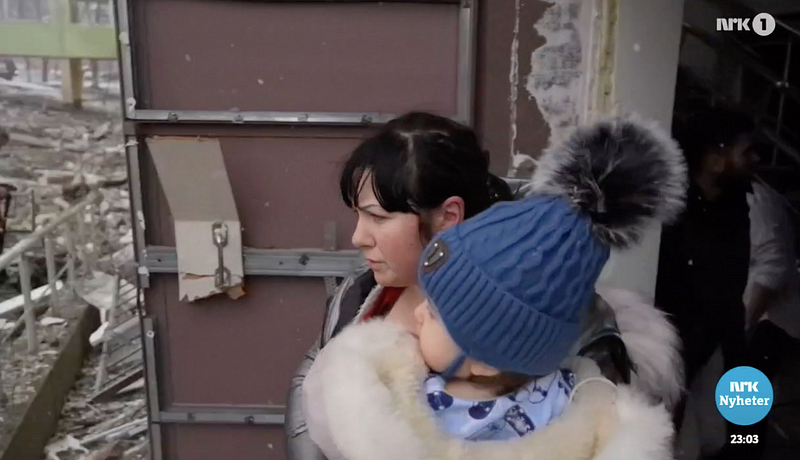
Woman and child in Ukrainian bombed city. Photo from NRK (Norwegian Broadcast Corporation)

Like most people, I would rather not think about and especially not talk or write about the Third World War. But sometimes it is necessary to take a closer look, talk about and discuss what we would rather not see happen.

I have lived for over 70 years and I remember the Cold War and the fear we had at the time that the Third World War would break out. Yes, I even wrote a book about it, Tellus 89, a dystopian novel, that is, a story about what must not happen, what is not allowed to happen.

I mean that we — and the world — today are in a situation where we have to be vigilant and make sure that not the worst happens.

Is what is happening in Europe now — many years after the collapse of the Soviet Union — a parallel to what happened in Europe after the First World War?

Should we be worried that what is happening now might be a parallel to what happened after the First World War when Germany was down and the desire for revenge in the 1930s became entrenched in the German people and led to Germany getting Hitler and the world getting World War II?

Can e.g. the sanctions against Russia cause the people of Russia to turn to the West and put the blame on the West?

Øivind H. Solheim is a novel author and a nature photographer from Norway who loves writing fiction, essays, and articles helping others understand life, other humans, and themselves. He has published six novels, two non-fiction books, and a poetry book.

Visit Øivind H. Solheim’s profile

Become a Medium member, read thousands of writers and support my writing.

Peace
War
Future
Security
Life
Recommended from ReadMedium