
What Happened with /r/AntiWork and Fox News?
An interview on TV set off an explosion of internet drama. These are the mistakes she made.
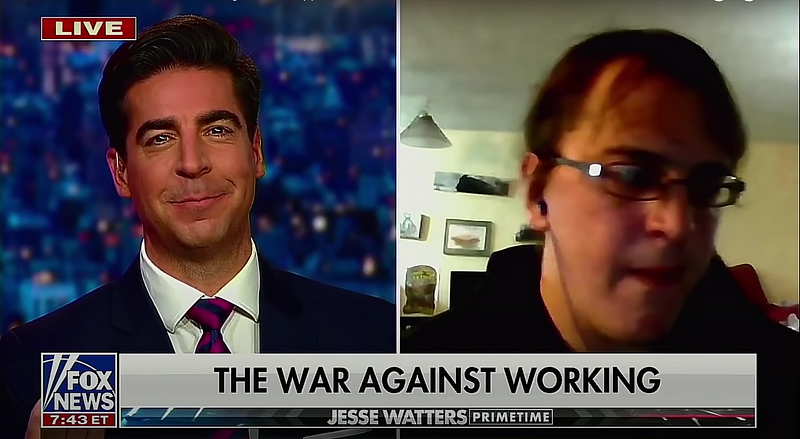
About a week ago, a portion of the internet melted down into chaos. On Reddit, a subreddit containing 1.7 million subscribers broke down into accusations and infighting, before temporarily going private (inaccessible to any outsiders).
The inciting incident was an interview on Fox News. But the deeper issue revolved around how, even when people agree on a general direction, there is debate over how to get there.
There are a number of analyses of this breakdown, lots of reactions on YouTube to what is happening on /r/AntiWork. For this article, I want to focus on the interview itself — and what lessons you can learn from this.
Even if you don’t normally give interviews, there are a ton of lessons to learn from the mistakes of this video.
So let’s briefly cover:
- What is /r/AntiWork, and what do they want?
- How did this interview go so wrong?
- What lessons can we take away to improve our own business performance?
Here we go.
/r/AntiWork — we know what we don’t want
First off, we have to talk about /r/AntiWork: what it is, what are the factions within it, and the power struggles.
Reddit is a community of many communities. Think of Reddit as a bunch of forums, all linked together by a common home page. Each individual forum can be accessed individually by going to reddit.com/r/forum_name. A member can browse individual forums, or can see the top posts across all of the different forums they have joined by going to the Reddit home page.
(Because of the URL structure, each Reddit forum is generally referred to with /r/ in front of it. /r/AntiWork is accessible at http://www.reddit.com/r/antiwork.)
The /r/AntiWork subreddit has existed for 8 years, but it’s exploded in popularity since the pandemic, as workers began pushing back against exploiting businesses. Common themes of posts in the subreddit focus on calling out businesses with predatory or illegal practices with regards to labor, fighting for workers’ rights, and posting memes or images showing how users push back against overreaching bosses, often by dramatically quitting.
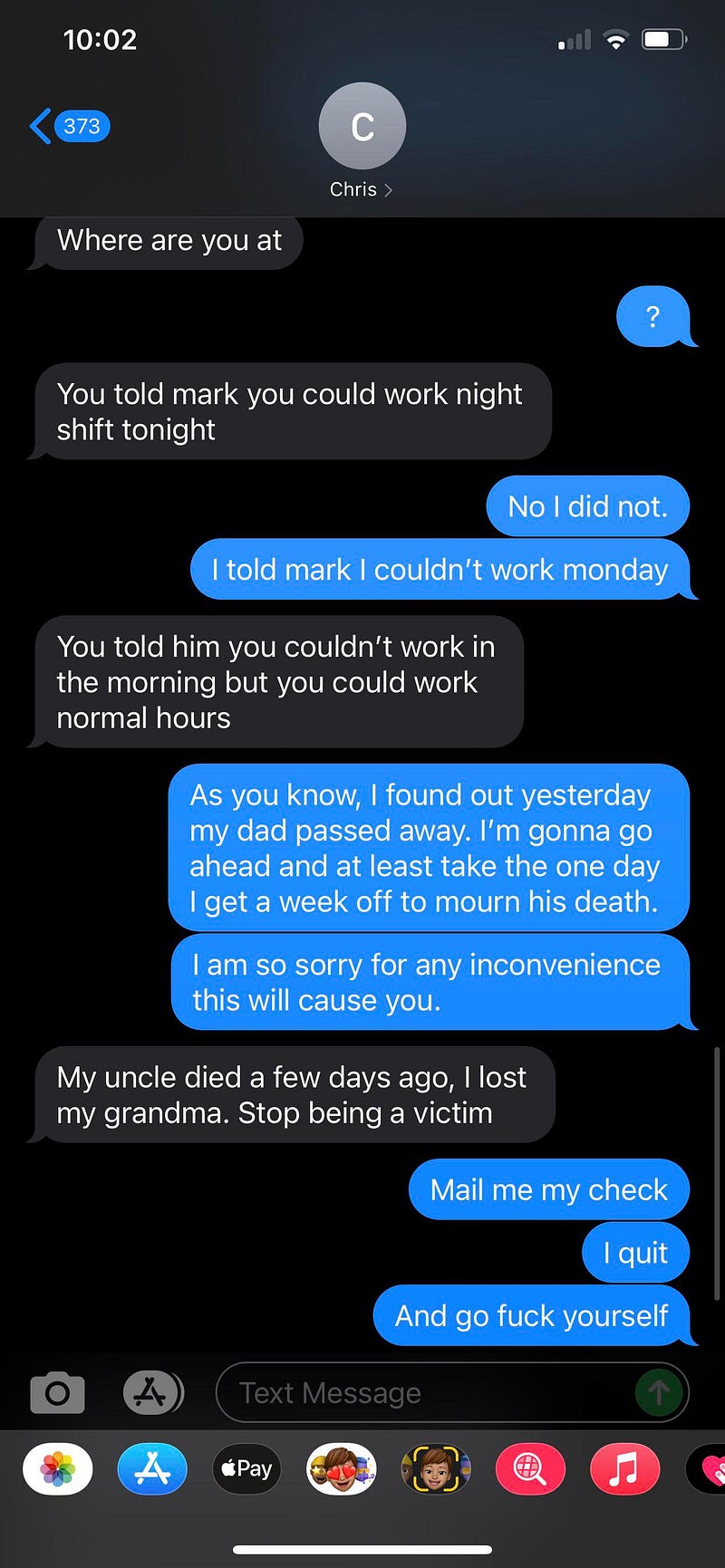
As will happen in a community of 1.7 million members, there were disagreements in the subreddit about what actions should be taken, what the members should be doing to advocate for a better work environment. Many felt that the subreddit should not grant interviews, as this would be putting an individual face on the larger movement.
But apparently Fox News reached out to the moderators, seeking to interview someone who was established on the /r/AntiWork forum. After discussion amongst themselves, the moderators selected one of their members to appear in the interview.
How the interview went wrong
It’s an unfortunate truth, but optics matter. There are thousands of books that talk about how the majority of communication is nonverbal. (It’s not actually 93%, the number often quoted, but is likely somewhere around 60–70%, depending on the situation.)
And if you watch even a portion of this interview, paying attention to everything except the words, you’ll see some problems.
Let’s break it down into different areas.
Appearance
First, before you ever speak, you are being judged. When you present yourself to someone for the first time, they look at everything you show to them. If you’re speaking to a large group, like a television interview or a presentation to a large audience, you need to use this to your advantage.
Look at the difference between the interviewer and the interviewee. The interviewer, Jesse Waters:
- wears a suit and tie, giving the impression that he is composed and professional;
- sits far enough back from the camera to frame his face and shoulders;
- has a neutral background to not distract from his face and words;
- has a high-resolution camera (this is television, so it’s not Jesse’s choice, but it still has an impact on our impression).
We compare this to the image we get immediately of Doreen Ford, the /r/AntiWork moderator:
- She wore a hoodie, rather than a more professional outfit. Yes, she’s advocating against working, but a hooded sweatshirt does not tell viewers that she is someone to respect.
- She sits too close to the camera, which can be distracting or threatening. (What if someone started talking to you, but they kept standing too close to you?)
- She has not selected a neutral background, which distracts us from her, her words, and her message.
- She is likely using a standard webcam, which is blurry and low resolution. (There are plenty of affordable high-quality webcams available, for anyone considering upgrading their laptop’s built-in.)
- She doesn’t have great lighting in the room, which further decreases the quality of her appearance.
So the initial impression, the nonverbal appearance, isn’t great. But do her words change our mind once the interview starts?
Body language
From the first sentence, we sadly don’t get anything to revitalize our flagging confidence in the speaker. We see a number of issues.
First, we don’t get direct eye contact with the camera — a contrast with how Jesse Waters, the interviewer, is acting. He’s looking right at the camera, right out at us. He’s engaging us with that eye contact, as if he were standing in front of us.
Doreen, on the other hand, is looking pretty much anywhere but the camera. Her eyes are hidden behind glasses (glasses are another item to avoid if possible on calls like this), but we see her looking down, left, but mostly right.
Now, this doesn’t mean that she’s lying (that’s an old, debunked myth), but this does seem evasive. Imagine if you were speaking to someone on the street, and they kept looking anywhere but at you. You’d likely conclude that they were uncomfortable and wanted to get out of the conversation. This is not the attitude you want to bring to an interview; you should be happy and eager to tell your story!
Filler words
Next, we’ve got filler words. For many people who aren’t well practiced at public speaking, filler words are killer.
Filler words include so, well, like, you know, yeah, and all sorts of grunts and non-word sounds (um, er, uh…).
In his first statement, Doreen uses fifteen filler words!
“Yeah, uh, so, there’s some misconceptions about the movement. So, we’re a movement where we want to reduce the amount of work that they’re, uh, that they’re forced to do, and, um, so we want to still put in effort, want to put in labor, um, but we don’t want to necessarily, uh, be in a position where we feel trapped. Uh, you just quoted from Office Space where that person feels very trapped in their job; I think we’re calling for a society where there’s less of that. Um, but yeah, absolutely, people still want to do things, they just want to do things where they feel rewarded and they feel like they’re in a good spot, in their life, uh, where their job respects them, stuff like that, uh, there’s very…[trails off]”
This is 43 seconds of airtime. This is not a good opener.

I used to use a lot of filler words when I spoke, mainly out of nervousness. The strange habit that helped me learn to stop using them? I had a colleague who hated when people spoke with pauses, filler words, ums and uhs and wells and all of them.
He would listen to me practice my talks — and he’d toss ping pong balls at me whenever I used a filler word. Not hard, not smacked at me with a paddle, but it was jarring enough to make me aware of the tendency to slip them in.
I had to learn to speak slower, to think about what words I was choosing next, but I learned to cut out the filler words.
For Doreen, an easy solution would have been to simply have written responses. She’s already looking at a computer screen; just read off the prepared statements. It won’t work for every question, but it can certainly work for the general openers, like “What is the goal of your movement?”.
Pacing
As we get into the interview, we start to see pacing issues.
Guess what happens when you’re giving an interview on live television? You get nervous.
And when you get nervous, you rush your words. You rush to start answering a question even before the interviewer has finished speaking, and you rush to pour out tons of information so that you can hopefully provide an answer somewhere in that word vomit.
It’s natural, but it’s not a good speaking approach.
We see this in the interview. Doreen rushes to start answering before Jesse Waters has finished asking his question. She’s giving caveats and keeps talking, which forces Jesse to cut her off, which further prevents her from getting her points across.
Content
We don’t really get to content until 2 minutes into the 3:23 interview, but this is what really sinks the ship for Doreen and the /r/AntiWork subreddit.
Doreen explains how she works approximately 25 hours a week, as a dog walker. Now, there’s nothing bad about this as her personal choice or profession — but if you’re presenting as the face of a movement that argues that corporations are destroying workers with too much demanding, never-ending work, you need to consider the optics of what you put out.
In furious reaction threads on Reddit, members posted about how this interview should have been with a nurse or doctor, someone who personally faces long hours and demanding job stress.
Remember, this is the person that the moderators of the subreddit collectively decided was the best person to represent their movement!
How could we do better?
There’s no way to undo a bad interview. For many people, this is their first impression of the /r/AntiWork movement: a group of awkward, badly dressed young people who fumble through complaints about having to work 25 hours a week walking dogs.
But this interview could have been made so much better with a few easy, reasonable, small adjustments:
- Appearance. Combed/brushed hair, a button-down shirt with a jacket, and a neutral, blank background would make a huge difference. Investing in a reasonably priced but higher quality webcam would also be huge. If you’re going to give a presentation, turn on the webcam before the meeting to see how it frames your face and body! You don’t want to be too close.
- Body language. Sit up straight, shoulders back, deep breath, look straight at the camera, and try to keep a small, close-lipped smile. Your goal is to look interested and reasonably excited to be present, to be able to share information. It’s the expression you put on when the flight attendant on a plane is giving the safety briefing and makes eye contact with you.
- Appearance again — if you wear glasses, consider contacts for the call, so that you don’t block the view of your eyes with glare from the screen. If you can’t wear contact lenses, turn down the screen brightness.
- Prep your content so you don’t rush. Write out your opener, your closing statement, the key points that you want to hit, maybe an anecdote or two if relevant. Have these open in front of you so that you can read them off.
- Take your time. Let the interviewer speak, and wait for them to finish. If they start cutting you off, get to the end of your sentence but don’t just trail off and let them run over you.
- Finally, content. Make sure that you know the top three points you want to drive home. Write them out beforehand, check with colleagues, and make sure you speak to them. Try to repeatedly state them, even using the exact same words each time.
Remember that opening statement? Here’s how it could have been much better:
“Thanks for having me, Jesse. AntiWork is not about wanting to avoid work; it’s about wanting meaningful work. Today, many people feel trapped in their jobs; we’re calling for a society where there’s less of that. We all still want to do things, but we want to do things where we feel rewarded and respected. When COVID hit, we said that medical workers were heroes — but we are burning them out with stress and overwork. That needs to change.”
Twenty-seven seconds. I timed it. And this hits three big points:
- The AntiWork movement is not about avoiding work, it’s about wanting meaning.
- We all want to feel rewarded and respected for what we do.
- Medical workers are an example of the current, broken system.
Then, every follow-up answer should keep drilling these points.
In conclusion: lack of preparation kills interviews before you even speak
If you go into any sort of speaking role, whether that’s an internal talk to your coworkers or a live interview on national television, and you decide that you can “wing it” — you’re going to do poorly.
A good public speaker thinks about their appearance, their body language, their pacing, their tone — and makes sure their content is distilled down to key points.
The interview linked above is a great example of failure on every level. Bad appearance, bad body language, bad speaking, nervousness leading to bad pacing, and a lack of prepared content and key points meant this interview veered badly off course.
The /r/AntiWork goals are noble. We should respect our workers, which includes fair pay, more worker-owned control over contracts, hours, and benefits, and human decency from bosses. The subreddit is still active and impassioned.
But this interview did not help them at all.
Do you have a favorite public speaking tip that has helped you? Or, conversely, what lessons have you learned from your own speaking experiences?
Enjoyed the article? Share it!
Additionally, consider becoming a paid Medium member: read unlimited articles for just $5 per month, cancel anytime. Use my referral link and I get a portion of your dues: https://medium.com/@westwise/membership


