What Happened During The Iran-Iraq War? (And What Caused It?)
Revisiting the deadly conflict
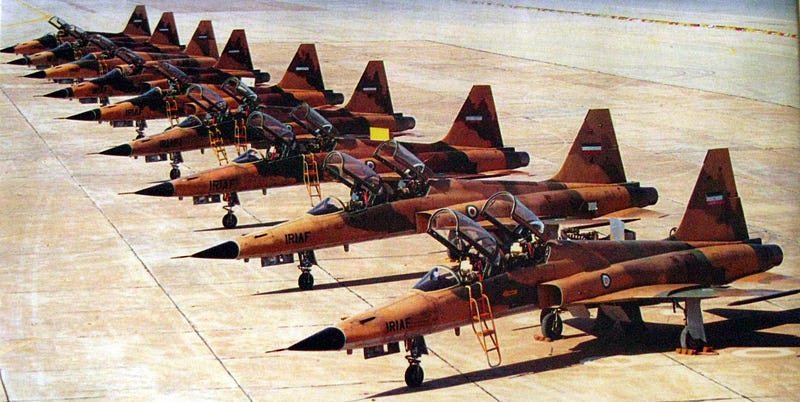
On September 22nd, 1980, Iraq launched a surprise attack on their neighbor Iran. Aircraft went screaming over the border, and explosions tore up strategic airfields. The initial bombings were the prelude to a broad attack across a 400 mile front. Iraqi troops poured into Iran, starting a war that would last far longer than anyone envisioned and kill hundreds of thousands. The Iran-Iraq War would last nearly eight years and become one of the bloodiest and most protracted wars in the post-WWII era.
What caused the Iran-Iraq War? Why does no one seem to remember the conflict in any great detail? Why did the war spiral into a year’s long struggle?
Against a backdrop of chaos in the Middle East and with the specter of a regional war rising once more, it is prudent to look back on the Iran-Iraq War. The last time a major regional war broke out in the Middle East, it left hundreds of thousands dead and laid the groundwork for future conflicts and continued instability.
Causes of The War
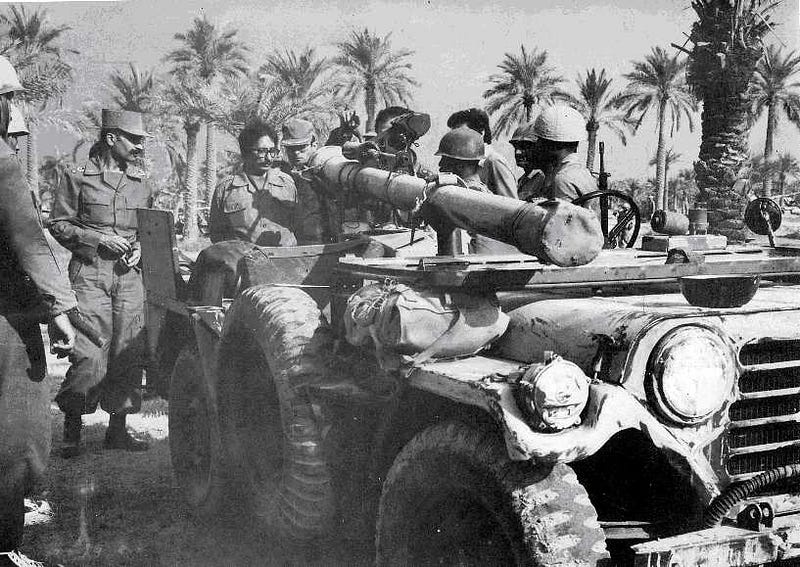
In 1979, Iran was rocked by an Islamic revolution that toppled the ruling Shah’s dynasty. The populist movement swept the old autocracy from power and replaced it with a strict theocracy. The revolution was spearheaded by Ayatollah Ruhollah Musavi Khomeini, who was “the face of Shia Islam.” The revolution greatly alarmed Sadaam Hussein, who had also come into power in 1979. He saw the Iranian Revolution as a threat to Iraq.
Hussein was ruling Iraq as the head of a secularist party that was filled with devout Sunni Muslims. Hussein was afraid that the populist movement in Iran would spread to Iraq and cause anti-Sunni Iraqis to rise up in support of the new Shia regime that had sprung up nearby in the most uproarious fashion. Even in 1979, Iraq was an uneasy patchwork of religious and tribal interests with grief and connections stretching back to World War I and World War II. A disruptive force like an Islamic Revolution could have easily swept through Iraq, as it had through Iran, and it could have swept Hussein and his own Western backers out with it.
Hussein believed that a fast and brutal invasion would weaken Iran and potentially lead to the collapse of the nascent Islamist government. He believed that after years of tension and in the wake of the fresh revolution, Iran was ripe for being toppled. This was a grave miscalculation. After years of mistreatment at the hands of the Shah and his Western backers, there were millions of Iranians ready to fight and die for an Islamic state. (Iraq was viewed as an unnatural state created and backed by the British and was a good stand in for the image of the Western boogeyman that had been so successful in Iran.)
Instead of causing an implosion, the Iraqi invasion of Iran caused an explosion of renewed patriotism and a rallying cry in which the new Iranian regime could gather around.
Hussein used a territorial border dispute from 1975 as a public justification for the war. Iraq felt as though they had ceded important national territory to Iran in 1975, and they were keen on taking that lost territory back.
Early Iraqi Success (1980–1982)
The early phase of the war swung in favor of Iraq. The original invasion took Iran by surprise. The Iranian military had been crippled by ideological purges which swept through the ranks in the wake of the revolution. Iraq was able to secure early gains and maintain a foothold in Iranian territory. By the end of 1980, Iraq had secured the strategic city of Khorramshahr and was digging in to repel an Iranian counterattack.
In early 1981, Iraq fought a successful tank battle at Dezful in which they lured hundreds of Iranian tanks into a marshy quagmire where 200 were destroyed or abandoned. The Battle of Dezful left the Iranian military bereft of armored strength which put them at a severe disadvantage. Luckily for them, the Iraqi advance was running out of steam.
Harsh terrain coupled with a lack of vision stalled any continuing advance into Iran. But Iraq had made tangible gains in the first two years of the war. The attack, however, did not cause the Iranian regime to collapse. Instead, thousands of fervent fighters flocked to the Iranian flag and were training to be thrust into the fight.
New Iranian Tactics and Counterinvasion (1983–1984)
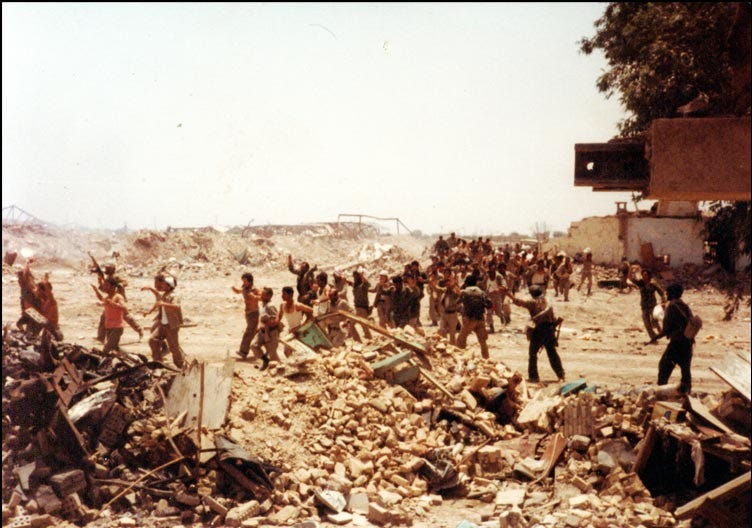
Iraq had managed to knock out a large portion of Iran’s heavy weaponry during the first phase of the war. Iraq had advantages in tanks, tank destroyers, self-propelled guns, and artillery. But Iran had an advantage of their own — manpower. Iran had a massive influx of volunteer soldiers ready to die for the cause. While Iran could not match Iraq’s strength in terms of armor and firepower at this point in the war (1982), they could overwhelm them with trained fighters.
Iran turned the tide of the war by using human wave tactics. Iran sent in thousands of religious volunteers to overwhelm Iraqi trenches, where they swarmed over fortified positions, spiked guns, and destroyed tanks. These tactics left Iran with thousands of casualties, but the war fervor was so high in Iran that it was seen as an acceptable trade off.
In May of 1982, Iran used these new tactics to fight and win the Second Battle of Khorramshahr, which gave Iran a springboard from which to invade Iraq. During hard fighting in 1982, Iraq lost tens of thousands of men, which caused Hussein to float the idea of suing for peace. Iran refused and instead launched their own invasion of Iraq.
Iran now poured into Iraq, years after Iraq had first poured into Iran. Iraq’s strategy quickly changed to one of defense, and instead of holding Iranian territory, the tactic turned to defending every inch of Iraqi territory. This counterinvasion was, like Iraq’s, initially successful and sent the Iraqi military into a tailspin. However, support from the Soviet Union paired with favorable terrain allowed Iraq to slow and eventually halt the Iranian advance.
Lines solidified, and the war would now turn into a stalemate. From 1984 to 1988, the two nations would be locked in a battle of wills and of attrition. The Iran-Iraq War was now a dreaded military stalemate.
After three years of fighting, thousands dead, and two separate invasions, the war was about to end its last exhausting portion.
Stalemate (1984–1988)
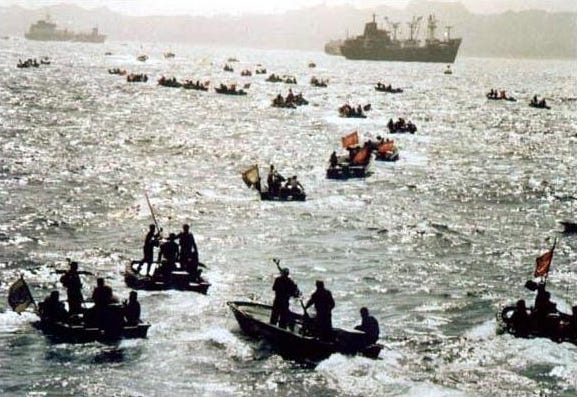
With both sides dug into defensive positions and neither side willing to agree to a ceasefire, the war entered a new phase beginning in 1984. Instead of trying to win on the battlefield, each side now tried to win a war of attrition. Attacks ramped up targeting cities and civilian areas, shipping in the nearby waterways was targeted with the goal of damaging supply lines and causing war weariness. Iraq resorted to using chemical weapons and deployed sarin and mustard gas against Iranian positions leading to thousands of casualties.
These new strategies were dubbed the Tanker War and the War of the Cities. Iraq targeted Iran’s oil production facilities with hopes of strangling their consistent source of income. Iran began to bomb Iraqi cities in the hopes that the population would throw in the towel and turn on Saddam Hussein. But money continued to flow in on both sides from the international community which only strengthened the fortified positions which in turn deepened the stalemate.
During this period of the war, both sides attempted to launch counterattacks and probing actions but neither were met with any sustained or notable success. By the end of the war, most of the military assets on either side were back roughly where they started.
After years of war, Iraq was worn out and the population was getting squirrelly. In response to growing troubles at home, Hussein approached Iran with a ceasefire agreement along with a threat. Sign the peace accord or he was going to start a terror bombing campaign against Iranian cities using weapons of mass destruction followed by yet another full scale invasion. Iran got the message and agreed to sign. The war was over and little was gained by either nation.
By the end of the conflict, hundreds of thousands were dead. Encyclopedia Britannica noted:
Estimates of total casualties range from 1,000,000 to twice that number. The number killed on both sides was perhaps 500,000, with Iran suffering the greatest losses.
In the aftermath of the conflict, both sides went back to their prewar borders. Nothing was gained making this one of the bloodiest conflicts with no discernable changes in territory or position in history. The Iran-Iraq War was one of the largest and bloodiest conflicts ever fought between conventional militaries post World War II.
Conclusion
It is disheartening to learn that nothing of real value was gained from this conflict. That makes the hundreds of thousands dead a tragedy in which nothing was truly gained. Both sides had opportunities to end the war early, and potentially save thousands of lives, but both sides refused to do so. Instead the war draged on and on and on killing more and more people. In the end, the Iranian theocracy did not collapse. Saddam Hussein would manage to cling to power for many more decades still and launch more invasions of neighboring nations.
The war proved that modern fighting was still bloody and still possible between conventional states following World War II. The carnage destabilized the region while also dispersing religious fanaticism and military equipment to the surrounding region. Today, it remains a footnote in history but also a potent reminder of how devastating modern war in the Middle East truly can be. It is a lesson that more people today need to look into and digest.
There are no fast wars in today’s world. Nor are there clean wars. Modern warfare is fast, deadly and can easily grind into dreadful stalemates (as seen with the ongoing war in Ukraine.)