
What Gamers, Gamblers, and Drug Addicts Have In Common
Sometimes you have to go back in time to see how to have a better future
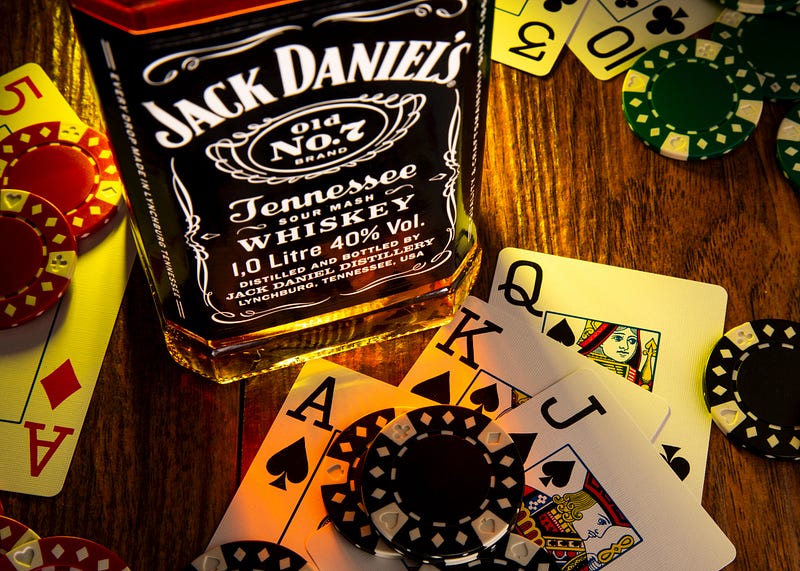
I love playing card games.
For years I would sit with my friends, brothers, and cousins to play Blackjack and Texas Hold ’Em. We never played with real money, but I always wondered what it was like.
Fast forward to last month, when I finally made the drive to the most popular casino in my area. After some hesitation and watching a few games from afar, I finally sat down at a Blackjack table, this time playing with real money.
As I slid a $100 bill over to the dealer, I knew I wasn’t going to come out ahead. Beforehand, I watched some videos on basic strategy and tried to memorize the infamous Blackjack strategy chart to slightly improve my odds. Still, I knew the house would win.
And, of course, I was right.
I lost probably 75% of the hands, but those few wins I managed to get just felt so exhilarating. Nothing felt better than watching the dealer slide $5 chips towards me. For those brief moments, I felt like a badass.
One time I got to split twice in one hand and won big that round. The rush was intoxicating. I wanted to play forever.
But, eventually, the dealer took my last pink $5 chip. He expected me to take out my wallet and keep playing. And honestly, I almost did.
But thankfully, I stood up, said my goodbyes, and got the hell out.
Casinos just had their best year ever. They made over 53 billion dollars, all at the expense of our nation’s poorest and most desperate.
In the book “Addiction by design,” Natasha Dow Schüll figures out why gamblers sit at slot machines for hours on end. At first, she tries explaining to them how the probability of success is not in their favor.
But to her surprise, these gambling addicts know full well they’re going to lose. The reason they sit there is more of a desire for escapism or flow.
The melodic sounds from the machines, flashing lights, and slight chance of walking away with thousands of dollars put the players into a trance-like state. For a brief moment, all of their worries, responsibilities, and even basic bodily functions cease to exist. All that matters is the game.
For what feels like a few minutes, they eventually realize they’ve been there for hours. These players have been “in the zone,” or in a state of flow, a sensation well-documented that’s best described as “a sense of fluidity between your body and mind, where you are totally absorbed by and deeply focused on something, beyond the point of distraction.”
It’s given this name because when you’re “in the zone,” work seems to “flow out of you.” The classical violinist at the orchestra, the athlete on the final play of the Super Bowl, and the artist completely immersed with his canvas all share an intense, authentic obsession with their craft.
These rare moments of absolute focus on something you genuinely enjoy make life worth living. Your brain is flooded with several “feel good” chemicals, including endorphins. People will go to extreme lengths to feel this, and some will even use heroin.
It’s vital to regularly experience flow because we fall into depression and anxiety without it.
Modern workplaces and social life don’t provide people with the “flow” that we so desperately crave. Interestingly, Jane McGonigal makes a similar point in “Reality is Broken,” but for gamers.
Games are designed to induce the flow state. A great example is the game “Pinball,” which checks all the requirements to get the player “in the zone:” Clear goals, rewards, immediate feedback, control of the activity, and the balance between player skill and the challenge. Of course, the game can’t be too easy, but it also can’t be so hard that the player feels hopeless in achieving victory.
If a game can check all these boxes, it can reliably induce the flow state for anyone who sits down to play. And if the game is so intoxicating, players will go to incredible lengths to keep playing even if it means death.
Ten years ago, the world freaked out when a Chinese man died after a 3-day gaming binge. Similar deaths have occurred in the past decade, but it’s still sporadic.
But my goal isn’t to say that video games are killing us. Rather, we are seeing a record number of people destroy their lives through addictions that are designed to give us excitement because modern life strips us of psychological needs that we so desperately crave.
Our hunter-gatherer ancestors didn’t have therapists because the world was abundant with lethal danger. They didn’t have the luxury to sit around and worry if they were wasting their lives or if they should change careers because basic survival was extremely difficult..
Most infants died before adulthood, plagues could pop up at any time, and enemy tribes could invade. Earlier humans benefited immensely from anxiety because it forced them to solve future problems before it was too late.
Sometimes that meant storing food for the winter, and other times it meant carving hundreds of spears so your people wouldn’t get caught empty-handed during an ambush.
For our ancestors, the constant work for survival continuously induced a sense of flow. They knew what they needed to make it to the next day, and set out to make it happen, whether hunting, fishing, crafting, foraging, or even child-rearing. As a result, their reward was not just living but improving the chances of survival for their tribe.
So, my advice is to find something that puts you in the zone. What do you genuinely enjoy doing? What do you genuinely care about? And more importantly, are you willing to slowly but consistently push yourself just outside your comfort zone so you can improve?
Maybe it’s working on your golf swing, taking up carpentry, or even writing on Medium. But whatever it is, make sure it’s genuinely your decision. Ever since I’ve dived into learning a new instrument, learning how to write decent articles, and long-distance running, I haven’t felt the need to return to a casino.
I decide how I get my dopamine hits, not them.