
What Dying Taught Me ….
7 Insights to help you go grow through trauma
In the last ten years I have died on four separate occasions.

However, the skill and commitment of my medical team ensured I didn’t become permanent resident in the hereafter.
After each medical emergency, I have thrown myself into recovering from the acute state of the various diseases that attempt to define or end my life.
Once stabilised, my typical strategy has been to bury myself back into work, often not even waiting to be discharged from hospital before I was back leading and managing teams and multiple functions.
I think what I was scared of, was that these life and death moments would change me. Ditto for the same fear attached to each diagnosis of the various chronic and acute conditions that describe how my mind and body work.
So, my brilliant strategy was to pretend that my life was travelling along the same pathway as the lives my friends and colleagues gleefully shared in the tearoom, around the water cooler or across their social media channels.
Yup for 10 years I attempted to hustle myself and everyone else that I was ok, and my life was hitting the same targets everyone else had for themselves.
A hustle that I managed, on the whole, quite well.
So well, that people have honestly assumed it was completely fine for me to be managing organisational legal proceedings from my hospital bed in ICU.
Strangely though, I have always categorised myself as a bad hustler, when in actual fact the opposite is true.
Even more important than discovering I am a world class hustler has been the realisation that I have spent at least decade hiding my true brilliant self.
I thought it was important for me to keep achieving the same things everyone else thought was important: CEO, global awards, profit and purposeful impact on individuals and communities, pretty shoes and killer nails.
But I completely disrespected myself … as I am guessing you do too.
Those four death moments were real.
My partner still has nightmares about them.
I have night terrors over them.
And because I was so busy ignoring them I never learnt the lessons they had to teach. Ditto for the lessons I have avoided from the many conditions that could be seen to limit my body and mind.
I wonder where you have done the same thing?
Head. In. The. Sand.
I have never sought the traditional path. I aspire to be ICONIC yet somehow over the last decade I have spent day after day playing a smaller and smaller game.
On the outside it looked like I was expanding my career and carving out a life for myself and my family whilst managing chronic ill health and frequent acute health crises, but I wasn’t.
I often see people on TV or social media, saying “wow I had an epiphany, I nearly died but I have been given a second chance at life and I am going to make it count. I am going to live my life full out and do everything I never thought I would do” and I wonder, how many people actually do that versus just saying it.
For me, I thought if I ignored what was and had happened, I could pick up my life and continue on. The sicker I got, the more I wanted the Disney version of an adult life.
Yet the harder I clung to the dream, the more my health spiralled out of control. And even more frightening I lost sight of who I was and what I truly wanted to achieve.
So what has changed?
My perspective.
At some point in 2019 I realised that what I have lived through, what I have achieved and what I can still achieve is not normal, not traditional, not the Disney version of an adult life.
Indeed — my life is far beyond the technicolour of Disney. It is as limitless and expansive as I choose to be, at once a technicolour rainbow and the inky black of the ever-expanding universe.
Is it easier to step into this bigger and more expansive?

Hell no! It is frightening and overwhelming, but I feel more grounded and aligned. I understand now that I am creating more than the instantaneous sugary satisfaction achieved through status and titles, or a false sense of security provided by pots of money.
I am creating purposeful impact that changes lives and builds a legacy.
It is a long and challenging game and one that requires me to work in a way that is right for me.
Traditional work hours, 9am-5pm (or what I was doing 7.30am-9/10pm), Monday to Friday in a busy noisy office do not support my health and wellbeing.
Instead I have had to craft a mindset that understands my 4–5 hours of focussed thinking work deliver greater outcomes than if I worked a full traditional work week. I need to sit on soft surfaces, not hard office chairs and I need to manage my pain and fatigue levels appropriately through regular rest breaks (mind and body). By working this way, I can then deliver keynote speeches to mega audiences of +1000, run masterclasses, do 1:1 mentoring and client facing meetings to do Trusted Adviser advisory consulting.
So what do you care about me?
You don’t!
But you should care about you and I can share some invaluable insights that might make your life easier — especially if you have lived through any kind of trauma.
Dying four times has taught me a lot as has living constantly with death in guise of complex and interrelated degenerative and terminal diseases. This along with a lifetime experience of trauma and abuse as a child and adult has helped me come to understand that I am a world class expert on resilience, grief and growth BECAUSE I stopped trying to create the Disney life and instead chose my own.
So here are my 7 lessons for growing THROUGH trauma
1. Own your own experience
It sounds simple to say, but few actually do this. As homo sapiens we are fundamentally the same — biologically speaking — it is our experiences that differentiate us. When we fail to accept and integrate our experience, our traumas compound, because we are in a state of dissonance with ourselves.
Instead by owning our experiences — the good, the bad and the ugly — we discover our uniqueness. It is only through owning our experiences that we can find a state of flow, because we are fully aligned, grounded and able to tap into cosmic energy.
Owning your own experience is not about proclaiming it from the hilltops, instead it is being able to articulate your experience to yourself, acknowledging the residue of fear, frustration, anger, shame and grief it has left behind.
2. Lean into your grief
Dying four times and subsequently learning to live with a constant state of ill health, knowing that each day ends with a new level of compounded deterioration and degeneration of my body and mind is both terrifying and incredibly sad.
By choosing to lean into my grief, I gain the upper hand by moving from a static and passive state of despair to an active state of feeling and reconciling anguish and angst.
My grief is for the life I had planned but now will never have, for the experiences I will miss out on and for the pain of my loved ones. Ultimately my grief is about letting my old life, hopes and dreams die, so that something new might be reborn. It will never be the same as my old life, but it could be even better — provided I actively choose to live it.
When we experience illness, the loss of a job, the end of a relationship, the loss of a friend or the horrifying ordeal of any kind of violence, we will go through a state of grief. It is the heartache you feel for the loss of innocence, letting go of hopes and dreams or saying goodbye to someone you cared about deeply (including yourself).
Helen Kübler-Ross and David Kessler gave us the five stages of grief (denial, anger, bargaining, depression and acceptance) and I can absolutely confirm their existence and the importance of passing through each phase.
For many years I remained in the denial and bargaining phases, thinking I could trick my body and mind out of the experience of dying and the ever-present experience of chronic illness. And then another acute episode happened, and I spiralled through anger and then depression.
Finally, I decided to stop and take stock.
Confronting my dying experiences intentionally and openly has been existentially profound — as it should be and was (even though I refused to acknowledge it at the time). But by understanding the true terror and opportunity of my health diagnoses I have allowed me to be me… finally. Allowing the tears to fall, feeling my heart break and acknowledging the pain, tenacity and strength of myself (as I was and as I am) cleansed my soul and properly released my old self.
3. Let yourself feel what you need to feel
Too often we hide our emotions away, believing them to be unfit for corporate, community or family environments. We don’t celebrate success nor commiserate failure and consequently lose the opportunity to connect and engage colleagues, clients, friends and families.
As technology and artificial intelligence becomes a more fundamental part of our lives, our capacity to authentically feel and share emotion will guarantee our jobs and relationships. The key here is being able to “authentically” feel as opposed to be social chameleons who choose to act a part depending on the circumstances, ultimately becoming emotionally stunted individuals unable to make meaningful connections.
This means we need to be continuously accessing, integrating and releasing all our emotional experiences — traumatic or triumphant — so that we can perform the critical emotional intelligence functions that technology and AI lack.
4. Breathe
When trauma hits: you find out you have lost your job, been diagnosed with cancer, been left by partner, you often forget to breathe.
I know I did. For years and years, I would often forget to take big deep breaths especially when I was most overcome by emotion.
Taking up meditation, I have reconnected with my breath and I continually amazed by the power of a good clean deep breath — it can literally change your perspective.
When you feel yourself being overwhelmed by emotion, stop, take a breath and then another and then focus.
For me, due to those four death moments, breathing was almost literally not possible. But everywhere else in my life, I have experienced the transformative effect of breathing.
5. Name your experience
“Fear of a name increases fear of the thing itself.”
J.K. Rowling
It is important to name your experience, if you want to move past trauma into growth. The more we allow our experiences to dwell in the dark well of nameless emotion, the greater their capacity to terrify and torture us and those we care about.
In naming the experience, it’s capacity to inspire fear falls away — just as Harry Potter and his friends discovered by naming their world’s most feared wizard, Voldemort. By refusing to continue refer to him as, “he who shall not be named” they were able to marshal wellsprings of courage and resilience that they had hitherto been unable to access.
But it is importantly to completely and honestly name the experience and/or fear. For many years I thought it was sufficient to name my experiences of declining mobility, escalating levels of pain or having lived through complete renal failure. It wasn’t. I needed to name my experience of dying gasping for breath, having no control over disease progression, of being left alone, of never being enough and of having failed to fully lived.
Now, I live intentionally. I name my all experiences and emotions through a daily journal practice and in doing so have discovered a deeper way of living my life. I can appreciate my bravery and strength and I know my resilience is constantly evolving and expanding to the point that I can now meditate on death — my experience of it and its approach.
And I have found that the more I name experiences, the fewer night terrors I have. Growing up as sexually abused child, night terrors have been a constant companion. This experience has been compounded by my adult experiences of abuse and almost continual trauma. Diagnosed with PTSD, I thought I was destined to live with these ever present night time companions- but as I have embraced the idea of Post Traumatic Growthand adopted a range of practices including naming my experience and emotion, the terrors have receded.
6. Choose to have dreams for the future that you turn into goals
My primary hope for the last decade has been to be well enough to work. I know …. WHAT!?!
My dreams and hope were to be able to continue living a life that was barely making me happy on a good day and was destructive on a bad day. And what I have had to fully acknowledge was the reality that I had forgotten how to dream and that fundamentally I did not believe I deserved to have dreams.
Although it has taken me the better part of a year to come to grips with these realisations, I am now excited to be entering a new decade with a list of dreams and goals.
But before you get too excited, remember these dreams have to authentically link to your life. For example, I could dream that a miraculous cure is found for the illnesses that have fundamentally comprised my health. But all that does is stop me from fully embracing my life as it is right now … so a better dream for me is for me to imagine flying in a hot air balloon over Cappadocia in Turkey or being a keynote speaker on a TEDX stage in North America. These dreams can be turned into goals that I can take proactive steps towards.
7. Embrace being an expert about yourself
Finally embrace yourself as an expert on yourself. Only you can know what is in the deepest most hidden part of your heart and therefore you need to be an all-in partner in whatever you do to try and move on from trauma, illness or loss.
For me, I had to discover who I was. I knew the old Naomi, but I had little understanding of what the new version of me thought about life and needed from life.
Of course, there were significant overlaps, and then were major differences. I am at once both more fearful and braver than I ever was. In my younger years I was an adventurer excited by travel and cultural experiences, now I am a curious explorer of physical, virtual and metaphysical worlds, I delight in learning about people and I find great joy in having a positive impact in the world at an individual and collective level. In the last little while, I have embraced my role as a creator, curator and collaborator in bringing technicolour into the lives of my clients, the communities I work in and the people I met.
And with reference to the traumas I have lived through and am growing through, I take positive action to comprehensively and authoritatively articulate my experience and my needs to those professionals tasked with supporting me. I no longer expect some expert to ride in on their white horse and fix me — I have let go of that pipe dream and replaced it with the dream of living my best life because of the limitations I have, not in spite of them.
Ultimately what death has taught me is that I am a timeless unicorn.
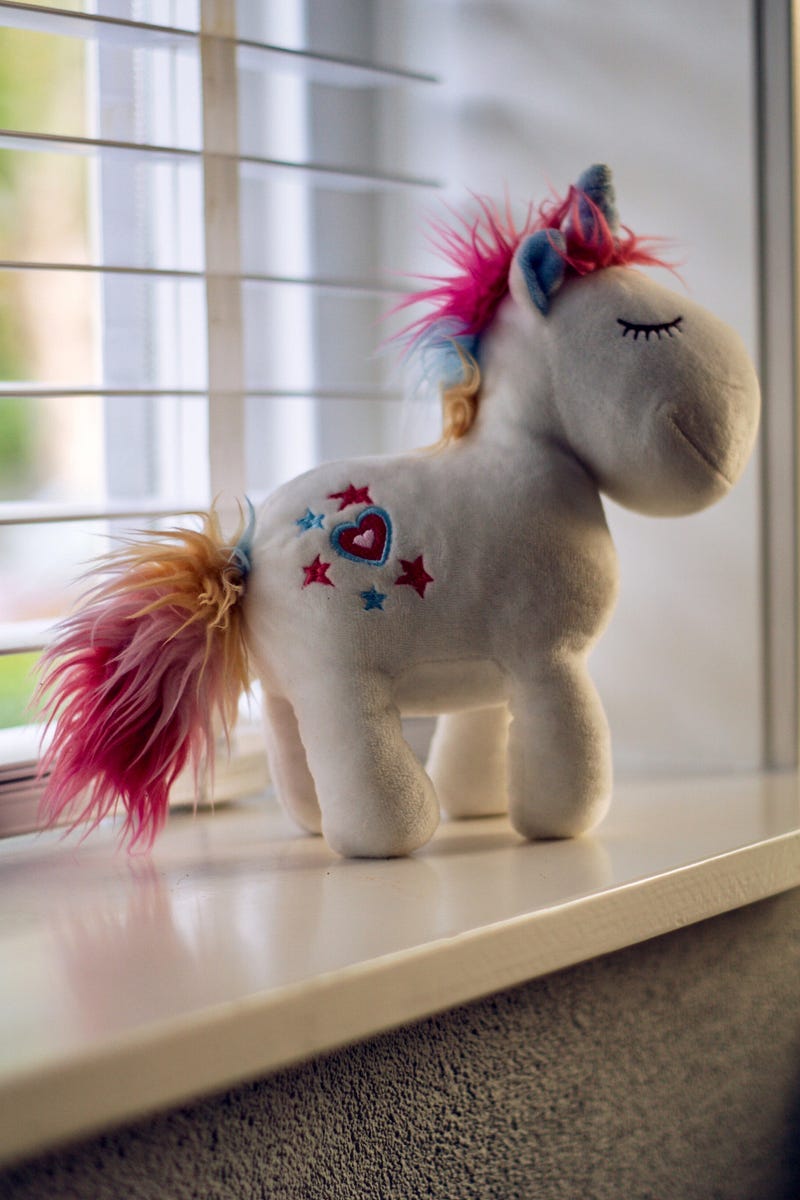
Everyday I have a new opportunity everyday to create joy and change, to help people connect more deeply to one another and themselves and to live my best life … regardless of whether I am in a hospital bed, on the couch or in front of an audience of 1 or 1000.
So what about you? Do you have to die to find life or are you intentionally creating your best life already?