
Learning — Both Ways
The Young Girl on TV Asks, “What Does the Dishwasher Do?”
The question makes sense. Children want to know why you do what you do. Do you even know?
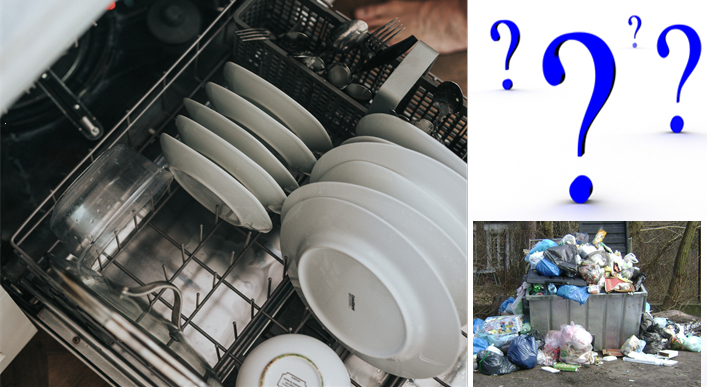
You, too, can learn a lot by answering them. So, “What does the dishwasher do?”
I spent a few months thinking about that question.
My first paying job was washing dishes and peeling potatoes in my dad’s restaurant. I earned 15 cents per hour, or $1.41 in today’s dollars.
The dishwasher was 2 feet taller than I was and just washed dishes. We had to dry them with cloth towels and put them away. I didn’t mind scraping stuff off into the garbage can, loading the dishwasher, putting the dishes away, or taking out the trash & garbage. However, I hated drying the dishes, more than anything.
I still do.
The dishwasher does jobs I hate
Our dishwasher now dries them for me with its super-heated water and hot drying cycle. It also sterilizes the dishes, much better than a hand-wash could.
Although the instructions say that we can put dirty dishes directly into the dishwasher, we wash them first. Some dishwashers have grinders to pulverize large chunks of food and screens to catch smaller fragments. The water is recycled. I prefer to use the cleanest water possible to wash my dishes, even though clean water is used to rinse them.
We run the dishwasher when it is full, about every 4 meals. If we go out for lunch or dinner, dishes could sit there for more than a day. Anything stuck to the dishes can produce odors or dry out and not come off during the wash cycle. Moist food might even attract bugs if the door is not tightly closed.
It doesn’t make much difference if you wash dishes after every meal, like with a large family, but it is expensive if you don’t need to. Here are the results of an MSN question of the day (8/22/20):
How often do you do the dishes?
  * 22% After every meal
  * 36% Every day
  * 39% Every few days
  * 3%  What’s that smell in the kitchen?
We wash pots and pans manually. Food sticks to them, they take up a lot of dishwasher space which requires running the dishwasher after every meal, and there aren’t many of them. It’s costly to put them in the dishwasher and doesn’t solve my problem. They don’t dry properly in the dishwasher, so I have to re-dry them anyway.
As for the dishes, they come out of the dishwasher completely dry and sorted.
Here are a couple of other silly-sounding questions:
Why do you wash the trash?
When I first talked to the daughter of my new girlfriend, now my wife, on the phone, one of the first questions she asked was, “Has my mom had you wash the trash yet?”
That was a strange question. I never heard of anybody washing the trash.
My wife worked in a hospital - medical research. Her condo was the cleanest home I had ever seen. One night, I walked in and saw a dead roach on the floor, its little legs up in the air. I could tell by looking at it that the poor thing starved to death! It couldn’t find any food.
For that reason, anything going into the trash is either clean or dry. Cans and plastic containers get washed and recycled. Sticky things, like butter wrappers, are washed before going into the trash.
Hot water is good enough to get most of the oily mess off. We don’t usually use soap on the trash since we have never had an odor problem.
By the way, we remodeled our house when we moved to The Villages so that we could, by design, clean it in about 3 hours. We do it every week or so, what most people call “spring cleaning.”
Just put meat in the garbage disposal - why buy one?
Strange questions aren’t limited to children. We replaced the garbage disposal during our remodel. The salesman at the box hardware store told me to put only meat down the disposal, that other things got stuck in the trap and stopped up the drain.
Why buy one if you could put only meat in it?
His comment didn’t make any sense to me, at first. I eventually saw how such a blockage could happen, though. If you peel 5 potatoes, stuff the peelings into the disposal, drizzle a little water into the drain until the peelings are gone, then turn off the water, the pipes will eventually become plugged.
The best way to prevent such a blockage is to follow the instructions that come with the disposal! Run plenty of water while using the disposal and don’t stuff the chamber completely full. Duh!
I’ve added one additional step: I use a bowl containing about 1/2 gallon of soapy water to prewash dishes for the dishwasher. When finished, I turn on the water, run the garbage disposal to empty it, then dump the half gallon into it all at once before turning it off. That will push anything that got stuck on down the drain. We’ve never had a drainage problem.
Conclusion
I’ve learned that seemingly simple questions usually aren’t simple. Even if you think it is a stupid question, ask it anyway. Others may not know any more than you do, but are afraid to ask.
The only stupid question is the one never asked.


