What Does It Mean to Be Old?
Do you judge people at a glance?
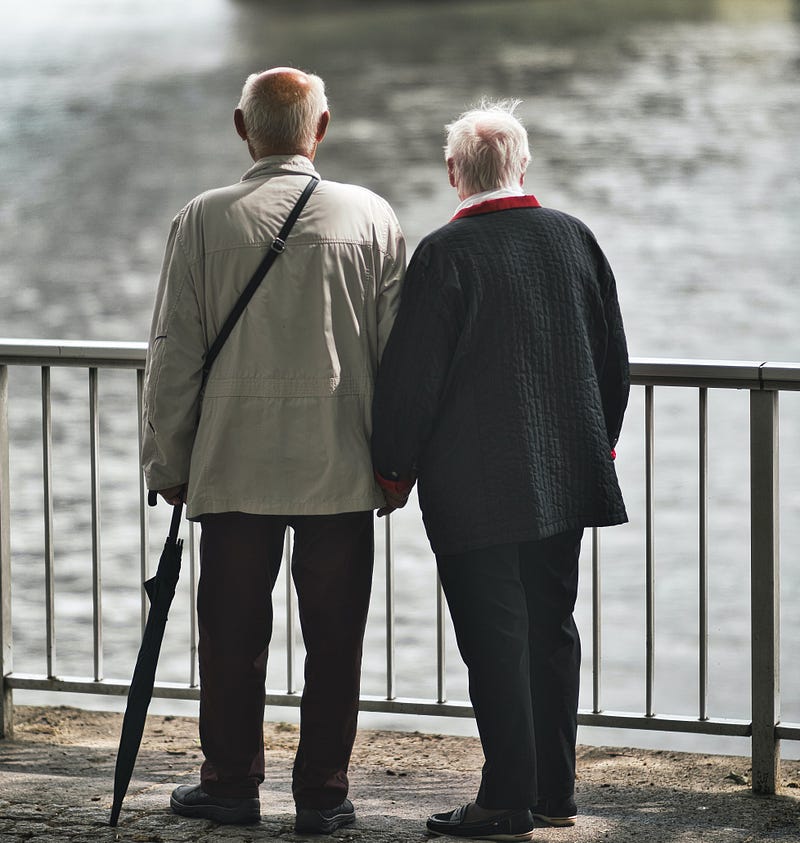
So many jokes and stories are told about old people and women — blondes in particular — that even if you’re old and/or blonde, you may buy into the assumptions that are made about you. Of course, racial stereotypes have been in our society longer than we have and getting rid of them isn’t easy. We may judge people based on their weight, their clothing, hairstyle, the car they drive, where they live or a disability.
You may think yourself less smart or capable than you are because society tends to laugh at certain of its segments, such as old folks. They are bent over, hard of hearing, slow moving, give “organ” recitals about the part of their body that has been replaced or doesn’t work quite right, and talk about “the good old days.”
The notion that being younger, thinner, richer, white, or male is better should be put to rest forever. In fact, “notion” isn’t the right word; it’s far more insidious than that word implies. Challenge yourself to notice your own prejudices. You might be surprised how quickly you make assumptions about other people. Not that you voice them necessarily.
I often hear seniors say, “We are invisible” to younger people. I once had a dentist who called me “dearie” and patted my shoulder. He’s history. People judge us as feeble, yet I almost never take an elevator if I have an option to take stairs. I see young people lining up to get in the elevator.
Working with older people has been a continuing education for me. When I make an inner assumption about someone, I’m often proven wrong. As a certain TV commercial says, “We know a thing or two because we’ve seen a thing or two.”
I’ve talked to people in their 90s who are vital, know a lot about the world, and are enthusiastic about life. I know a senior woman here in Benicia who bicycles all over the world, sometimes by herself, and another who travels the world alone with ease. Another who reads more books and goes to more live performances than I do. She can teach me a thing or two.
We should all be less judgmental toward other people. We haven’t walked in their shoes.
Beyond that, we often buy the assumptions others make about us. Let’s stop that right now! How about not deciding what we can or should do based on our age, but on whether it is something we would like to do and are able to do? Or accepting the things we can’t do without feeling lessened by that?
My family loves to play games. I do, too, but I’ve given up on a couple which involve speed. One is a crazy card game — a kind of group solitaire — which goes so fast, I can’t keep up. The other requires identifying matching shapes, patterns, and colors, fast. My grandkids will always beat me at that. No problem. Games that require strategy, like Dominion or Settlers of Cattan, or knowledge of history, like Chronology, I do fine.
Those who work with seniors try to stay on the cutting edge of ideas that are redefining old age. I note that Prime Minister Theresa May of Great Britain appointed a Minister for Loneliness, ironic that in this super-hooked-up world, where every kind of communication is available all the time, many people are lonely. You’re healthier and happier when you interact with others.
We don’t have to let aging or who we are as older people be defined by others; we are lucky to live at a time when we can redefine it for ourselves!+


