
What Does a Colorectal Surgeon Do in the Emergency Room?
The answer is, I don’t know. So if you find out, please tell me.
There was an article a couple of weeks back that said medical schools were graduating medical students early to ‘help in the fight’. I laughed. Medical students are very good at studying but don’t know a thing about being a doctor so what good would they do, I said. (Exposing trainees to this type of contagion is an entirely different ethical issue- do they need that type of risk? Or, on the other side of the coin, without that exposure, how will they learn?) Anyway, medical students on the front lines, working with intubated patients. That would never work.
I take it back now. I admit I was wrong. So there are probably going to be 60 students in the area graduating early, in a month or so, who will be ‘joining the workforce’. But medical students fresh out of training might be exactly what we need. As a surgeon, I go to the emergency room (ER) war zone every night from 12 pm-8 am and feel like I’m in training again.
Honestly, this ‘doing stuff at odd hours’ never really ends for doctors. At this point, I have trained myself pretty well to be awake when I need to be awake, and crash completely when I can go to sleep. The reason I say that medical students would be great is that I am basically babysitting COVID patients.
There’s not enough staff because healthcare workers are getting sick or just not showing up. The hospitals are full, the emergency rooms are overwhelmed, and somewhere in between, there float a couple of dozen patients who are in a no man’s land between being admitted and going to a bed. That’s where I come in.
I sit down at a computer, gowned to the teeth, papers scattered around me because the paper shredder guy hasn’t emptied the box in weeks. Nurses are shouting above the noise for orders. On the overhead speakers, codes are being called every couple hours.
I try to focus and look through the entire ER patient list and check to see which patients are admitted. I don’t see the new patients; the ER staff handles those. I check their labs, notes, vital signs to see what I’m dealing with. Then I walk around and check in with each patient, some of them just laying wrapped up in a sheet, all of them with a surgical mask on, some of them with an oxygen mask or nasal cannula underneath. Some of them want water and some want to get up and go to the bathroom. Some of them haven’t seen a provider (PA or MD) in hours and have questions. Some need extra blood drawn. They are usually sleeping, or at least have their eyes closed to the beds upon beds of people piled up in the ER.
Then I get to the real work. I call the nurses upstairs to see if they have a bed. I give them a report on the patient’s status, which includes things I am not used to talking about, like the size of their IVs and whether or not they have skin breakdown on their buttocks. I tell them the things I think are important- their medical history, drug allergies, any tubes and drains they’re connected to. And then I move them. Sometimes by myself (I’m pretty good at driving a stretcher), but usually with one other team member. The only way to let more people get help in the ER is to get people out.
So that’s the first category of people. The second category is the people who need to transfer out of our hospital to another hospital. When this assignment started, people were trying to transfer out non-COVID patients. As Governor Cuomo so eloquently observed, “It turns out we don’t have any non-COVID patients.” Honestly, every single one of our patients had a positive COVID test last night, all but one who had what appeared to be severe cancer. His COVID test came back negative, but I am still suspicious (25% false-negative rate in some reports, 5% in others). He probably had the worse prognosis of anyone in that ER, but his test was negative. (Footnote: no hospital would take him even though he was COVID negative.)
Our criteria had to change. Then, we decided we would send out COVID positive patients who were less sick but needed a normal bed or COVID positive patients who were sicker and needed a bigger ICU or ones who had other diagnoses with special needs (like a procedure that we can’t do because our hospital can’t accommodate it).
Then, I get on the phone and reason, plead, and argue for someone to take the patient to help relieve the burden on our ER. Most of the time they do, even if it sometimes takes 4-8 hours. I go talk to the patient to make sure it’s okay with them to be admitted and get better care elsewhere, instead of sitting forgotten in the ER hallway. They’re usually okay with it. We fill out the paperwork and 4-8 hours later, the ambulance comes to pick them up.
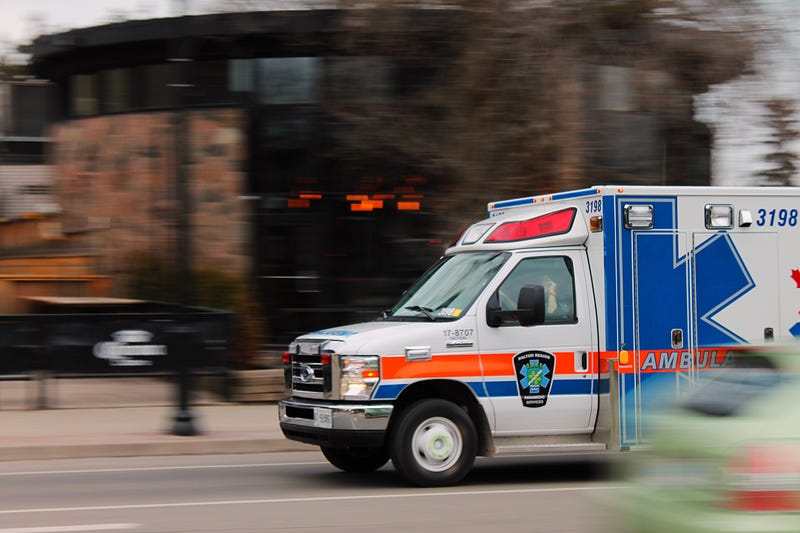
There are patients who are on ventilators in the hours before the ambulance can pick them up. They need medication orders, fluid adjustments, vital signs checked and blood drawn. Some need central lines (like a bigger, longer IV) for harsher medications that keep them asleep and keep their blood pressure up. Some need Foley urinary catheters.
So far, I haven’t had to intubate anyone (though I would gladly do it), and I haven’t had anyone die on my watch. But that is not saying much. I think some of the sicker patients get whisked off to the ICU right away, and some people are dying at home. I know I tend to be a white cloud (in medicine, we call people dark clouds or white clouds depending on whether they are a magnet for trouble or not), but I also don’t really get frazzled. I’m always willing to pitch in.
There’s a saying that my mom says a lot (in Chinese), ‘Give money or give energy (the character for energy also works or strength).’ Those who don’t have money, give their energy, and those who don’t have energy, give money. Some, I guess, give both.
I give my energy where it’s needed, wholeheartedly. I said that medical students could do what I’m doing now because there’s very little clinical skill needed, just collecting and regurgitating information. But there is no task that I consider beneath me. At this juncture, there cannot be.
Those of us in healthcare, we will do anything. We will do everything to see an end to this. Everyone is doing their part for the war effort, sewing masks at home, donating salads, buying PPE for the hospitals — I can transport a patient and move them from the stretcher to the bed, or call their loved ones to let them know they’re okay.
I can do that.
Besides, I have no butts to cut today anyway.


